Why Rush Street matters.
Rush Street is an energetic corridor where Gold Coast's architectural elegance, Chicago's social history, and the Near North Side's enduring cosmopolitan character converge along one of the city's most celebrated avenues.
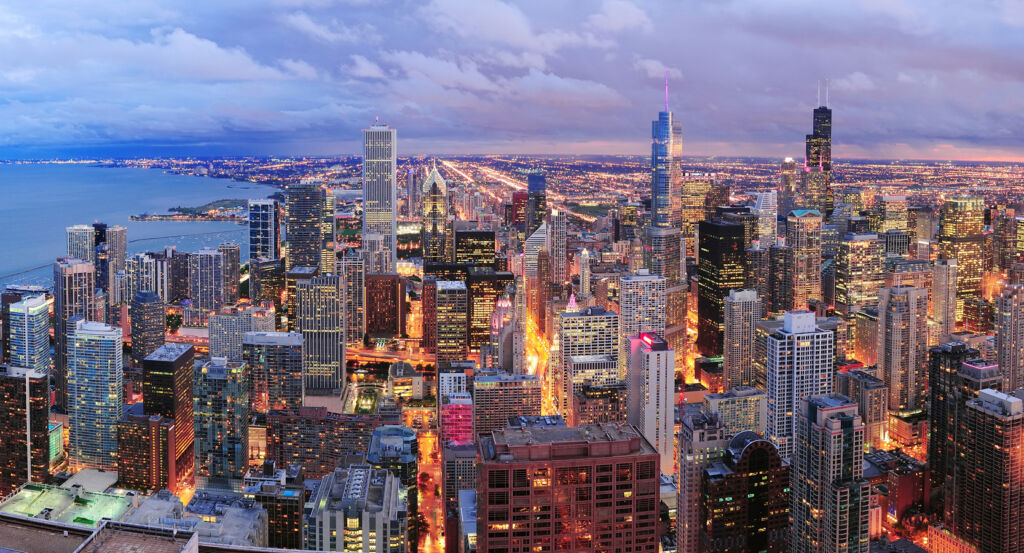
Running through the Gold Coast between River North and Streeterville, the corridor connects historic hotels, landmark churches, luxury residential towers, celebrated restaurants, and distinguished commercial buildings that collectively trace more than a century of urban transformation. Gilded Age mansions, limestone apartment houses, Art Deco high-rises, and contemporary mixed-era architecture establish a streetscape that reflects successive chapters of Chicago's prosperity and reinvention. Walking along Rush Street reveals how commerce, hospitality, and residential development combined to shape one of Chicago's defining urban corridors. The result is a corridor whose enduring character reflects the character of the Gold Coast.
What defines Rush Street.
Rush Street is best known for evolving from a nineteenth-century residential thoroughfare into one of Chicago's premier entertainment and hospitality districts following the construction of the Michigan Avenue Bridge in 1920, which redirected commercial activity toward the Near North Side. Completion of the Grand Mile commercial corridor during the twentieth century, together with nearby stations on the Chicago Transit Authority Red Line, strengthened Rush Street's accessibility while encouraging investment in hotels, restaurants, retail, and high-rise residential development. Between the 1920s and the 1970s, distinguished apartment buildings, hotels, and commercial structures by architects including Holabird & Root, Marshall and Fox, and Loebl Schlossman & Bennett reshaped the corridor with Art Deco, Classical Revival, and Modernist architecture. Designation of portions of the surrounding neighborhood within the Michigan-Wacker Historic District and continuing preservation efforts have protected the architectural fabric that defines Rush Street today.
Development of the Near North Side Multiple Resource Area, recognized through the National Register of Historic Places, documented the concentration of historically significant residential and commercial architecture surrounding Rush Street while reinforcing the corridor's importance within Chicago's urban evolution. Construction of the John Hancock Center in 1969 transformed the skyline immediately east of the corridor, establishing a new model for mixed-function skyscraper engineering and permanently altering development patterns throughout the Gold Coast. The long-running presence of institutions including the Chicago History Museum, the Archdiocese of Chicago, and the Grand Mile Association has further shaped preservation priorities, neighborhood identity, and commercial stewardship across the surrounding district. Together, these nationally recognized designations, engineering achievements, and civic institutions demonstrate how Rush Street continues expressing the historical, architectural, and commercial evolution of the Gold Coast.
How Rush Street fits.
Rush Street is best experienced through an exploration of the Gold Coast's architecture, hospitality, and cultural heritage.
Begin at The Richard H. Driehaus Museum, where a meticulously restored Gilded Age mansion introduces the craftsmanship and architectural ambition that defined Chicago's elite residential era before the route continues north. Continue to The Historic Water Tower, whose survival of the Great Chicago Fire and enduring civic symbolism deepen the historical narrative while anchoring the Grand Mile. Conclude at Oak Street Beach, where sweeping views of Lake Michigan and the skyline provide the scenic payoff while revealing how the Gold Coast balances urban sophistication with its remarkable waterfront setting. The progression moves naturally from residential grandeur to civic resilience before concluding along Chicago's shoreline, revealing how Rush Street connects architectural ambition, historical continuity, and the enduring character of the Gold Coast.
Where your story begins.
Foresyte Travel reveals places that feel extraordinary long before you arrive.
Enjoy editorial crafted for luxury travelers.
Foresyte may earn a commission when you book.