Why Singleton Boulevard matters.
Singleton Boulevard is a transformative West Dallas corridor where industrial heritage, architectural innovation, and neighborhood revitalization converge along one of the city's most influential thoroughfares.
Running through West Dallas between Trinity Groves, the Design District, and the West End, this dynamic corridor connects acclaimed restaurants, adaptive reuse developments, neighborhood businesses, landmark bridges, scenic trails, and welcoming public spaces that collectively showcase Dallas' remarkable urban renaissance. Repurposed warehouses, architecturally significant commercial buildings, contemporary mixed use developments, public art, landscaped boulevards, locally owned cafés, and energetic gathering places create an urban landscape where generations of manufacturers, entrepreneurs, chefs, artists, residents, and visitors have shaped one of Dallas' fastest evolving districts. Singleton Boulevard developed as a principal industrial artery serving the Trinity River before evolving into a defining connector between historic neighborhoods and one of the city's premier culinary destinations. The result is a corridor defined by adaptive reuse, entrepreneurial energy, and enduring metropolitan significance.
What defines Singleton Boulevard.
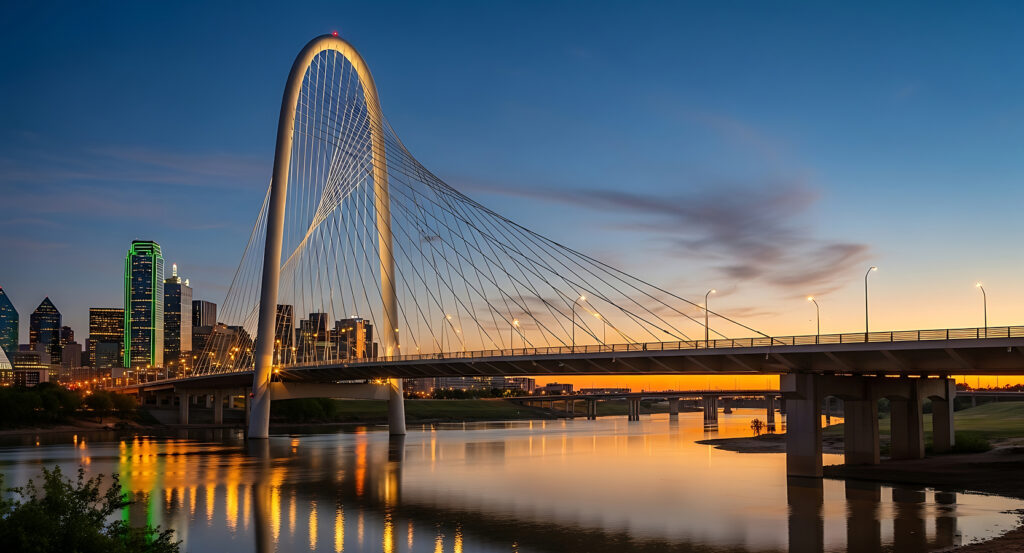
Singleton Boulevard is best known for the Margaret Hunt Hill Bridge, Santiago Calatrava's 400 foot central arch that became the first completed bridge in the Trinity River Corridor Project and transformed the Dallas skyline with one of the world's most recognizable cable stayed bridge designs.
Opened in 2012, the bridge established a dramatic new western gateway to downtown while symbolizing Dallas' commitment to architectural excellence and large scale urban investment. Its elegant engineering, sweeping pedestrian access, and striking visual profile accelerated redevelopment throughout West Dallas and Trinity Groves, attracting new businesses, restaurants, residential projects, and public spaces to formerly underutilized areas. Today, the bridge remains one of the city's defining landmarks, drawing visitors from around the world while serving as a vital transportation link across the Trinity River. That extraordinary architectural achievement has established Singleton Boulevard as one of the city's signature urban corridors.
How Singleton Boulevard fits.
Singleton Boulevard works as an exploration of Dallas' architectural landmarks, culinary destinations, and riverfront recreation.
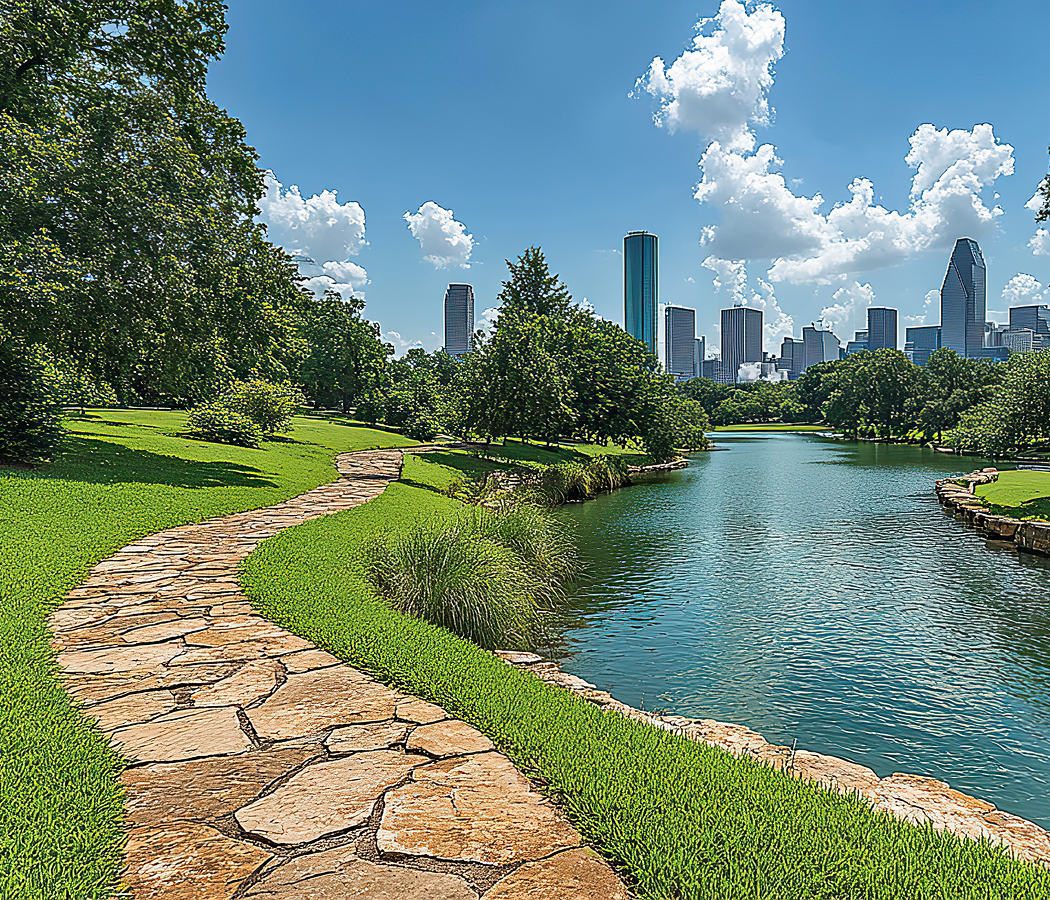
Begin at the Margaret Hunt Hill Bridge, where Santiago Calatrava's soaring design immediately establishes the corridor's defining identity. Continue toward Trinity Groves, where chef driven restaurants, neighborhood gathering spaces, and skyline views provide broader perspective on the entrepreneurial revival reshaping West Dallas. From there, make your way to the Trinity Strand Trail, where beautifully landscaped pathways and scenic urban views provide a memorable conclusion while showcasing one of Dallas' most ambitious recreational infrastructure projects. Along the route, you'll encounter architecturally significant landmarks, welcoming public spaces, thriving local businesses, beautifully designed pedestrian corridors, celebrated dining destinations, and energetic recreational landscapes that reveal West Dallas' exceptional depth. The progression moves naturally from an internationally acclaimed bridge to Dallas' premier culinary district to one of the city's leading urban trails, demonstrating how Singleton Boulevard connects architectural innovation, community life, and outdoor discovery within the heart of West Dallas.
Where your story begins.
Foresyte Travel reveals places that feel extraordinary long before you arrive.
Enjoy editorial crafted for luxury travelers.
Foresyte may earn a commission when you book.