Why Southmore Boulevard matters.
Southmore Boulevard is an elegant corridor where Museum District's cultural distinction, architectural heritage, academic tradition, and civic character converge along one of Houston's most celebrated east-west streets.
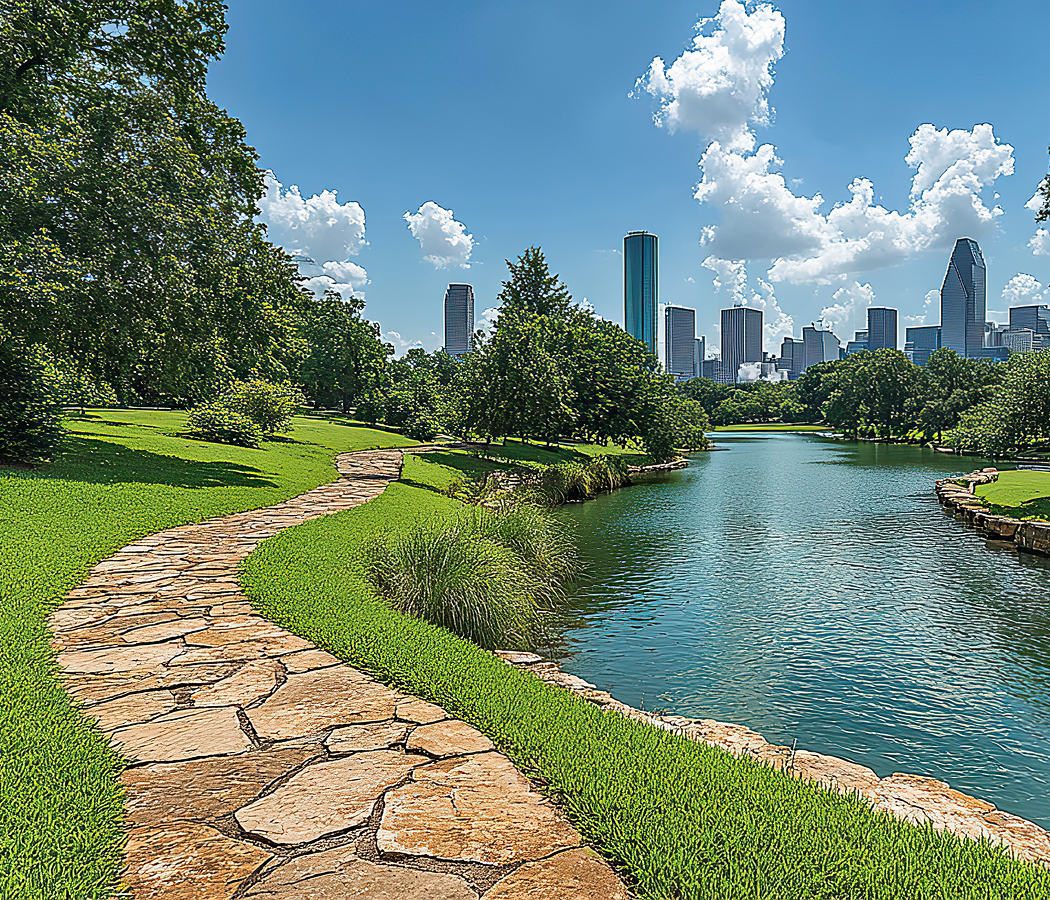
Running through Museum District between Midtown and Third Ward, the corridor links renowned museums, historic institutions, established residential neighborhoods, and expansive civic landscapes that collectively reflect Houston's emergence as one of America's foremost centers for culture, education, and the arts. Broad landscaped medians, mature live oaks, distinguished institutional architecture, and carefully preserved historic residences create a streetscape where more than a century of civic investment remains readily apparent. Continued stewardship has strengthened the boulevard while preserving the architectural cohesion and cultural significance that distinguish the Museum District from every surrounding neighborhood. The result is an experience defined by architectural refinement, intellectual vitality, and one of Houston's most compelling corridors.
What defines Southmore Boulevard.
Southmore Boulevard is best known for extending through the Museum District, whose character emerged during the early twentieth century as Houston philanthropists, educational leaders, and civic organizations established an extraordinary concentration of museums, universities, and cultural institutions south of downtown. Development surrounding the corridor accelerated following the opening of Rice University in 1912, while nearby institutions including the Museum of Fine Arts, Houston, founded in 1900, and the Houston Museum of Natural Science, established in 1909, transformed the district into one of the nation's leading cultural destinations. Blocks bordering the boulevard preserve distinguished examples of Colonial Revival, Mediterranean Revival, Classical Revival, and Mid-Century Modern architecture that document successive phases of Houston's residential and institutional growth. Continued preservation, institutional investment, and thoughtful expansion have enabled Southmore Boulevard to retain the cohesive streetscape established during the Museum District's principal era of development. Collectively, the corridor's academic legacy, architectural diversity, institutional prominence, and cultural continuity establish Southmore Boulevard as one of Houston's defining historic corridors.
Along the boulevard, First Presbyterian Church of Houston, whose congregation was organized in 1838 before relocating to Southmore Boulevard in 1958, demonstrates how established religious institutions expanded alongside the Museum District while contributing enduring architectural and civic presence to the corridor. That tradition of institutional permanence continues through the nearby Houston Center for Contemporary Craft, opened in 2001, whose exhibitions, artist residencies, and educational programming broaden the boulevard's longstanding relationship with craftsmanship, material culture, and creative practice. Surrounding sections of the Southmore Historic District preserve early twentieth-century brick residences distinguished by decorative masonry, deep front porches, ornamental woodwork, and mature tree canopies that reinforce the residential character developing alongside the boulevard's major cultural institutions. Together, these historic congregations, craft institutions, and preserved residential streetscapes demonstrate how Southmore Boulevard evolved within a corridor where cultural prominence is strengthened by equally enduring architectural and community traditions.
How Southmore Boulevard fits.
Southmore Boulevard works as an exploration of Houston's artistic achievement, scientific discovery, and cultural legacy.
Begin at The Menil Collection, where internationally renowned artworks and thoughtfully designed galleries establish an intimate introduction to Houston's globally significant cultural landscape. Continue to Houston Museum of Natural Science, where exceptional paleontology, mineralogy, astronomy, and anthropology collections expand the experience through one of Texas' most visited museums. Conclude at Museum of Fine Arts, Houston, where internationally significant collections spanning millennia provide the historical payoff by illustrating Houston's emergence as one of North America's foremost centers for the visual arts. The progression moves naturally from contemplative artistic expression to scientific exploration before culminating in one of the nation's great encyclopedic art museums.
Where your story begins.
Foresyte Travel reveals places that feel extraordinary long before you arrive.
Enjoy editorial crafted for luxury travelers.
Foresyte may earn a commission when you book.