Why The Country Club matters.
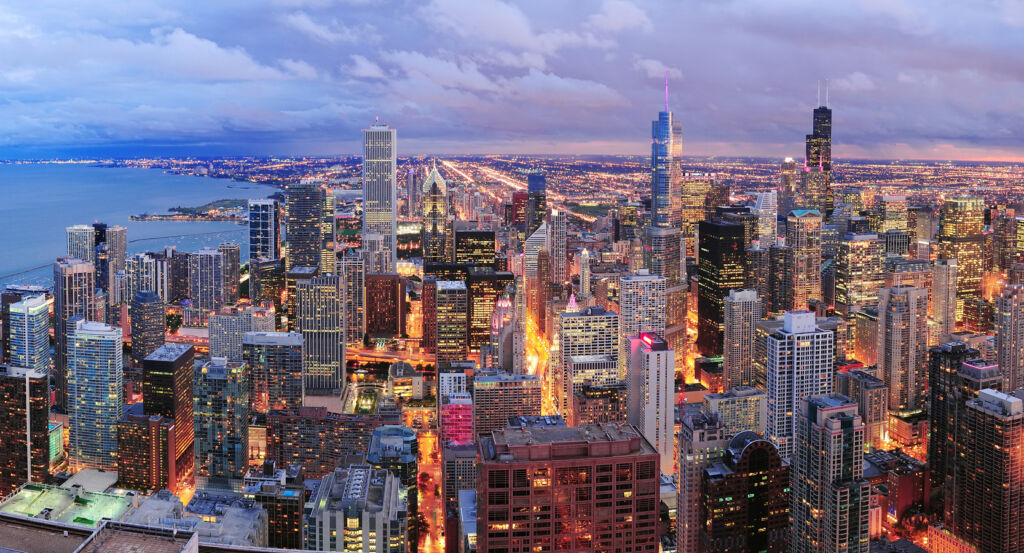
The Country Club is a rowdy country bar where Wrigleyville's sports-and-nightlife corridor meets Southern pub cooking, country music, late-night DJs and a game-day operation calibrated to the crowds moving through Clark Street.
Set along North Clark Street near West Cornelia Avenue and just steps from the commercial blocks leading north toward Addison Street, the bar occupies Wrigleyville's central nightlife strip between Sheffield Avenue to the east, Racine Avenue to the west and the neighborhood's densest concentration of game-day businesses farther north. Two floors give the venue substantial vertical capacity, with the upper level functioning as a private-party room above the principal bar. Rustic finishes and country-western decorative cues establish the room's thematic direction before music becomes the stronger organizing force after dark. The principal floor shifts among televised sports, trivia, country music and Top 40 DJ sets as the weekly calendar changes. The result is a high-energy Wrigleyville bar whose two-level footprint, country styling and event-driven programming absorb the sharp changes in traffic that define Clark Street across games, weekends and late nights.
What defines The Country Club.
The Country Club is best known for operating as a country-western bar and Southern-inspired restaurant in the heart of Wrigleyville, with a character built around music, sports viewing and large-group drinking. The establishment traces its public-facing character to 2014, a date still carried in the copyright line of its official site. Its concept explicitly joins the bar culture associated with Austin's Sixth Street to the musical character associated with Nashville, positioning country music as the connective element between a Chicago sports district and Southern nightlife references. Live music formed part of that character alongside the food program, and the local Wrigleyville business association continues to categorize the venue through live music, pub food and sports-bar use. Cubs home dates exert direct control over operations: the bar opens ahead of home games and Wrigley special events, and its regular promotional calendar changes on those dates. Football creates a second sports constituency through the Chicago New York Jets fan club, whose games receive sound and dedicated specials at the venue. Thursday programming centers on Queen of Hearts trivia, and Friday and Saturday nights turn toward DJs mixing country with Top 40 music. Large-group business extends through packages for gatherings reaching 300 people, with the second-floor room supporting fundraisers, birthdays, engagement parties and game watches.
How The Country Club fits.
The Country Club works as the concluding stop for a North Side route connecting a neighborhood cinema engineered at the dawn of talking pictures, a landscaped cemetery shaped by major figures in Chicago architecture and a baseball ground whose survival turned a short-lived Federal League park into one of the sport's oldest stadiums.
Begin at Music Box Theatre, which opened on August 22, 1929 as a 700-seat neighborhood cinema built for $110,000 inside a larger development containing nine storefronts and 32 apartments. Louis I. Simon designed the building for the Southport Avenue Businessmen's Association, and Lasker and Sons operated the theatre. Sound film was still new enough that the design retained an orchestra pit and organ chambers as insurance against the technology's failure, even though the house itself was conceived specifically for motion pictures. Its atmospheric auditorium uses a dark blue ceiling, star-like lights, moving cloud effects and architectural scenery resembling an Italian courtyard. A second screen entered an adjacent storefront in 1991, preserving the original auditorium intact. Continue to Graceland Cemetery, established by lawyer Thomas Bryan in 1860 after he purchased 80 acres beyond Chicago's city limits. Illinois granted a perpetual charter the following year, and landscape architect H.W.S. Cleveland began developing the park-like grounds. William Le Baron Jenney later contributed design and engineering work before Ossian Simonds used native planting to shape the expanded property's pastoral character. The cemetery grew to 119 acres and became the burial place of major Chicago architects, industrialists, politicians and athletes, with Lorado Taft's Eternal Silence among its significant funerary works. Conclude at Wrigley Field, constructed in 1914 for Charles Weeghman's Federal League club at an estimated cost of $250,000. The 14,000-seat Weeghman Park hosted its first game on April 23, when the Chicago Federals defeated Kansas City 9-1. The Federal League collapsed after 1915, Weeghman purchased the Cubs and moved them to the ballpark for the 1916 season, and William Wrigley Jr.'s ownership eventually produced the Wrigley Field name in 1926. Bleachers, ivy and the hand-operated scoreboard arrived during the 1937 work, and lights finally brought official night baseball in 1988. The progression moves from a neighborhood cinema engineered around the technological upheaval of sound through a Victorian landscape shaped by Chicago's architectural culture and culminates in a short-lived rival league's ballpark that survived to become an enduring center of North Side baseball.
Where your story begins.
Foresyte Travel reveals places that feel extraordinary long before you arrive.
Enjoy editorial crafted for luxury travelers.