Why The Detroit Club matters.
The Detroit Club is historic elegance woven into contemporary hospitality, Georgian-era social legacy reimagined as refined comfort, and downtown presence translated into residential sophistication rather than transactional anonymity, a place where Detroit's civic rhythm is not merely visited but meaningfully felt.
Located in the heart of Downtown Detroit within walking distance of Grand Circus Park, Orchestra Hall, the Fox Theatre, business districts, and cultural institutions, The Detroit Club occupies a rare position: a private social club with roots deep in the city's past that opens its doors to guests seeking a stay that feels thoughtful, grounded, and distinct from typical hotel experiences. Arrival here does not feel like entering a branded hospitality shell; it feels like stepping into a living piece of Detroit's architectural and social narrative, where legacy and modern life coexist with composure. The exterior façade, dignified masonry, classical proportions, historic detailing, signals presence. Once inside, the lobby and public spaces unfold with a sense of continuity rather than spectacle: refined materials, layered lighting that favors calm clarity, and seating areas arranged for conversation, private pause, or reflective quiet rather than rushed movement or visual distraction. The overall effect is one of residential dignity, where hospitality is organized around presence. Guest rooms here extend that refined logic into private space. Layouts are generous and intelligently composed, allowing space to work, rest, and reflect. Beds are deeply comfortable and designed for restorative sleep after long days spent exploring Detroit's cultural corridors, attending business meetings, or enjoying local dining and performance venues. Lighting is layered and adaptable, enabling a seamless transition from productive daylight hours to evenings of calm reflection. Windows frame contextual views of downtown, architectural details, street rhythm, and shifting light, anchoring your stay in place rather than detaching you from the city's pulse. Bathrooms are modern, purposeful, and thoughtfully detailed: clean lines, intuitive layouts, strong water pressure, and finishes that feel substantial. Sound management helps preserve interior calm even as the city's energy continues beyond your window. Service at The Detroit Club is polished, attentive, and deeply situationally aware. Interactions with staff feel professional without stiffness, warm without being intrusive, and local guidance reflects lived knowledge rather than rote hospitality scripts. Whether offering transit tips that save time, recommending dining local favorites that locals favor, or guiding you to cultural experiences aligned with your interests, assistance here feels genuinely supportive. Staying at The Detroit Club feels like choosing timeless presence over trend, residential resonance over generic luxury, and a place that supports how you inhabit a city rather than how you merely pass through it, making this an exceptional base for travelers seeking resonant depth, historical continuity, and refined comfort.
What defines The Detroit Club.
The Detroit Club's character is best known for its extraordinary heritage as one of North America's oldest private social clubs, a place built for community, conversation, and civic life, and that legacy continues to inform the experience for guests today.
Founded in the late 19th century during a period when Detroit was emerging as a critical economic and cultural center, The Detroit Club was originally conceived as a gathering place for leaders in business, law, politics, and society. Rather than being preserved as a static museum piece, the building has evolved with the city while maintaining the integrity of its original architectural language, social purpose, and spatial logic. Interiors retain historic resonance, grand staircases, subtle ornamental detail, and room proportions that speak directly to the era of their creation, but they are integrated with contemporary systems and comfort in ways that feel organic. Public rooms, dining salons, lounges, meeting spaces, were designed not for performance, but for conversation, debate, and connection. This legacy persists in the way spaces feel lived in. Furnishings are chosen for warmth and durability rather than theatrical effect; materials like rich woods, subtle metals, and tactful textures convey presence without shouting for attention. Renovations and updates have consistently prioritized operational infrastructure: acoustics that support calm, lighting calibrated for human rhythm, climate control that is quiet and responsive, and connectivity that works. These elements may be invisible at first glance, but they subtly transform how comfort accumulates over the length of a stay. Guest rooms reflect this same dual character of heritage and modernity. Instead of emphasizing historic ornament or generic “luxury finishes,” the design reframes classic proportion through contemporary clarity: thoughtful storage, logical circulation, lighting that feels composed rather than dramatic, and surfaces that are tactile without being decorative for show. This creates an environment that feels owned rather than observed, a subtle but meaningful difference in how a space shapes your presence. The Detroit Club's location further amplifies its identity. Situated amid Grand Circus Park and within walking distance of performance venues, theaters, cultural institutions, and downtown transit, the property does not isolate guests from city life. Instead, it positions them within Detroit's living geography, a convergence of history, design, commerce, and cultural momentum. Staff at The Detroit Club reflect this grounded orientation. Service is delivered with contextual knowledge rather than scripted gestures; insights feel local and nuanced rather than generic. Recommendations fit your pace and interests, which performances are genuinely notable, where to find enduring neighborhood eateries, how to navigate transit rhythms, and are delivered with timing that respects your autonomy. In a hospitality world often dominated by surface impression or thematic embellishment, The Detroit Club stands apart by committing to architectural integrity and experiential depth, proving that when a place honors its own history while supporting contemporary comfort, it becomes a space that feels rich, resonant, and truly lived in.
How The Detroit Club fits.
The Detroit Club works as a refined urban anchor that supports both thoughtful exploration and meaningful presence, especially for travelers who want Detroit to feel coherent, accessible, and narratively rich.
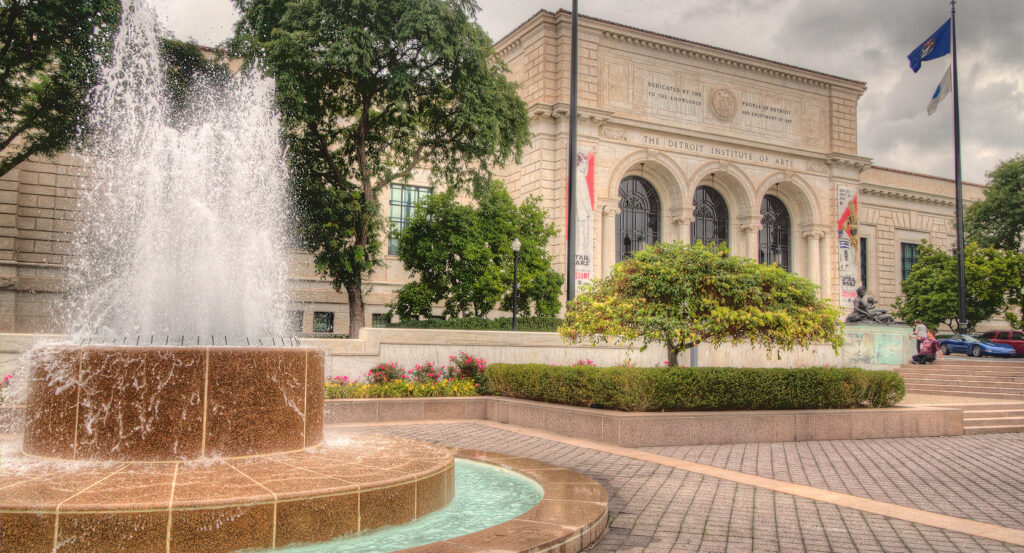
Days here begin with context. Step outside and you are within walking distance of some of Detroit's most significant cultural corridors: the Detroit Institute of Arts, Charles H. Wright Museum of African American History, performance venues at the Fisher Theatre and Fox Theatre, and historic streets that reveal architectural layers from different eras. Morning exploration can unfold organically, architectural tours, museum visits, coffee walks, without the logistical pressure of transit planning. Midday returns to the hotel are genuinely restorative. The composed interior environment allows experience to settle rather than stack, giving you psychological space to reset before afternoon or evening plans take shape. This makes long days sustainable. Afternoons can extend into deeper discovery: long lunches at neighborhood favorites, civic tours that explore the city's layered history, or purposeful wandering through districts like Brush Park, Greektown, or Midtown. Because the Club sits at the juncture of culture and commerce, movement feels additive rather than disjointed, each segment of your itinerary connects naturally to the next. Evenings here resolve into coherence. Whether you attend a performance, enjoy a meal at a local restaurant, or walk through Grand Circus Park at dusk, returning to the hotel feels like completing a thoughtful arc. The environment supports decompression without detachment from place, allowing you to reflect rather than rush. Over several nights, familiarity becomes a resource. You begin to recognize patterns, which streets are quietest after sunset, which cafés open early and reward return, how transit rhythms shift at different hours, and your movement feels guided by experience. Extended stays reveal the hotel's deepest contribution: resonant continuity. You engage with Detroit not as a series of disconnected highlights, but as a coherent environment rich with texture, rhythm, and meaning.
Where your story begins.
Foresyte Travel reveals places that feel extraordinary long before you arrive.
Enjoy editorial crafted for luxury travelers.
Foresyte may earn a commission when you book.