
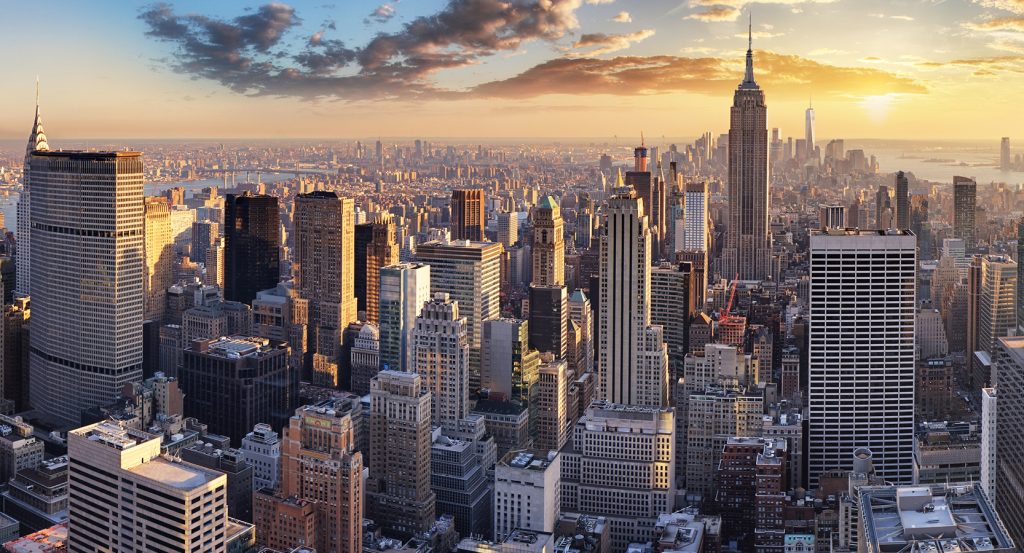
Why you should experience The Knickerbocker in New York, NY.
The Knickerbocker is a storied luxury hotel where Times Square's theatrical bravado, Gilded Age ambition, cocktail mythology and culture of nocturnal performance converge within John Jacob Astor IV's great Broadway hotel.
Set along Broadway near West 42nd Street and just steps from Times Square, the hotel opened in 1906 within a Beaux-Arts building developed by Astor and associated almost immediately with residents Enrico Caruso and George M. Cohan and guests including John D. Rockefeller, F. Scott Fitzgerald and Giacomo Puccini. Maxfield Parrish created Old King Cole for the original bar through a $5,000 commission from Astor, while bartender Martini di Arma di Taggia became associated with an early dry martini served to Rockefeller. After the original hotel closed in 1921 and spent decades as offices, Gabellini Sheppard Associates returned the building to hospitality in 2015 through contemporary interiors deliberately set against the surviving Beaux-Arts exterior. The result is a hotel where Astor, Caruso, Parrish and more than a century of Times Square mythology give one Broadway address a cultural inheritance almost impossible to manufacture.
What you should know about The Knickerbocker.
The Knickerbocker is best known for opening in October 1906 as John Jacob Astor IV's luxury hotel at Broadway and West 42nd Street, incorporating portions of the earlier St. Cloud Hotel into a Beaux-Arts property that became entwined with Times Square during the district's emergence as New York's entertainment crossroads. Enrico Caruso maintained an extensive residence inside the hotel because of its proximity to the Metropolitan Opera House, and when a premature report of Germany's surrender reached New York on November 8, 1918, the tenor led crowds in singing “The Star-Spangled Banner” before repeating the scene when the armistice actually arrived three days later. Astor commissioned Maxfield Parrish for $5,000 to paint Old King Cole for the hotel bar in 1906, requiring the artist to use Astor as the king's model, while bartender Martini di Arma di Taggia became associated with perfecting an early dry martini for regular John D. Rockefeller. The hotel's social orbit extended through George M. Cohan, F. Scott Fitzgerald, Anna Pavlova, Giacomo Puccini and Theodore Roosevelt before Prohibition helped extinguish its nightlife economy and the property closed as a hotel in 1921. More than nine decades later, Gabellini Sheppard Associates reworked the building for its 2015 return to hospitality, creating 330 rooms including 31 suites while preserving the contrast between its ornate early twentieth-century exterior and a deliberately restrained contemporary interior.
Chef Charlie Palmer established the revived hotel's culinary authorship through Charlie Palmer at The Knick, where Gabellini Sheppard designed a 122-seat fourth-floor restaurant around Eramosa stone flooring, swirling Frappuccino stone, Mica interlayer glass screens, metal-mesh curtains and a wine room constructed from illuminated Venetian glass. The rooftop develops another chapter through St. Cloud, named for the earlier hotel incorporated into the Knickerbocker's physical history and occupying more than 7,800 square feet of indoor and outdoor space beneath the Times Square New Year's Eve Ball. Sushi chef Taishi Yamaguchi and Charlie Palmer later extended that program through Akoya, where Executive Chef Adam Raksin oversees temaki made to order with imported and local seafood, seasonal Japanese rice and crisp nori inside a LUCID-designed space containing a 13-seat sushi counter and 16-seat dining room. Together, Charlie Palmer, Gabellini Sheppard, Taishi Yamaguchi, Adam Raksin and LUCID continue the Knickerbocker's century-old relationship between authored interiors, serious hospitality and the social rituals of eating and drinking in Times Square.
How to fold The Knickerbocker into your trip.
The Knickerbocker works as the anchor for an afternoon tracing the theatrical architecture, entertainment history and urban performance that transformed Times Square into a global stage.
Begin at New Amsterdam Theatre, where architects Herts & Tallant completed their Art Nouveau theater in 1903 with interiors by George Gray Barnard and Robert Blum, creating the Broadway home later synonymous with Florenz Ziegfeld's Follies and the lavish theatrical culture developing just before the Knickerbocker opened. Continue to Stephen Sondheim Theatre, whose original 1918 Henry Miller's Theatre became Manhattan's first Broadway house designed under post-1916 building regulations before its auditorium was reconstructed within the Bank of America Tower and renamed for Stephen Sondheim in 2010. Conclude at Lyceum Theatre, where producer Daniel Frohman opened Herts & Tallant's 1903 theater with an apartment above the auditorium and a small door allowing him to watch performances from his desk, preserving an intimate remnant of Broadway's early managerial culture. The progression moves from Ziegfeld-era performance through Broadway's architectural evolution into Frohman's intensely personal theater, reconstructing the performance culture that surrounded The Knickerbocker during Times Square's explosive early twentieth-century ascent.
Where your story begins.
Foresyte Travel reveals places that feel extraordinary long before you arrive.
Experience premium editorial crafted for luxury travelers.







































































































