Why The Westin Book Cadillac Detroit matters.
The Westin Book Cadillac Detroit is an expansive historic hotel where Downtown Detroit's civic and industrial legacy meets the Book brothers' 1924 ambition, Louis Kamper's Italian Renaissance architecture and the city's modern revival.
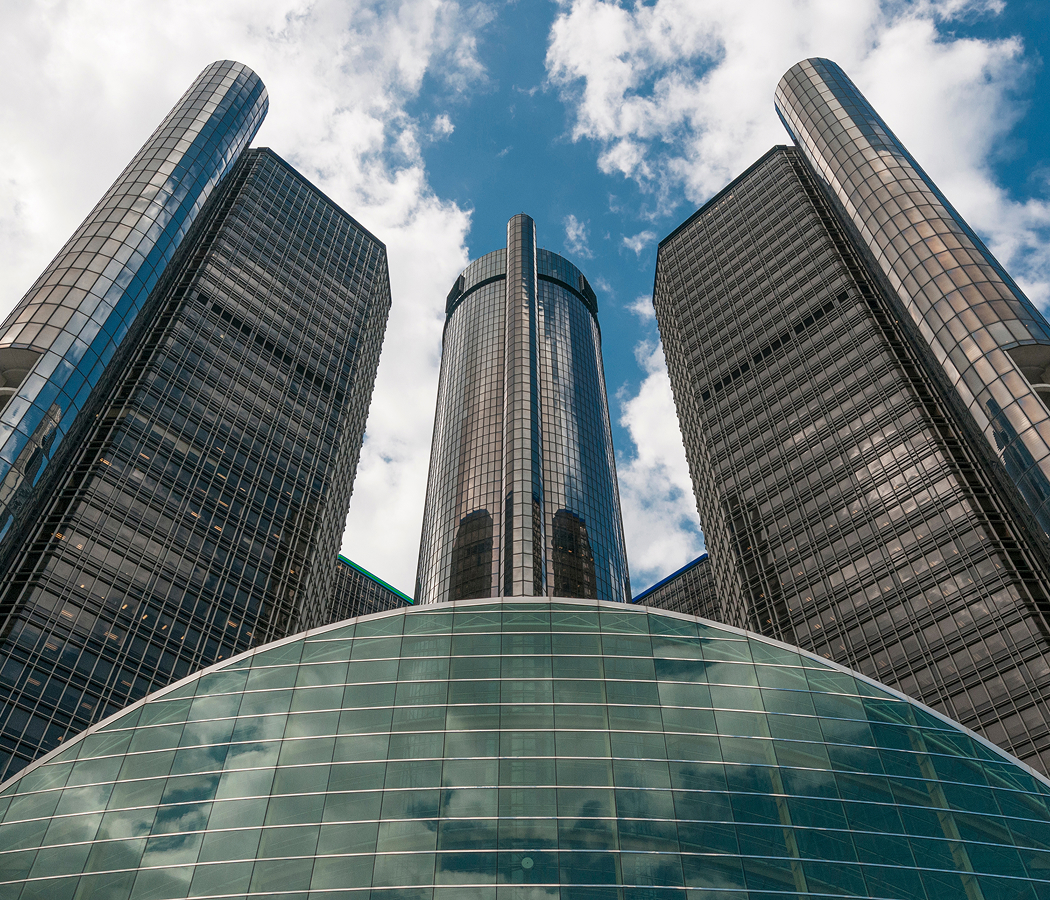
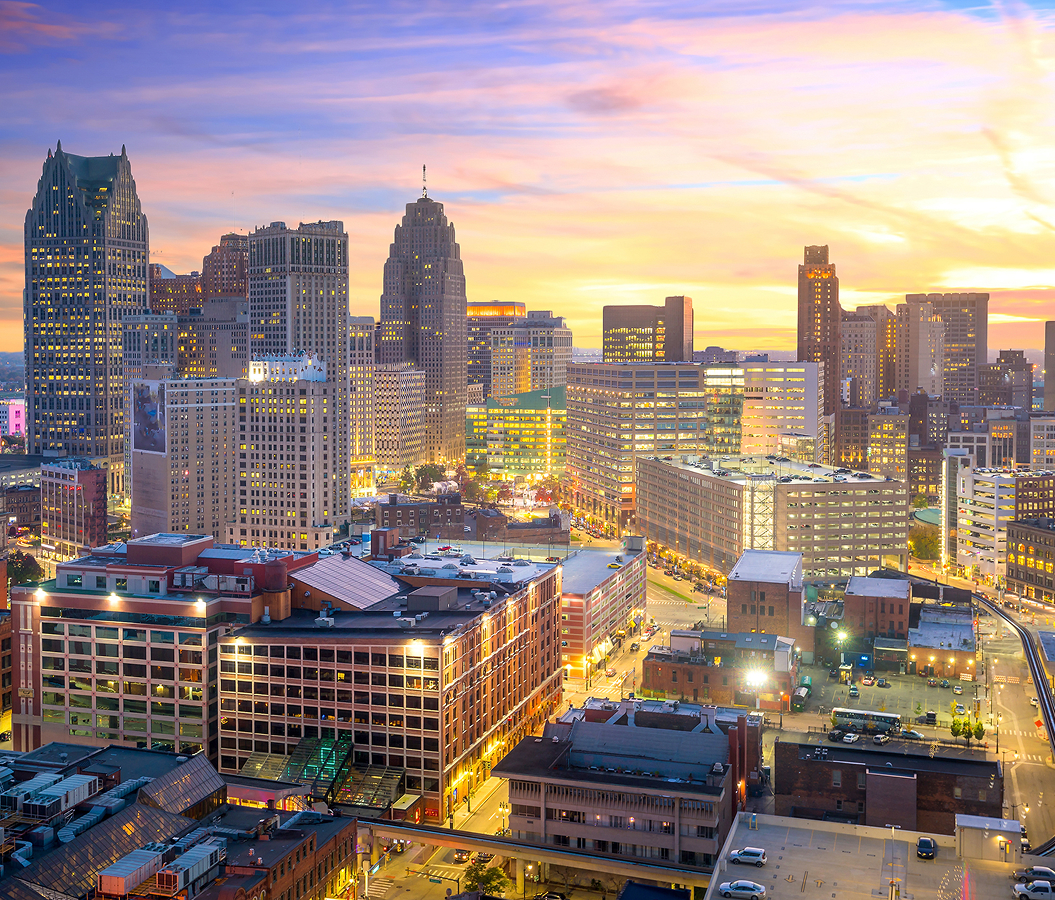
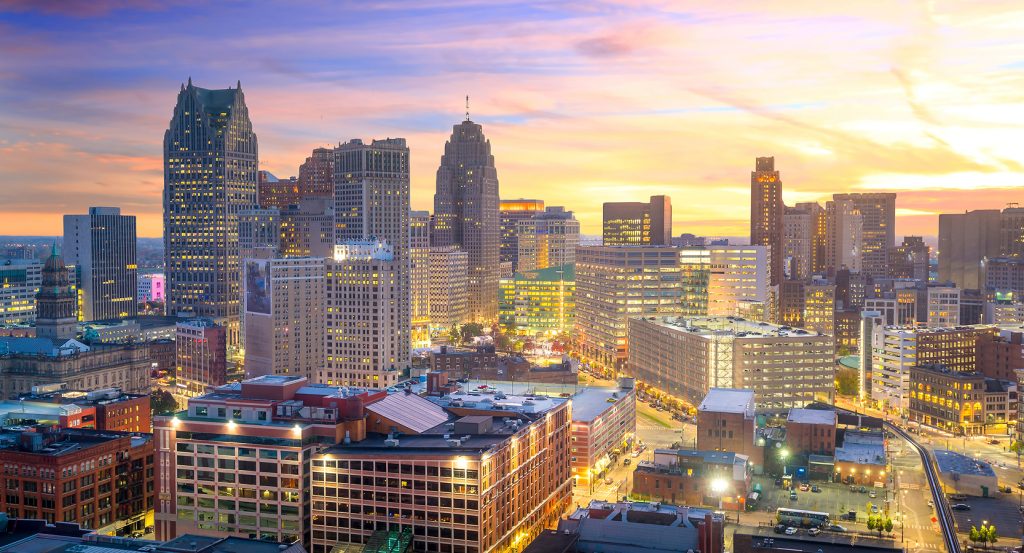
Occupying the block at Washington Boulevard and Michigan Avenue between State Street and Lafayette Boulevard, The Westin Book Cadillac Detroit stands beside Campus Martius Park, west of Woodward Avenue and within walking distance of the riverfront, sports venues and downtown's restored office towers. The hotel rises within the Washington Boulevard Historic District, a concentrated urban landscape of early twentieth-century skyscrapers, civic buildings, commercial towers and restored pedestrian corridors. Its principal frontage faces Washington Boulevard, the avenue the Book brothers imagined as the 5th Avenue of the Midwest, while Michigan Avenue leads east toward the central business district and stadium precinct. The surrounding streets connect the hotel with Campus Martius, Grand Circus Park, the Detroit River, Huntington Place and the entertainment venues around Comerica Park and Ford Field. The building's Italian Renaissance composition contrasts with the glass towers, contemporary office buildings and revived public spaces that now define much of Downtown Detroit. The primary encounter is with a hotel whose scale records the city's industrial wealth and early twentieth-century confidence. A secondary atmosphere comes from traffic, sports crowds, office workers, restored façades and the ceremonial movement of guests through one of Detroit's most important urban corridors. The result is a hotel whose architecture links Detroit's grand-hotel era with the continuing reconstruction of its downtown core.
What defines The Westin Book Cadillac Detroit.
The Westin Book Cadillac Detroit is best known for originating as the Book-Cadillac Hotel, the 1924 skyscraper that became the tallest hotel in the world when it opened. Detroit-born entrepreneurs and real estate developers J. Burgess Book Jr., Herbert Book and Frank Book commissioned the project as part of their effort to transform Washington Boulevard into a prestigious urban address. The brothers had acquired the earlier Cadillac Hotel in 1918 and later planned a much larger replacement that would compete with the grand hotels of New York, Chicago and Europe. Local architect Louis Kamper designed the building in an Italian Renaissance style with Venetian decoration, expansive entrances and vertical elements influenced by Mesopotamian and Egyptian forms. The Michigan Avenue entrance included statues representing figures from Detroit's early history, including General Anthony Wayne, Chief Pontiac and Antoine de la Mothe Cadillac. The hotel opened on December 8, 1924, with thirty-three stories, 1,136 rooms and private baths, convention facilities, ballrooms and a radio broadcasting station. Its opening represented the confidence of a city whose automobile industry, manufacturing wealth and expanding commercial population had created demand for a new generation of metropolitan hotels. The Book-Cadillac's importance came from its scale as much as from its decoration, because it functioned as a vertical city within the city. Its ballrooms, restaurants, public rooms and guest accommodations supported conventions, business meetings, private celebrations, political gatherings and long-term stays. The Italian Garden ballroom became one of the property's most celebrated rooms, using lighting and sound effects to simulate the atmosphere of an outdoor villa garden. The building's early success was interrupted by the Great Depression, and the Book brothers lost control of the property in 1931 after financial difficulties. Ownership changed several times during the following decades, while the hotel continued to serve as one of Detroit's most prominent addresses. The property later operated under several names, including the Sheraton-Cadillac, Detroit-Cadillac and Radisson-Cadillac, reflecting broader changes in American hotel ownership and branding. The hotel closed in 1984 after a proposed mixed-use redevelopment failed to proceed. It remained vacant for nearly two decades, becoming a visible symbol of Detroit's economic decline and the abandonment of several historic downtown buildings. The Washington Boulevard Historic District entered the National Register of Historic Places in 1982, strengthening the preservation case for the hotel and its neighboring structures. A new redevelopment plan emerged in 2006, when the Ferchill Group proposed converting the deteriorated building into a Westin hotel with branded residences. After a renovation costing $200 million, the property reopened in October 2008 with 453 guestrooms and 65 condominium units. The reopening became part of Detroit's wider downtown revitalization, demonstrating that large historic buildings could return to active use through preservation, investment and contemporary hospitality management. The Westin Book Cadillac Detroit carries several overlapping identities: skyscraper, grand hotel, preservation project, residential development and downtown landmark. Its significance rests on the connection between Detroit's industrial prosperity, its period of urban decline and the continuing effort to restore the city's central architectural fabric.
Louis Kamper's original design established the building as a ceremonial urban monument, using height, symmetry, ornament and material richness to communicate the importance of Detroit's commercial centre. The tower's architecture combines a broad base for public functions with an elevated shaft of guestrooms and upper-level residences, creating a vertical arrangement that separates social, business and private uses. The Michigan Avenue entrance incorporates sculptural references to Detroit's early history, placing civic memory directly into the hotel's public façade. Venetian-inspired decoration extends through the interior, where marble, plasterwork, metal detailing and formal circulation routes reinforce the building's connection with European grand-hotel traditions. The restored public spaces retain the scale required for conventions, weddings, receptions and large civic gatherings. The Venetian Ballroom and Crystal Ballroom form the principal historic event rooms, while contemporary meeting areas accommodate conferences, business events and private functions. The hotel's current guestrooms and suites adapt the original residential programme through Westin Heavenly Beds, Heavenly Baths, workspaces, modern technology and city-facing views. The 453-room configuration demonstrates how a building designed for more than a thousand rooms could be reorganized for contemporary expectations of space, privacy and service. Westin Club provides an additional lounge environment with seating, wireless connectivity and food and beverage service for eligible guests. The indoor pool and WestinWORKOUT Fitness Studio extend the property's wellness programme within the restored structure. The Motor Bar occupies the lobby as a contemporary social room shaped by Detroit's history, serving craft cocktails and light dining in a setting connected to the building's public circulation. The Boulevard Room operates as the hotel's breakfast restaurant, providing American cooking within a more casual dining environment. Sullivan's Steakhouse occupies the first floor with prime steaks, seafood, martinis, live music and a substantial wine list. Haus of Brunch brings a separate brunch character to the property, while Starbucks Reserve Café connects the hotel with the daily routines of downtown workers, travelers and event guests. In-room dining continues the traditional hotel function of serving meals privately within guestrooms and suites. The property's restaurants and bars create a sequence from lobby drinks to formal steakhouse dining, morning meals, brunch gatherings and private accommodation service. Its events programme remains equally important, because the hotel's historic rooms were designed for large gatherings and continue to support weddings, conventions and civic celebrations. The Westin Book Cadillac Detroit functions as more than a restored façade. Its current character depends on the coordination of architectural preservation, residential comfort, wellness facilities, dining, business services and event infrastructure. The building's continued importance comes from its ability to retain the social scale of a grand hotel while adapting its rooms and services to the operating demands of contemporary Detroit.
How The Westin Book Cadillac Detroit fits.
The Westin Book Cadillac Detroit works as a starting point for tracing Detroit's transformation from a planned civic centre into an industrial capital, a cultural city and the birthplace of a global popular-music movement.
Begin at Campus Martius Park, the reconstructed civic centre formed around the intersection of Woodward Avenue, Michigan Avenue, Monroe Street and Cadillac Square. The site became the focal point of Judge Augustus Woodward's plan to rebuild Detroit after the Great Fire of 1805, establishing a geometric centre for the city's streets and public institutions. Its present landscape combines lawns, seasonal installations, public art, memorials, performance areas and the Point of Origin marker associated with Detroit's surveying history. The park's position between the hotel, the commercial district and the riverbound avenues makes it the most immediate expression of Downtown Detroit's public life. Campus Martius establishes the route through civic planning and the city's continuing effort to make its historic centre active, accessible and socially shared. Continue to Detroit Institute of Arts, the major cultural institution located on Woodward Avenue in Midtown Detroit. Founded in 1885 as the Detroit Museum of Art, the institution moved to its present site in 1927 as its collection expanded. Architect Paul Philippe Cret designed the principal Beaux-Arts building as a temple-like setting for a collection that now contains more than 65,000 objects and more than one hundred galleries. Rivera Court contains Diego Rivera's Detroit Industry murals, which interpret the city's manufacturing system through expansive frescoes examining technology, labor and human ambition. The museum connects Detroit's industrial wealth with international art, public education and the civic decision to preserve a major cultural institution within the city. Conclude at Motown Museum, the preserved Hitsville U.S.A. complex at 2648 West Grand Boulevard. Berry Gordy purchased the two-family house in 1959 using an $800 family loan and established Motown Records on its first floor, with Studio A occupying a converted photography studio at the rear. The label developed a production system that connected songwriting, musicianship, recording, artist development and commercial distribution, producing music that reached audiences across racial and national boundaries. Esther Gordy Edwards founded the museum in 1985 after Motown moved its headquarters to Los Angeles, preserving the house, studio and artifacts as a record of Detroit's cultural influence. The progression moves from Campus Martius Park's planned civic centre through the Detroit Institute of Arts' industrial and cultural interpretation and concludes at Motown Museum's internationally consequential musical history.
Where your story begins.
Foresyte Travel reveals places that feel extraordinary long before you arrive.
Enjoy editorial crafted for luxury travelers.
Foresyte may earn a commission when you book.