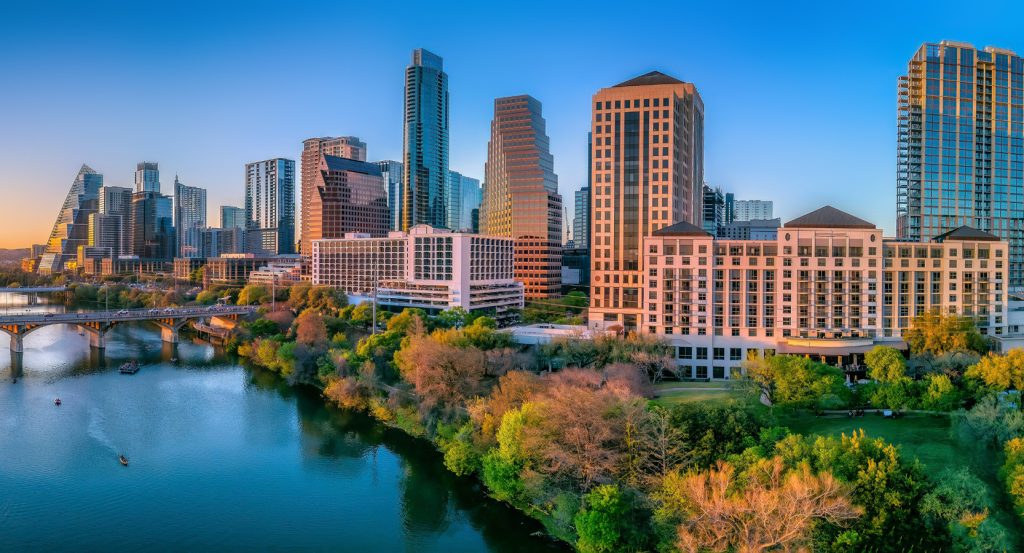
Why you should experience Waller Street in Austin, Texas.
Waller Street is a historic East Austin corridor where neighborhood heritage, civic history, and creative culture converge along one of the city's most enduring residential streets.
Running through East Austin between Downtown, Holly, Chestnut, and Rosewood, this energetic corridor connects historic homes, architecturally significant churches, celebrated neighborhood parks, thriving local businesses, welcoming community spaces, and enduring cultural institutions that collectively showcase Austin's remarkable evolution from a nineteenth-century residential district into one of Texas's most dynamic urban neighborhoods. Mature tree canopies, thoughtfully preserved early twentieth-century architecture, lively neighborhood activity, celebrated local gathering places, flourishing artistic expression, and enduring community traditions create an urban landscape where generations of educators, musicians, entrepreneurs, families, residents, and visitors have experienced one of Central Texas's defining neighborhood corridors. Waller Street continues to evolve while preserving the authenticity and diversity that define East Austin. The result is a corridor defined by historical character, cultural vitality, and lasting neighborhood significance.
What you should know about Waller Street.
Waller Street is best known for bordering the George Washington Carver Museum, Cultural and Genealogy Center, whose nationally significant archives preserve one of Texas's largest collections documenting African American history, genealogy, art, and cultural achievement.
Established within Austin's historic African American community, the museum has become an essential institution for preserving stories that shaped both the city and the broader history of Black Texans. Its extensive archival collections, rotating exhibitions, educational initiatives, and cultural programming illuminate generations of artistic excellence, civic leadership, entrepreneurship, and community resilience. Today, the museum continues to serve as one of the state's foremost centers for African American historical research while strengthening East Austin's role as the cultural heart of Black Austin. That extraordinary archival legacy has established Waller Street as one of the city's most culturally significant corridors.
How to fold Waller Street into your trip.
Waller Street works as an exploration of East Austin's history, cultural heritage, and neighborhood character.
Begin along Waller Street, where the historic residential streetscape immediately establishes the corridor's defining identity. Continue toward the George Washington Carver Museum, Cultural and Genealogy Center, where one of Texas's leading African American cultural institutions provides broader perspective on the street's extraordinary historical legacy. From there, make your way to Waterloo Park, where one of Downtown's signature public parks provides a memorable conclusion while celebrating the city's enduring blend of history, culture, and public life. Along the way, you'll encounter architecturally significant historic homes, welcoming neighborhood streets, thriving community landmarks, beautifully landscaped public spaces, celebrated cultural destinations, and energetic gathering places that reveal East Austin's exceptional depth. The progression moves naturally from a historic neighborhood corridor to a nationally significant cultural institution to one of Austin's premier urban parks, demonstrating how Waller Street connects cultural preservation, community life, and urban discovery.
Where your story begins.
Foresyte Travel reveals places that feel extraordinary long before you arrive.
Experience premium editorial crafted for luxury travelers.