
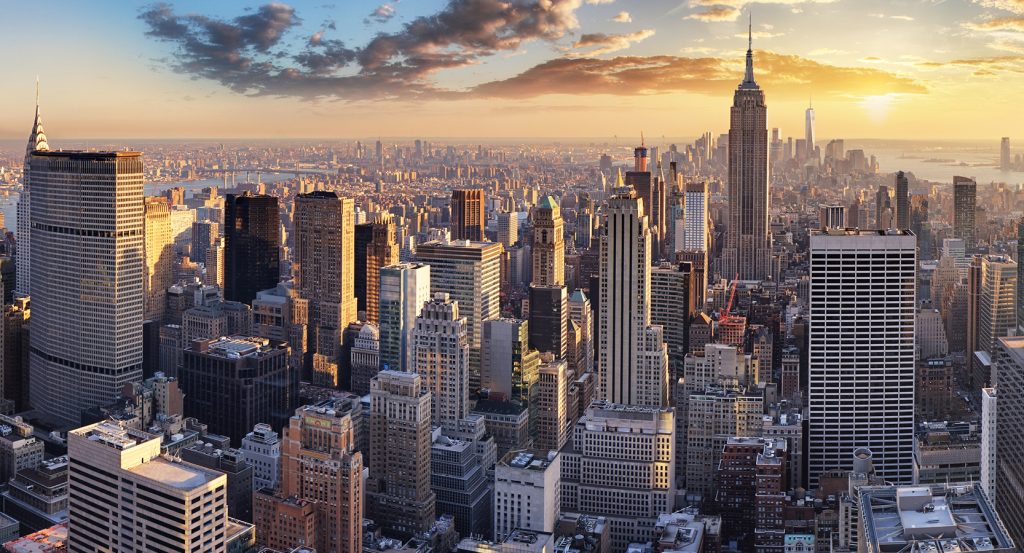
Why you should experience WestHouse Hotel New York in New York, NY.
WestHouse Hotel New York is a debonair luxury hotel where Midtown's theatrical glamour, Art Deco inheritance, cultural ambition and after-dark sophistication converge within a contemporary interpretation of a 1920s Manhattan townhouse.
Set along West 55th Street near 7th Avenue and just steps from Carnegie Hall, the 172-room property was conceived by Jeffrey Beers International around the imagined private residence of an urbane Manhattan host, drawing upon the neighborhood's interwar apartments, jazz clubs and theatrical interiors. Beers combined dark woods, polished metals, beveled mirrors, geometric detailing and custom furnishings with photographs selected from the archive of renowned New York photographer Slim Aarons, whose images of twentieth-century society deepen the residential conceit. Guestrooms extend that style through custom carpeting, leather headboards, marble bathrooms and fixtures by Waterworks, while many upper-floor accommodations frame the Midtown skyline and Central Park. The result is a hotel where Beers turns the cultural confidence surrounding Carnegie Hall into a private-house fantasy rooted in Manhattan's enduring appetite for performance and style.
What you should know about WestHouse Hotel New York.
WestHouse Hotel New York is best known for opening in December 2013 as a 172-room luxury property developed by Hospitality Holdings with architecture and interiors by Jeffrey Beers International, whose founder brought an unusually multidisciplinary background spanning architecture, glassmaking and hospitality design to the project. Beers studied architecture at the Rhode Island School of Design, received a Fulbright scholarship to study glassmaking with Oscar Niemeyer in Brazil and worked for I.M. Pei before establishing his own studio in 1986, experiences that informed WestHouse's combination of architectural geometry, reflective surfaces and crafted decorative objects. The hotel occupies a building originally constructed in 1927, and Beers approached its reinvention through the premise of a sophisticated private Manhattan residence, using dark timber, polished metal, beveled mirrors, geometric patterns and commissioned furnishings to reference the glamour of the interwar city. The 172 accommodations include 18 suites, with marble bathrooms incorporating Waterworks fixtures, while selected rooms and suites provide views toward Central Park and Times Square. Slim Aarons photography introduces another layer of twentieth-century social history throughout the interiors, placing images by the photographer known for documenting affluent postwar leisure within a property consciously organized around the mythology of sophisticated New York entertaining.
The Den establishes the property's principal social room through a fireplace, library-like furnishings and intimate seating, while the twenty-third-floor Terrace shifts the residential premise upward into an indoor-outdoor space overlooking Midtown and the Hudson River. WestHouse built its operating model around a Residents Fee that bundles breakfast, evening drinks and hors d'oeuvres, Wi-Fi and additional services into the stay, deliberately describing guests as residents to reinforce the private-house concept established by Beers. That language connects directly with the architecture: communal rooms function as extensions of the accommodations, allowing breakfast and evening cocktails to occur within spaces conceived as a resident's salon and terrace. The property subsequently joined Small Luxury Hotels of the World, placing its independently styled 172-room format within a global collection centered on individually characterized luxury hotels. Together, Jeffrey Beers's architectural authorship, Slim Aarons's photography, the 1927 building, the Residents program and the elevated Terrace give WestHouse a coherent character built around a specific fantasy of Manhattan social life.
How to fold WestHouse Hotel New York into your trip.
WestHouse Hotel New York works as the anchor for an afternoon tracing the music, architecture and performing arts culture concentrated along the southern edge of Central Park.
Begin at The Art Students League of New York, founded in 1875 by artists dissatisfied with conventional academy instruction and housed since 1892 inside Henry J. Hardenbergh's French Renaissance building, where generations including Georgia O'Keeffe, Norman Rockwell, Jackson Pollock and Mark Rothko passed through its studios. Continue to New York City Center, where Harry P. Knowles designed the exuberant Moorish Revival building for the Ancient Arabic Order of the Nobles of the Mystic Shrine in 1923 before Mayor Fiorello La Guardia helped convert it into Manhattan's first performing-arts center in 1943. Conclude at The Museum of Modern Art, founded in 1929 under the leadership of Abby Aldrich Rockefeller, Lillie P. Bliss and Mary Quinn Sullivan, where a collection beginning with eight prints and one drawing grew into one of the defining institutions of modern art. The progression moves from an artist-run school through a fraternal hall reinvented around performance into the institution that permanently altered New York's relationship with modern art, revealing the concentration of creative ambition that gives WestHouse Hotel New York its natural Midtown context.
Where your story begins.
Foresyte Travel reveals places that feel extraordinary long before you arrive.
Experience premium editorial crafted for luxury travelers.







































































































