Why 16th Street matters.
16th Street is an energetic corridor where Pilsen's industrial heritage, artistic identity, immigrant traditions, and urban reinvention intersect along one of Chicago's most recognizable east-west streets.
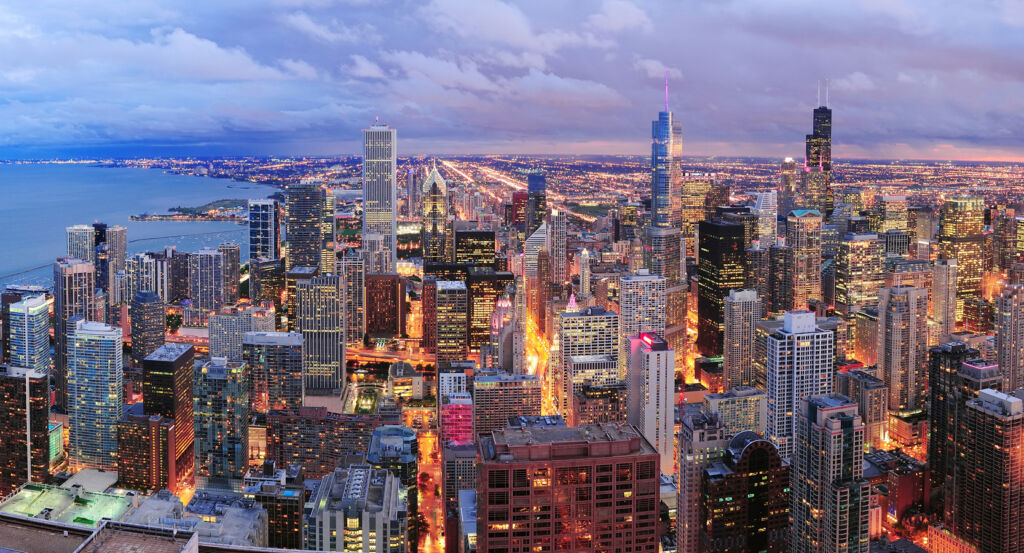
Stretching through Pilsen between the South Branch of the Chicago River and Western Avenue, 16th Street connects historic manufacturing districts, residential blocks, neighborhood businesses, transportation infrastructure, and longstanding civic spaces that together tell the story of the community's continual evolution. The streetscape shifts from imposing brick industrial buildings and active rail corridors to colorful commercial façades, historic masonry architecture, and inviting public spaces, creating an environment where Chicago's manufacturing past and contemporary creative culture remain closely intertwined. The corridor reaches its defining character where industrial character, artistic expression, and neighborhood continuity reinforce one another across successive generations. The result is a corridor defined by creative momentum, architectural resilience, and Pilsen's enduring ability to continually reinvent itself while honoring its past.
What you should know 16th Street.
16th Street is best known for serving as a historic transportation and industrial spine shaped by the rapid expansion of Chicago during the late nineteenth century. Construction of the 16th Street rail corridor established one of the city's most important freight gateways, carrying traffic for multiple railroads including the Atchison, Topeka and Santa Fe Railway, Pennsylvania Railroad, and Chicago, Rock Island and Pacific Railroad, while nearby industrial plants and warehouses accelerated commercial growth throughout the surrounding district. Completion of the Chicago Sanitary and Ship Canal in 1900 reshaped regional transportation and manufacturing by creating a navigable waterway that strengthened freight movement immediately south of the corridor. Throughout the twentieth century, coordinated investment by the Chicago Department of Transportation, Cook County, and regional freight agencies modernized bridges, viaducts, and transportation infrastructure while preserving the corridor's critical role within Chicago's logistics network. Together, railroad engineering, industrial expansion, canal construction, and infrastructure investment established 16th Street as one of Chicago's defining transportation corridors.
Large-scale brick warehouses, steel-framed industrial buildings, freight embankments, and concrete retaining walls constructed between the 1880s and 1930s demonstrate the engineering methods that supported Chicago's emergence as North America's principal rail hub. The surrounding district became a focal point for wholesale distribution, food processing, manufacturing, and freight interchange, creating thousands of industrial jobs that influenced the long-term development of nearby neighborhoods. Continued collaboration among transportation agencies, preservation organizations, neighborhood stakeholders, and municipal planners supports bridge rehabilitation, freight efficiency, streetscape improvements, and adaptive reuse of historic industrial properties. Together, engineering innovation, industrial architecture, economic history, and sustained reinvestment explain why 16th Street remains one of Chicago's most historically significant urban corridors.
How 16th Street fits.
16th Street works as an exploration of Chicago's industrial heritage, public art, and evolving urban landscape.
Begin at the 16th Street Murals, where expansive works of public art transform former industrial infrastructure into one of the city's most distinctive outdoor creative experiences before naturally leading farther along the corridor. Continue to Ping Tom Memorial Park, where riverfront landscapes and sweeping skyline views reveal how former industrial land has been thoughtfully reimagined for public enjoyment before carrying the experience toward its conclusion. Conclude at Canal Origins Park, where interpretive exhibits overlooking the Chicago Sanitary and Ship Canal provide a fitting finale explaining the engineering achievements that reshaped both the neighborhood and the city. The progression moves naturally from artistic reinvention to riverfront renewal before culminating in the infrastructure that helped define Chicago's industrial rise.
Where your story begins.
Foresyte Travel reveals places that feel extraordinary long before you arrive.
Enjoy editorial crafted for luxury travelers.
Foresyte may earn a commission when you book.