Why 3rd Street matters.
3rd Street is a storied corridor where Old City's colonial legacy, maritime heritage, architectural craftsmanship, and enduring commercial character define one of Philadelphia's most historically significant north-south streets.
Running through Old City between Northern Liberties and Society Hill, the corridor connects colonial streetscapes, eighteenth-century mercantile buildings, nationally significant civic institutions, and preserved residential blocks that collectively reflect Philadelphia's evolution from a riverfront trading settlement into the nation's first capital. Successive blocks reveal how William Penn's city plan, Delaware River commerce, transportation investment, and historic preservation established an avenue whose historic fabric continues shaping Philadelphia's oldest neighborhood. Brick rowhouses, granite curbs, restored warehouses, and masonry storefronts document more than three centuries of urban development. The result is an experience defined by continuity, craftsmanship, and one of Philadelphia's most distinguished historic corridors.
What you should know 3rd Street.
3rd Street is best known for developing immediately west of the Delaware River waterfront within William Penn's 1682 plan for Philadelphia, placing the corridor at the center of the city's earliest commercial, residential, and political growth. Expansion following the Act of Consolidation of 1854, together with horse-drawn streetcars and later electric railway service operated by the Union Traction Company and Philadelphia Rapid Transit Company, strengthened connections between the colonial core, Center City, and Philadelphia's rapidly expanding neighborhoods while sustaining commercial activity along one of the city's oldest thoroughfares. Builders introduced enduring collections of Georgian, Federal, Greek Revival, and Italianate architecture distinguished by Flemish-bond brick masonry, marble stoops, paneled entryways, fanlights, brownstone lintels, decorative cornices, wrought-iron hardware, and finely crafted wood interiors that reflected Philadelphia's celebrated eighteenth- and nineteenth-century building traditions. Merchants, ship chandlers, importers, publishers, financial institutions, and generations of independent businesses established a diverse commercial landscape that reinforced the avenue's importance within Philadelphia's Atlantic trading economy. Together, Penn's original plan, transportation expansion, architectural craftsmanship, maritime commerce, and sustained institutional investment established 3rd Street as one of Old City's defining corridors.
Designation of the Old City Historic District on the National Register of Historic Places and recognition of surrounding areas as a National Historic Landmark District strengthened long-term preservation of one of the nation's richest concentrations of colonial and early federal architecture. Establishment of Independence National Historical Park in 1948 protected 55 acres containing many of the country's most significant historic structures, reinforcing the corridor's relationship with Philadelphia's earliest civic landscape while encouraging careful stewardship of surrounding streetscapes. Continued restoration has preserved original brick façades, granite curbs, wood sash windows, wrought-iron hardware, period storefront proportions, and traditional masonry detailing that continue expressing the craftsmanship established across more than three centuries of urban history. Together, federal preservation, historic district recognition, and sustained architectural stewardship demonstrate how 3rd Street continues expressing the civic, commercial, and architectural legacy that has distinguished Old City since Philadelphia's founding.
How 3rd Street fits.
3rd Street works as an exploration of Philadelphia's colonial origins, architectural heritage, and riverfront history.
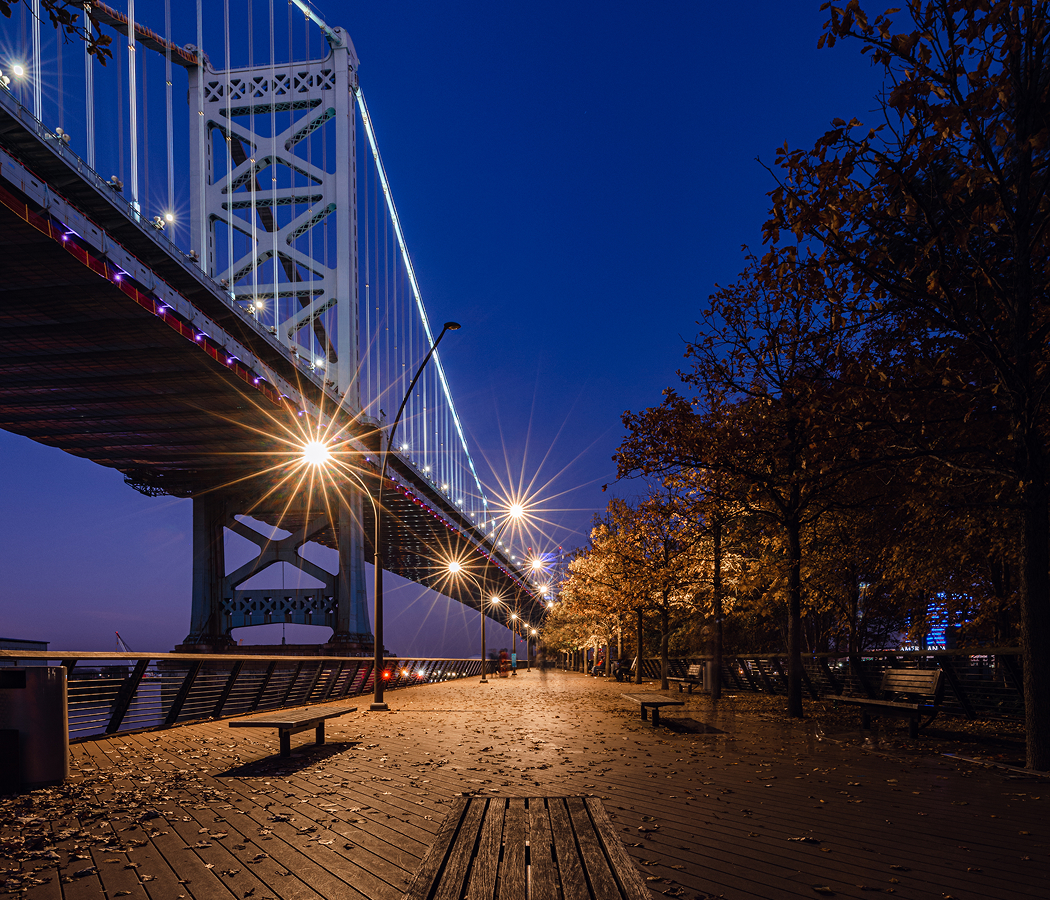
Begin at Elfreth's Alley, where the nation's oldest continuously occupied residential street introduces the craftsmanship and intimate scale of colonial Philadelphia before naturally leading toward the city's founding institutions. Continue to Museum of the American Revolution, where immersive galleries deepen appreciation for the struggle that transformed Philadelphia into the birthplace of a new nation before guiding the experience toward the waterfront. Conclude at Race Street Pier, where expansive Delaware River views provide the historical payoff by reconnecting the colonial street grid with the maritime trade that fueled Philadelphia's emergence as one of North America's leading ports. Together, the sequence traces the city's evolution from colonial neighborhood to revolutionary capital before concluding along the waterfront that shaped its earliest prosperity.
Where your story begins.
Foresyte Travel reveals places that feel extraordinary long before you arrive.
Enjoy editorial crafted for luxury travelers.
Foresyte may earn a commission when you book.