Why you should experience Philadelphia Marriott Old City in Philadelphia, Pennsylvania.
Philadelphia Marriott Old City is historic presence reimagined as contemporary calm, operational clarity, and urban ease, a hotel that doesn't just put you near Old City's celebrated corridors, cobblestone streets, and revolutionary landmarks, but frames them with thoughtful comfort and spatial intelligence, making this one of the most strategically sensible places to stay in the city.
Located just minutes from Independence Hall, the Liberty Bell, Christ Church, and the Delaware River waterfront, the hotel sits at a crossroads of history, commerce, and contemporary life. Arrival feels purposeful rather than ornamental, the exterior signals capability and relevance without relying on exaggerated architectural gestures. Once inside, the spatial logic becomes immediately clear: public spaces are organized around movement and human scale. Materials are refined and functional, mixed metals, warm neutrals, wood surfaces calibrated for durability and tactility, and lighting designed to support orientation. There is a sense of operational calm here; a level of design that supports presence. This is a hotel that works first, and welcomes second, which is part of what makes it feel genuinely attuned to real travel needs. Guest rooms extend this philosophy into private space with comfort that feels reliable yet refined. Layouts are generous and responsive, allowing you to rest, think, or regroup with ease after full days exploring the city's many layers. Beds are engineered for consistency, not merely plush, but truly supportive of recovery, which matters when you're walking historic districts, attending meetings, or navigating transit. Lighting is layered and adaptive, enabling productive morning routines, afternoon breaks, and restful evenings. Windows frame fragments of Philadelphia's texture: rooftops, historic façades, and distant street movement that reminds you this is a city with life beyond your room. Bathrooms are modern, clean-lined, and thoughtfully designed for daily use rather than visual show; strong water pressure, good storage, and intuitive fixture placement make morning and evening routines feel streamlined rather than choreographed. Sound insulation is effective, giving the rooms a sense of interior calm even in the heart of a lively district. Service at Philadelphia Marriott Old City is polished, deliberate, and situationally aware. Interactions feel respectful, helpful, and contextually informed, staff assist with local insights rather than canned answers, and help you move through the city's texture rather than merely handing you another key card. Staying here feels like choosing contextual intelligence over theatrical staging, spatial clarity over visual noise, and a hotel that supports your Philadelphia experience rather than competes with it, making Philadelphia Marriott Old City a strong choice for travelers who want the city to feel accessible, comprehensible, and genuinely livable.
What you should know about Philadelphia Marriott Old City.
Philadelphia Marriott Old City operates less like a transient stop and more like urban infrastructure expressed with hospitality intelligence, and that orientation shapes both how the hotel feels and how it functions.
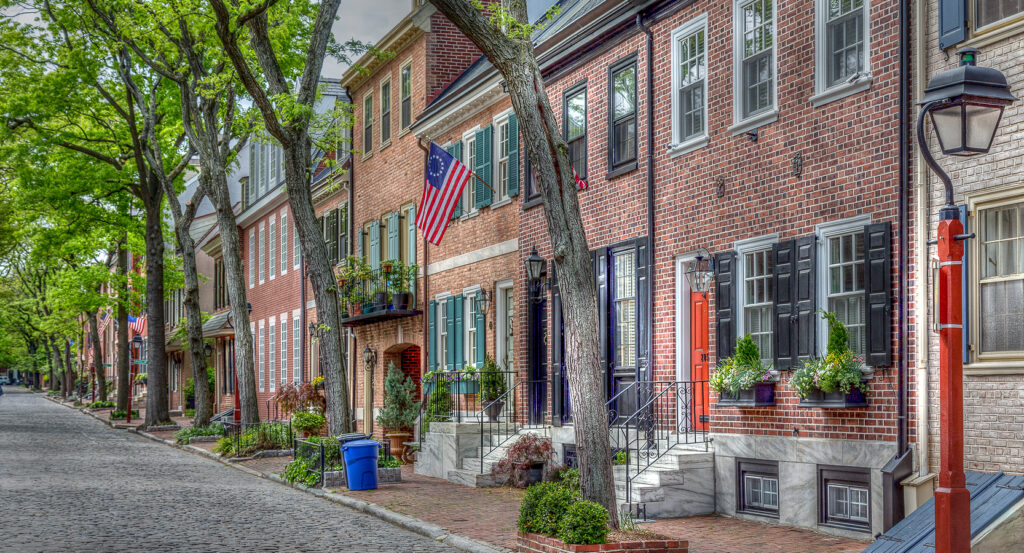
Old City is among the oldest continuously inhabited neighborhoods in the United States, and its streets, corridors, and facades carry centuries of narrative in every block. The hotel's placement here is not accidental; it is logistical and narrative, strategically positioned to allow visitors to move through the city's history and contemporary life. Rather than trying to soften its character to match Old City's historic aura or leap into boutique theming, the hotel embraces a neutral-modern architectural language that respects context while acknowledging the needs of today's travelers: strong circulation, functional zones, reliable comfort systems, and spaces that support both rest and productivity. Public areas are designed for ease of movement, check-in, lounge, work zones, and meeting rooms are logically arranged to minimize noise and maximize flow. Circulation is intuitive; sightlines are clear; attention is given to spatial ergonomics. Renovations and updates follow this logic: improving infrastructure, lighting balance, acoustic performance, and comfort systems takes precedence over fleeting aesthetic trends. This operational clarity makes the hotel especially effective for a wide range of guests: professionals on business, families exploring history, long-stay travelers needing stability, and repeat visitors who value consistency. Old City's economy and rhythm are not defined by blockbuster tourism alone; they are shaped by education, law, museum districts, and civic life. The hotel's staff culture reflects this complexity. Service is delivered with practical knowledge, directions that prioritize efficiency, dining recommendations that suit purpose rather than hype, transit guidance that works with the city's real rhythm rather than abstract maps. Interactions feel informed by context rather than rehearsed, and this creates trust: you feel supported without being directed. In a landscape where many hotels attempt to tell a story through visual excess, Philadelphia Marriott Old City stands apart by committing to operational depth as its form of luxury, proving that a well-functioning environment can feel more supportive than one crowded with stylistic signals.
How to fold Philadelphia Marriott Old City into your trip.
Philadelphia Marriott Old City works as a logistical and resonant anchor, especially for travelers who want Philadelphia to feel navigable, layered, and coherent.
Days here begin with orientation. Step outside and you are immediately within walking distance of America's founding landmarks, Independence Hall, the Liberty Bell, the National Constitution Center, yet you do not feel corralled into a tourist circuit. Instead, the neighborhood invites curiosity: quiet alleyways, boutique galleries, historic taverns, and civically resonant sites that unfold through your movement. Midday returns to the hotel are deeply restorative. The composed interior environment allows experiences to settle rather than stack; you can pause without physical fatigue before continuing your exploration. This makes long days sustainable rather than exhausting, and allows you to engage with the city's layers at a human pace. Afternoons can extend into deeper cultural engagement: museum corridors, historical tours, long lunches in neighborhood restaurants, or purposeful wandering through Society Hill, Penn's Landing, or Chinatown. Because the hotel sits at a crossroads that rewards mobility, each movement feels additive. Evenings at Philadelphia Marriott Old City feel like natural sequels. Dining nearby, attending a performance, or sharing a quiet walk through historic streets all resolve comfortably back at the hotel. The environment supports decompression without detachment, allowing you to reflect rather than rush. Over multiple nights, familiarity becomes an asset. You begin to anticipate rhythms, which streets feel calmest at sunset, where your favorite cafés are at certain hours, which transit routes save time and energy. The hotel becomes less of a backdrop and more of a structure that supports your momentum. Extended stays reveal another layer of value: resonant continuity. You engage deeply with Philadelphia not as a checklist or map, but as an ordered experience that respects pace, place, and presence.
Where your story begins.
Foresyte Travel reveals places that feel extraordinary long before you arrive.
Experience premium editorial crafted for luxury travelers.