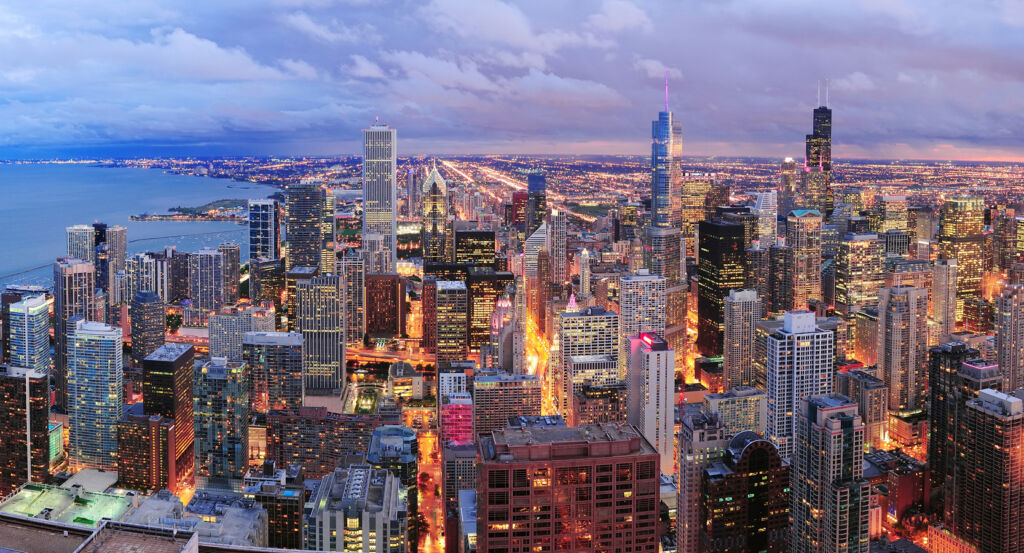
Why you should experience 15th Street in Chicago, Illinois.
15th Street is a resolute corridor where Pilsen's industrial heritage, immigrant legacy, architectural character, and ongoing reinvention converge along one of the neighborhood's northern gateways.
Extending through the northern edge of Pilsen between the South Branch of the Chicago River and Western Avenue, 15th Street links former industrial districts, historic residential blocks, transportation infrastructure, and longstanding neighborhood institutions that collectively reflect more than a century of urban evolution. The streetscape transitions from imposing brick warehouses and rail embankments to finely detailed masonry residences, neighborhood storefronts, and tree-lined blocks, revealing how manufacturing, commerce, and community development have continuously shaped the corridor. The corridor reaches its defining character where industrial resilience, architectural continuity, and cultural vitality reinforce one another across successive generations. The result is a corridor defined by enduring character, historic craftsmanship, and Pilsen's remarkable capacity for renewal.
What you should know about 15th Street.
15th Street is best known for developing alongside the rapid industrial expansion that transformed Chicago's Near West Side during the late nineteenth century. Construction of extensive freight infrastructure serving the Chicago, Burlington and Quincy Railroad, Pennsylvania Railroad, and other regional carriers established the surrounding district as a major center for warehousing, manufacturing, and wholesale distribution. Completion of the Chicago Sanitary and Ship Canal in 1900 reshaped commercial transportation throughout the area by strengthening freight connections between Chicago's rail network and inland waterways, while nearby factories and industrial plants accelerated economic growth. During the twentieth century, investment by the Chicago Department of Transportation, regional planning agencies, and municipal infrastructure programs modernized viaducts, streets, bridges, and utility corridors while preserving the street's strategic role within the city's transportation network. Together, railroad expansion, canal engineering, industrial development, and infrastructure investment established 15th Street as one of Pilsen's defining historic corridors.
Residential and commercial construction completed between the 1880s and 1920s introduced substantial Italianate, Romanesque Revival, Classical Revival, and Chicago School buildings distinguished by decorative brickwork, limestone detailing, pressed-metal cornices, and heavy timber structural systems. The surrounding district became an important center for food processing, wholesale trade, metalworking, and freight logistics, supporting thousands of industrial jobs that influenced the long-term growth of nearby communities. Ongoing collaboration among preservation organizations, municipal agencies, neighborhood development groups, and private investment continues supporting adaptive reuse projects, façade rehabilitation, streetscape improvements, and stewardship of the area's historic industrial architecture. Together, architectural craftsmanship, economic history, preservation leadership, and sustained reinvestment explain why 15th Street remains one of Chicago's most historically significant urban corridors.
How to fold 15th Street into your trip.
15th Street works as an exploration of Chicago's industrial history, riverfront renewal, and contemporary creative landscape.
Begin at Canal Origins Park, where interpretive exhibits overlooking the Chicago Sanitary and Ship Canal introduce the engineering achievements that reshaped both the neighborhood and the city before naturally leading eastward. Continue to Ping Tom Memorial Park, where expansive riverfront landscapes and skyline views reveal how former industrial land has been thoughtfully reimagined for public enjoyment before carrying the experience toward its conclusion. Conclude at the 16th Street Murals, where grand public artworks transform historic industrial infrastructure into one of Chicago's most compelling expressions of contemporary creativity. The progression moves naturally from engineering history to riverfront renewal before concluding with a vivid celebration of artistic reinvention.
Where your story begins.
Foresyte Travel reveals places that feel extraordinary long before you arrive.
Experience premium editorial crafted for luxury travelers.