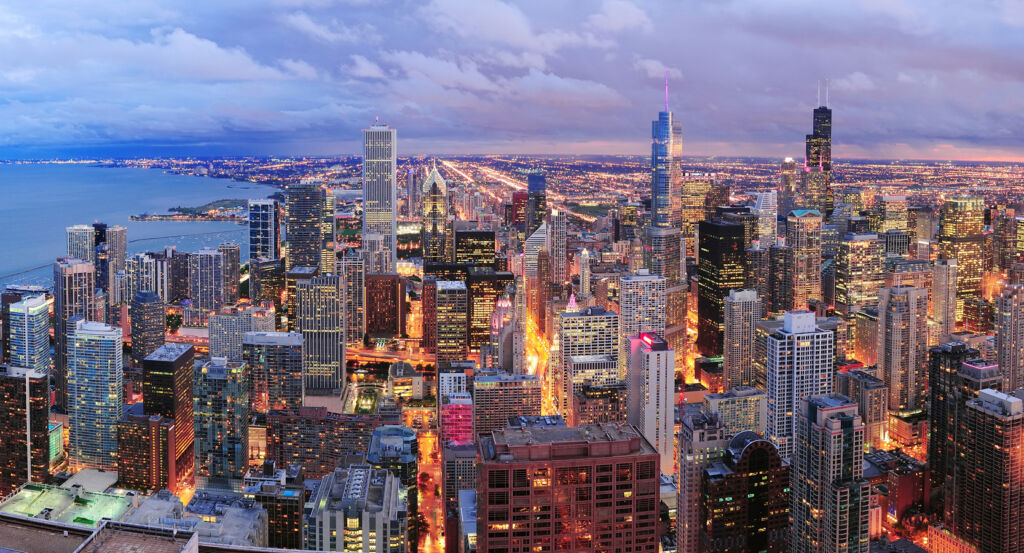
Why you should experience 31st Street in Chicago, Illinois.
31st Street is a spirited corridor where Bridgeport's industrial heritage, lakefront connections, neighborhood traditions, and Chicago's South Side history converge along one of the city's defining east-west streets.
Running through Bridgeport between the South Branch of the Chicago River and Lake Michigan, 31st Street connects historic residential blocks, transportation infrastructure, neighborhood institutions, riverfront landscapes, and civic destinations that together reflect generations of steady urban evolution. Block after block reveals another expression of the corridor's character as classic Chicago brick cottages, enduring commercial buildings, historic railroad infrastructure, mature boulevard plantings, and carefully maintained streetscapes create an environment shaped by craftsmanship, commerce, and civic ambition. The corridor reaches its defining character where industrial legacy, neighborhood continuity, and waterfront access create one of the South Side's most distinctive urban experiences. The result is a corridor defined by resilient character, architectural continuity, and Bridgeport's enduring contribution to Chicago's development.
What you should know about 31st Street.
31st Street is best known for serving as a historic transportation corridor linking the South Branch of the Chicago River, the Illinois and Michigan Canal corridor, and Chicago's expanding lakefront during the city's rapid industrial growth in the nineteenth and twentieth centuries. Construction of the 31st Street Bridge created a vital crossing over the South Branch while nearby freight rail corridors operated by the Pennsylvania Railroad, the New York Central Railroad, and other major railroads established the avenue as an important connection between manufacturing districts and regional markets. The corridor also benefited from the enormous economic influence of the nearby Union Stock Yard, established in 1865, whose industries attracted successive waves of Irish, Lithuanian, Polish, Bohemian, and Italian immigrants that shaped Bridgeport's enduring residential character. Continued investment by the Chicago Department of Transportation, planning initiatives from the Chicago Department of Planning and Development, and modernization associated with Burnham Park and the city's lakefront have strengthened accessibility while preserving the avenue's longstanding transportation role. Together, bridge construction, freight rail infrastructure, industrial expansion, immigration, and coordinated planning established 31st Street as one of Chicago's defining South Side corridors.
Completion of 31st Street Harbor in 2012 introduced one of the largest public marina facilities on Lake Michigan, adding hundreds of boat slips, modern recreational amenities, and expanded shoreline access as part of Chicago's continuing lakefront improvements. Nearby redevelopment of former industrial properties has encouraged adaptive reuse, new recreational spaces, and environmental restoration while preserving important elements of the corridor's transportation heritage. Collaboration among the Chicago Park District, the City of Chicago, neighborhood organizations, and preservation advocates continues supporting accessibility improvements, public space investment, shoreline stewardship, and commercial revitalization throughout the surrounding area. Together, waterfront investment, adaptive reuse, environmental restoration, and sustained civic leadership explain why 31st Street remains one of the South Side's most dynamic transportation corridors.
How to fold 31st Street into your trip.
31st Street works as an exploration of Bridgeport's industrial legacy, evolving waterfront, and architectural character.
Begin at Bridgeport Art Center, where the adaptive reuse of a grand industrial warehouse introduces the neighborhood's transformation from manufacturing center to creative destination before naturally leading east along the corridor. Continue to 31st Street Harbor, where expansive marina facilities, landscaped promenades, and sweeping views across Lake Michigan reveal the avenue's enduring relationship with Chicago's waterfront before carrying the experience toward its conclusion. Conclude at Burnham Park, where Daniel Burnham's celebrated lakefront vision provides a memorable finale that unites recreation, landscape design, and public access while reflecting the remarkable evolution of 31st Street across more than a century of Chicago history. The progression moves naturally from industrial reinvention to waterfront vitality before concluding within one of the city's defining public landscapes.
Where your story begins.
Foresyte Travel reveals places that feel extraordinary long before you arrive.
Experience premium editorial crafted for luxury travelers.