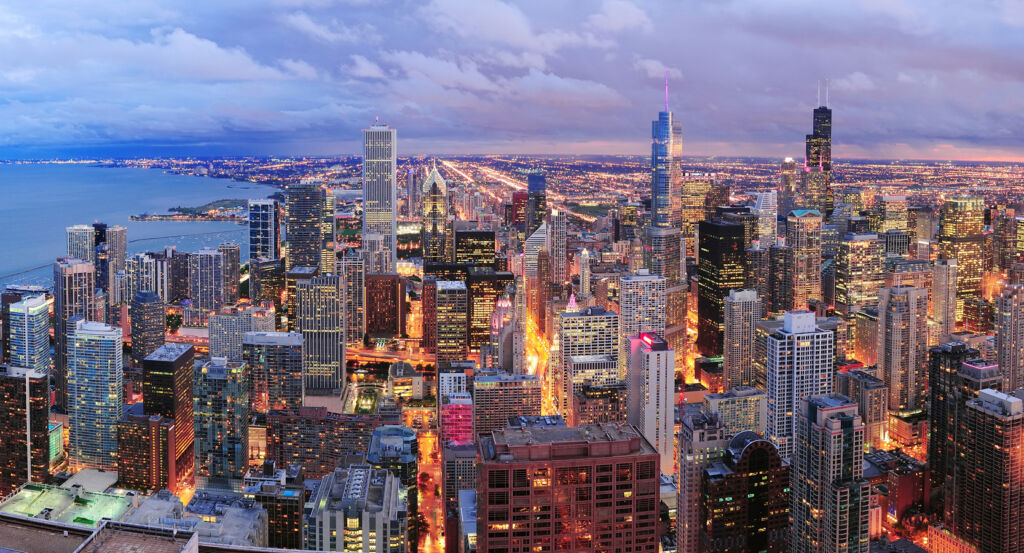
Why you should experience 45th Street in Chicago, Illinois.
45th Street is a distinguished corridor where Bronzeville's cultural legacy, architectural heritage, neighborhood institutions, and Chicago's South Side history converge along one of the community's defining east-west streets.
Running through Bronzeville between Wentworth Avenue and Lake Park Avenue, 45th Street connects historic residential blocks, churches, cultural institutions, neighborhood parks, and enduring commercial pockets that together reflect more than a century of South Side evolution. Block after block reveals another expression of the corridor's character as stately greystones, early twentieth-century apartment buildings, decorative brick façades, mature boulevard landscapes, and carefully preserved streetscapes create an environment shaped by craftsmanship, civic leadership, and artistic influence. The corridor reaches its defining character where residential continuity, cultural achievement, and architectural character create one of Bronzeville's most rewarding urban settings. The result is a corridor defined by architectural richness, cultural influence, and the enduring legacy of one of Chicago's most significant historic communities.
What you should know about 45th Street.
45th Street is best known for developing during Bronzeville's rapid expansion in the late nineteenth and early twentieth centuries, when the neighborhood evolved into one of the nation's foremost centers of African American commerce, culture, and civic leadership following the Great Migration. Growth surrounding the corridor accelerated through expansion of the Illinois Central Railroad commuter service, operation of today's 47th Street and 51st/53rd Street (Hyde Park) stations on the Metra Electric District, and construction of the South Side Elevated Railroad, creating regional connections that encouraged sustained residential and commercial development. Between the 1890s and 1930s, builders introduced substantial greystone residences, Classical Revival apartment buildings, Romanesque churches, and handsome brick flats that continue defining the corridor's architectural identity. Preservation initiatives led by the Chicago Department of Planning and Development, investment by the Chicago Department of Transportation, and neighborhood revitalization efforts have strengthened historic streetscapes while reinforcing Bronzeville's architectural legacy. Together, residential expansion, commuter rail investment, architectural craftsmanship, preservation, and coordinated planning established 45th Street as one of Bronzeville's defining neighborhood corridors.
During the twentieth century, the surrounding community became home to influential newspapers including the Chicago Defender, whose reporting shaped national awareness of the Great Migration and African American civic life across the United States. Organizations including the Bronzeville Historical Society, the Quad Communities Development Corporation, and neighborhood preservation advocates have worked alongside municipal agencies to restore historic buildings, encourage economic reinvestment, and preserve the community's architectural character. Decorative terra cotta, carved limestone entrances, ornamental cornices, and richly detailed masonry continue reflecting the exceptional quality of construction that distinguished Bronzeville's residential development during its formative decades. Together, influential journalism, preservation leadership, architectural stewardship, and sustained neighborhood investment explain why 45th Street remains one of Bronzeville's most enduring residential corridors.
How to fold 45th Street into your trip.
45th Street works as an exploration of Bronzeville's architectural heritage, cultural history, and artistic legacy.
Begin at The Forum, where one of Chicago's finest nineteenth-century assembly halls introduces Bronzeville's longstanding tradition of civic gatherings and cultural expression before naturally leading through the surrounding neighborhood. Continue to Victory Monument, where one of the city's most significant public memorials honors the accomplishments of the Eighth Regiment of the Illinois National Guard while deepening appreciation for Bronzeville's civic history before carrying the experience toward its conclusion. Conclude at Bronzeville Walk of Fame, where commemorative installations celebrating writers, musicians, athletes, and civic leaders provide a fitting finale that reflects the remarkable influence Bronzeville has exerted on Chicago and the nation. The progression moves naturally from civic architecture to public remembrance before concluding with a celebration of the community's enduring cultural contributions.
Where your story begins.
Foresyte Travel reveals places that feel extraordinary long before you arrive.
Experience premium editorial crafted for luxury travelers.