
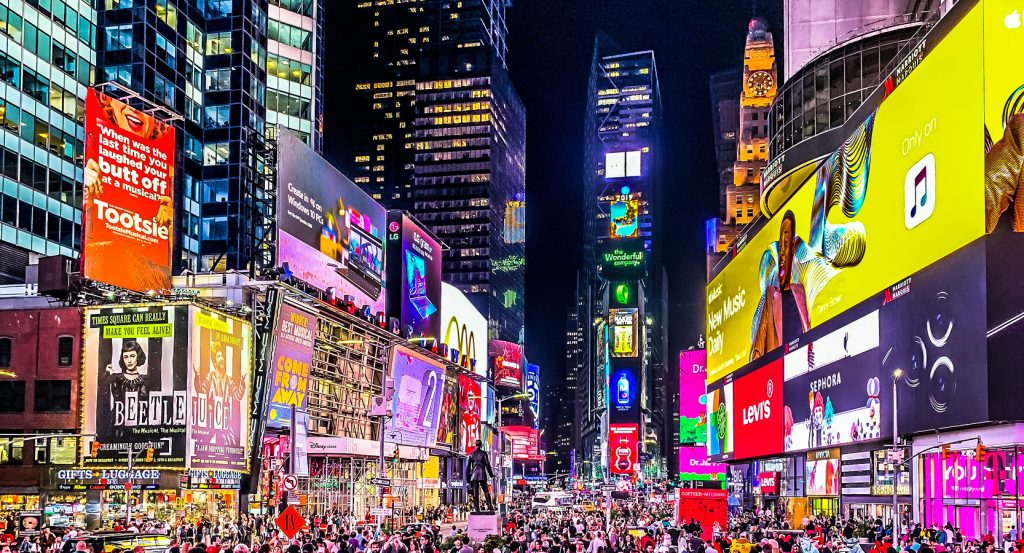
Why you should experience One Times Square in New York, NY.
One Times Square is a defining Midtown landmark where Times Square's commercial performance, global media infrastructure, New Year's Eve traditions, digital advertising evolution, and dense urban entertainment economy converge at one of the most visually recognizable intersections in the world.
Set at the intersection of Broadway, 7th Avenue, and 42nd Street in the heart of Times Square, this slender early 20th century skyscraper anchors the northern end of Duffy Square and directly faces the illuminated canyon of LED billboards that define the district's contemporary identity. Originally completed in 1904 as the headquarters of The New York Times, the building helped shift the surrounding area from a theater district into a media and commercial hub, catalyzing the transformation of Longacre Square into Times Square itself. Over time, the structure became synonymous with mass media display innovation, eventually transitioning from newspaper headquarters into one of the most valuable advertising real estate assets in the world, with its massive electronic billboards visible to hundreds of thousands of daily pedestrians. The building's base also hosts the annual New Year's Eve ball drop tradition, where the illuminated sphere descends from its rooftop flagpole in a globally televised countdown that draws over a billion viewers annually. The result is a destination defined by media performance, urban density, and one of the most globally recognized intersections in contemporary culture.
What you should know about One Times Square.
One Times Square is best known for being completed in 1904 as the original headquarters of The New York Times, which prompted the renaming of Longacre Square to Times Square after the newspaper relocated just a few years later in 1913, marking the building as the catalyst for one of the most famous commercial districts in the world. Designed by architect Cyrus L. W. Eidlitz, the 25 story steel framed skyscraper represented an early era of New York vertical construction, later evolving from office use into a structure almost entirely dedicated to exterior advertising signage, reflecting the district's shift toward media commercialization and experiential urban branding.
The building became structurally and culturally redefined throughout the 20th and 21st centuries, as interior office usage declined and exterior LED and digital billboard installations expanded to cover nearly every facade surface, turning the structure into a vertical advertising platform generating some of the highest per square foot advertising revenue in the world. It also serves as the host site for the iconic New Year's Eve ball drop, a tradition that began in 1907 and has continued with multiple redesigned versions of the illuminated ball, now tracked live by global audiences each December 31st. Continuous upgrades to lighting infrastructure, media screens, and structural reinforcement have preserved the building's role as both a historic origin point of Times Square and a modern centerpiece of global broadcast culture.
How to fold One Times Square into your trip.
One Times Square works as the central focal point of a Midtown itinerary built around theater, public plazas, and major commercial landmarks.
Begin at Bryant Park, where seasonal programming, public seating, and the New York Public Library establish a quieter civic contrast to the energy of Midtown. Continue north along 6th Avenue into Times Square, entering the full visual density of LED billboards, street performers, and theater marquees that define the district. Arrive at One Times Square to experience the epicenter of New Year's Eve broadcasting culture and one of the most heavily advertised buildings on Earth. Continue onward to the Broadway Theater District, where historic performance venues such as the New Amsterdam Theatre and Richard Rodgers Theatre anchor the world's most influential stage entertainment ecosystem. Conclude at Rockefeller Center, where art deco architecture, seasonal installations, and Top of the Rock views provide a structured architectural counterpoint to the commercial intensity of Times Square. The progression moves from civic park space to immersive media corridor to broadcast landmark to theatrical district, revealing why One Times Square remains one of the most symbolically loaded buildings in global urban culture.
Where your story begins.
Foresyte Travel reveals places that feel extraordinary long before you arrive.
Experience premium editorial crafted for luxury travelers.







































































































