
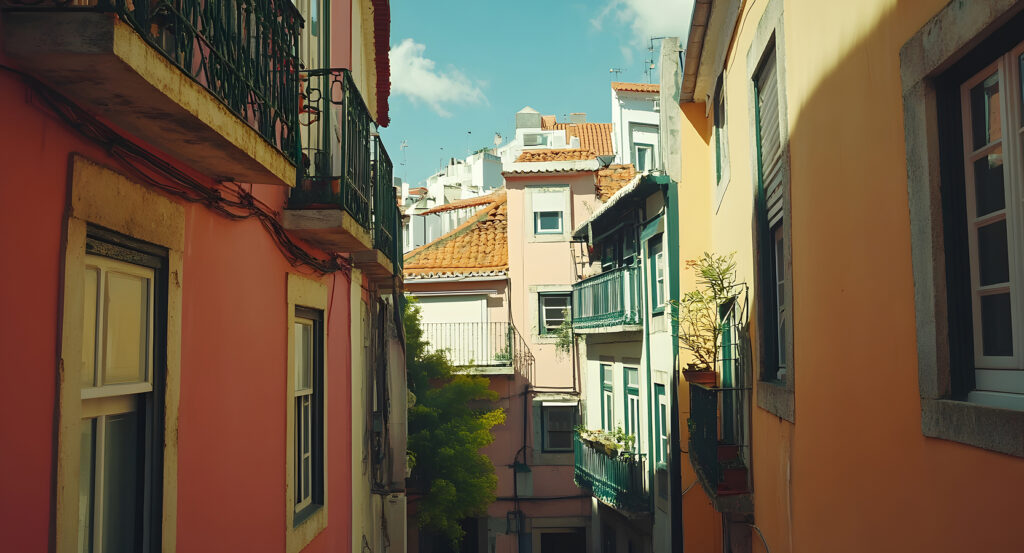
Why you should experience Fado Museum in Lisbon, Portugal.
Fado Museum is Lisbon's pulse preserved in song.
Tucked within a restored 19th-century warehouse at the edge of Alfama, it feels less like an institution and more like a confession, a place where Lisbon's most vulnerable voice still echoes through time. Inside, the air hums with the sound of guitars and saudade, that untranslatable ache that sits between longing and grace. The walls shimmer with black-and-white portraits of singers mid-verse, eyes closed, mouths open, surrendering to the emotion that defines a nation. Dimly lit rooms lead you through the story of fado, from the narrow taverns where it was born to the grand stages it later conquered. Every exhibit feels intimate, almost sacred; recordings drift from hidden speakers, overlapping like memories carried on wind. It's impossible to leave unmoved. Fado is Lisbon, not the city of postcards, but the city of heartbeats, heartbreaks, and hope. And here, in Alfama, its soul is still singing.
What you should know about Fado Museum.
The museum opened in 1998 as a tribute to one of Portugal's most intangible treasures, fado, recognized by UNESCO as part of the world's intangible cultural heritage.
Its home, a former water pumping station, was chosen with intention: a space that once gave Lisbon water now gives it voice. The museum's curation is less chronological and more resonant, designed to let sound lead memory. The journey begins in the dim light of early Alfama, where fado first rose from sailors' laments and the murmurs of dockworkers, and expands outward through rooms devoted to its interpreters. You'll find Amália Rodrigues' stage gowns, handwritten lyrics by Alfredo Marceneiro, and the iconic twelve-string Portuguese guitar that gives fado its trembling clarity. But beyond objects, the architecture itself carries meaning: arched ceilings echo the intimacy of old taverns, while the main exhibition hall's layout spirals like a melody, circling back toward silence. Few visitors realize that beneath the museum lies an active archive, preserving thousands of recordings, film reels, and manuscripts, Lisbon's living vault of sound. The experience ends not with an exhibit but with a projection room, where the lights dim and you're enveloped by the voices of fado itself, raw, unguarded, eternal.
How to fold Fado Museum into your trip.
To visit Fado Museum is to give Lisbon your full attention, and to let it speak back.
Walk down from the Alfama hills toward Largo do Chafariz de Dentro, where the museum's ochre façade stands beside the curve of the tramline. Go in the late afternoon, when the light softens and the neighborhood outside hums with music. Start slowly; let the first sounds wash over you before moving through the exhibits. Don't rush, the experience unfolds like a song, verse by verse. Sit in the listening room for a while; the audio selections change daily, but each voice carries the same gravity, a story sung. Before leaving, step out onto the terrace overlooking the Tagus, where the sound of distant guitars from Alfama cafés merges with the breeze. Then, as night falls, follow that sound. Walk uphill toward one of the nearby casas de fado, where dinner begins late and songs begin later. When the lights dim and the first notes tremble through the air, you'll realize the museum wasn't an ending, it was an overture.
Where your story begins.
Foresyte Travel reveals places that feel extraordinary long before you arrive.
Experience premium editorial crafted for luxury travelers.














































































































