Why Barton Creek matters.
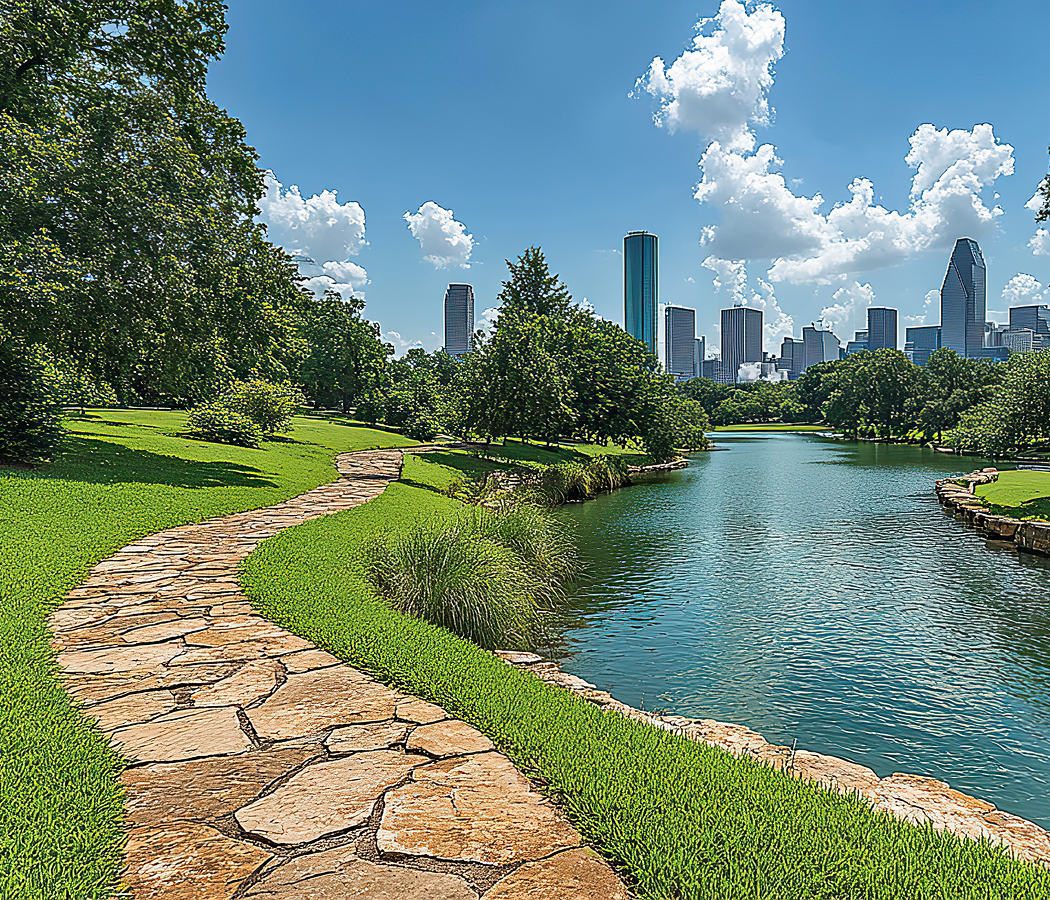
The Barton Creek in Austin flows like the city's lifeline, a ribbon of clear, spring-fed water winding through limestone cliffs and wild greenbelts, connecting Austin's heart to its untamed roots.
It begins in the Hill Country, carving its way toward Lady Bird Lake, passing through shaded canyons, swimming holes, and tranquil stretches where turtles bask and dragonflies hover above the current. Along its path lies the famed Barton Creek Greenbelt, among the most beloved outdoor escapes in Texas, a place where locals hike, climb, kayak, and swim, often all in the same afternoon. When the creek runs high after a rain, its cascades and pools awaken with movement; when it slows, the stillness brings a meditative calm that feels a world away from downtown's hum. It's a natural sanctuary that reflects Austin's dual spirit, equal parts wild adventure and slow, sunlit ease.
What defines Barton Creek.
The Barton Creek watershed spans over 120 square miles, making it among the largest and most ecologically vital systems in Central Texas.
Its flow is sustained by the Edwards Aquifer, the same underground reservoir that feeds Barton Springs Pool, linking both landmarks in a delicate hydrological dance. The creek's limestone bed reveals fossils millions of years old, and its surrounding cliffs have drawn climbers and explorers for generations. Indigenous peoples once camped along its banks, using its dependable water source as a seasonal gathering site long before Austin existed. In modern times, Barton Creek became a rallying cry for environmentalists, most notably during the 1990s “Save Our Springs” movement, which fought to protect it from urban overdevelopment. That activism not only preserved the creek's clarity but also helped define Austin's character as a city deeply tied to its natural heritage. Every ripple here carries a story, of geology, culture, and resilience intertwined.
How Barton Creek fits.
To experience Barton Creek in all its beauty, start along the Barton Creek Greenbelt, accessible from multiple trailheads across South Austin.
The Gus Fruh, Twin Falls, and Sculpture Falls access points each offer distinct personalities, from cliff-jumping ledges to serene swimming basins surrounded by oak and juniper. For a peaceful morning, bring a paddleboard or kayak and launch near Zilker Metropolitan Park, where the creek widens into calm, emerald channels perfect for exploring at your own pace. Hikers can follow the Greenbelt Trail for miles, weaving between shaded groves and open bluffs, with plenty of opportunities to stop for a dip. The best time to visit is late spring or after heavy rains when the water flow is strongest, though even in dry months, the shaded trails remain inviting. Pack water, wear sturdy shoes, and bring your curiosity, because every bend in Barton Creek offers something new: a secret pool, a hidden cave, or the rare quiet that makes Austin feel wild again.
Where your story begins.
Foresyte Travel reveals places that feel extraordinary long before you arrive.
Enjoy editorial crafted for luxury travelers.
Foresyte may earn a commission when you book.