
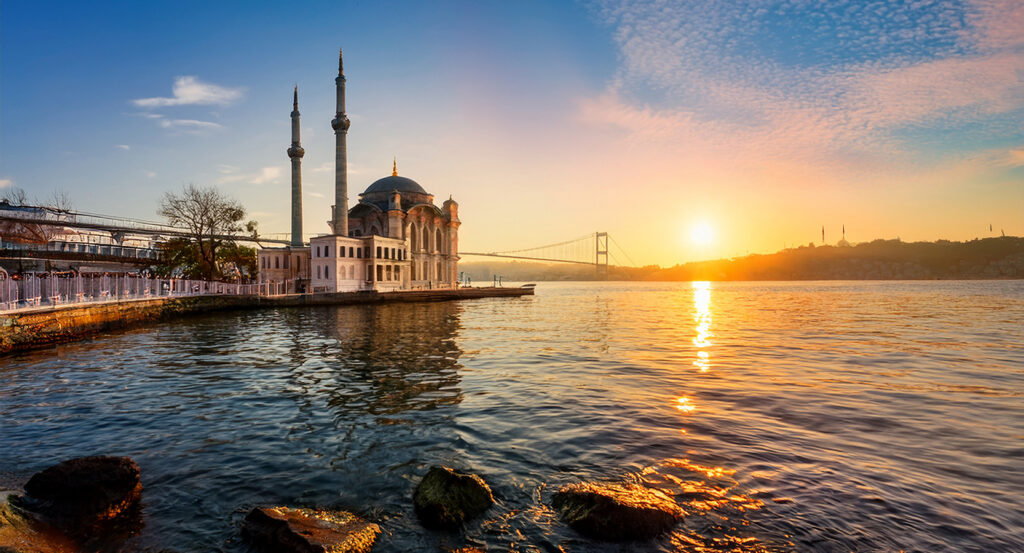
Why you should experience Anadoluhisarı in Istanbul, Türkiye.
The Anadolu Fortress, or Anadoluhisarı, stands as one of Istanbul's most evocative relics, a medieval sentinel guarding the narrowest point of the Bosphorus.
Rising from the Asian shore opposite its larger European twin, Rumeli Fortress, its stone towers and ivy-clad walls seem to whisper across the water, telling stories of empire, conquest, and endurance. The moment you approach, the air changes, the city's noise softens into the sound of waves lapping against ancient battlements. The fortress feels frozen in time, its crumbling ramparts overlooking a panorama that hasn't lost its power to awe: the blue shimmer of the Bosphorus, fishing boats drifting by, the Fatih Sultan Mehmet Bridge arching overhead like a modern crown. Standing within these walls, you feel Istanbul's dual essence, East and West, old and new, forever intertwined. Anadolu Fortress isn't just a ruin; it's a reminder that the city's strength has always come from what connects its shores.
What you should know about Anadoluhisarı.
Built in 1395 by Ottoman Sultan Bayezid I, nearly six decades before the conquest of Constantinople - Anadolu Hisarı was the empire's first foothold on the Bosphorus.
Strategically placed at the narrowest part of the strait, it was constructed to control naval traffic and prepare for the siege that would one day change the world. Its completion marked the beginning of Ottoman dominance over the Bosphorus, allowing Bayezid's fleet to block Byzantine supply lines. The fortress's position was later mirrored by the Rumeli Fortress on the opposite bank, built by Sultan Mehmet the Conqueror in 1452. Together, the two strongholds turned the Bosphorus into an Ottoman strait. The Anadolu Fortress once included a small garrison, wooden houses, and a watchtower, parts of which still stand today. Despite centuries of earthquakes and sieges, its original walls remain remarkably intact. Few realize that its name, “Anadolu,” meaning “Anatolian”, signifies its place as the guardian of Asia, watching over the city's passage into history.
How to fold Anadoluhisarı into your trip.
To feel the true spirit of the Bosphorus, begin your exploration at Anadolu Hisarı, it's one of the few places where Istanbul's medieval and modern eras coexist in harmony.
Arrive by ferry or car and stroll through the quiet village that surrounds the fortress; its narrow lanes are lined with wooden Ottoman houses and tea gardens shaded by fig trees. Climb the nearby hill for a panoramic view, the fortress below, the Bosphorus glittering ahead, and Rumeli Fortress visible across the water like a stone reflection. After exploring the outer walls, stop by one of the seaside cafés nearby for Turkish tea or fresh-caught fish, the view alone is worth lingering for. Visit in the morning for solitude, or at sunset when the fortress walls glow honey-gold under the bridge's lights. This isn't a place for crowds or spectacle; it's for contemplation, for standing quietly where empire once stood watch. The Anadolu Fortress on the Bosphorus isn't just history, it's endurance carved in stone, watching over the water that still defines Istanbul's heart.
Where your story begins.
Foresyte Travel reveals places that feel extraordinary long before you arrive.
Experience premium editorial crafted for luxury travelers.





































































































