
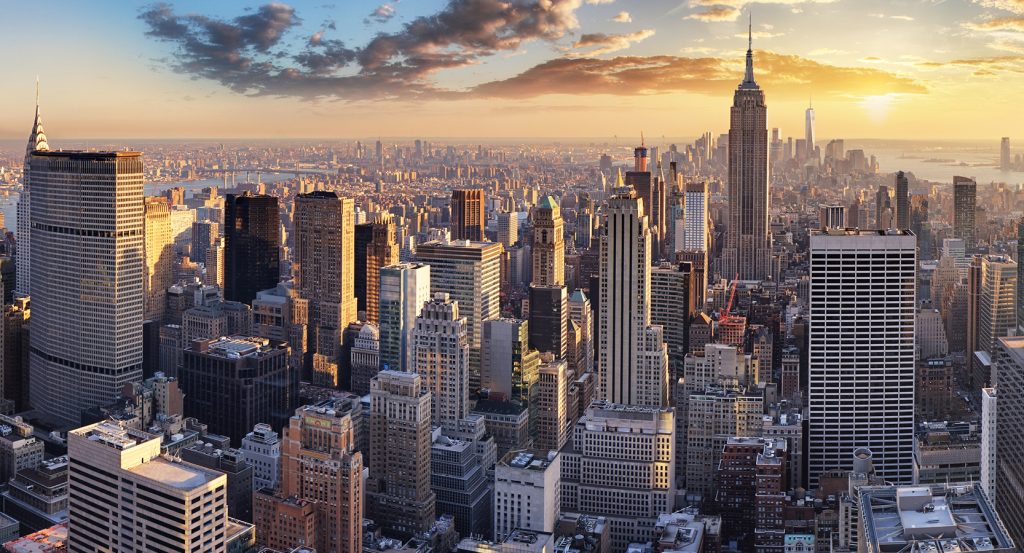
Why you should experience Broadway Plaza Hotel in New York, NY.
Broadway Plaza Hotel is a cinematic hotel where NoMad's entertainment history, mercantile energy, intimate scale and creative culture converge on a Broadway address connected to the birth of commercial motion pictures.
Set along Broadway near West 27th Street and just steps from The Jazz Gallery, the hotel occupies a 13-story building designed by Elfenbein/Cox, completed in 1991 and converted from offices into a hotel in 2000. The property stands within the Madison Square North Historic District, designated in 2001, placing its comparatively modern architecture among the cast-iron storefronts, loft buildings and former commercial structures that chart Broadway's evolution through successive generations of Manhattan commerce. A 2016 exterior redesign reshaped the street presence through revised storefronts, signage, lighting and a new entrance canopy, sharpening the building's relationship with the Broadway corner. The result is a hotel whose restrained architecture and intimate proportions place a contemporary hospitality layer within NoMad's unusually compressed chronology of commerce, entertainment and creative production.
What you should know about Broadway Plaza Hotel.
Broadway Plaza Hotel is best known for occupying the address where the Holland Brothers opened the first commercial Kinetoscope parlor on April 14, 1894, turning 1155 Broadway into one of the foundational sites in the history of motion-picture exhibition. Ten Edison Kinetoscopes were arranged in two rows of five, with patrons paying 25 cents to view one row of films, while each cabinet presented moving images individually through a peephole instead of projecting them collectively onto a screen. The program drew from films produced at Edison's Black Maria studio, and the commercial success of the format helped propel Kinetoscope parlors across the United States before projected cinema rapidly overtook the single-viewer technology after 1895. More than a century later, the address operates as a 69-room independent hotel, creating an unusually direct continuity between one of commercial cinema's earliest experiments and a contemporary Broadway hospitality business.
The property completed another major reinvention in April 2025, renovating all guestrooms, bathrooms and corridors while introducing eight accommodations with private outdoor terraces. Approximately 65 percent of the room inventory now carries views toward the Empire State Building, and the accommodation program extends from Deluxe Queen and King rooms into junior suites, two-king configurations accommodating as many as six guests and terrace categories specifically oriented toward the Midtown skyline. Modern-art reproductions continue throughout the property, preserving a visual character centered on contemporary imagery while the new terraces give the small 69-key hotel an unusually strong outdoor component for this stretch of Broadway. The combination of the 2025 renovation, eight private terraces, unusually large multi-bed configurations and direct Empire State Building sightlines gives Broadway Plaza Hotel a contemporary character entirely separate from the remarkable cinematic history beneath its address.
How to fold Broadway Plaza Hotel into your trip.
Broadway Plaza Hotel works as the anchor for an afternoon tracing jazz experimentation, public-space history and early skyscraper engineering through the tightly layered cultural geography of NoMad.
Begin at The Jazz Gallery, founded in 1995 by Dale Fitzgerald, vocalist Lezlie Harrison and trumpeter Roy Hargrove as a home for musicians and composers, before moving from its original SoHo space to 1158 Broadway in 2012 and developing a program that now presents more than 400 shows annually alongside commissions, residencies, mentoring and rehearsal support. Continue to Madison Square Park, officially opened in 1847 and redesigned by William Grant and Ignatz Pilat in 1870, where the Statue of Liberty's arm and torch stood from 1876 to 1882 to raise money for the statue's pedestal and the United States' first public Christmas tree appeared in 1912. Conclude at Flatiron Building, where D.H. Burnham & Co. used steel-frame construction to raise the former Fuller Building in 1902 on the triangular parcel formed by Broadway and 5th Avenue, creating one of the defining architectural experiments of the early Manhattan skyscraper era. The progression moves from Hargrove, Harrison and Fitzgerald's contemporary jazz incubator through a public square associated with the Statue of Liberty and early civic performance into Burnham's steel-framed tower, revealing the unusually concentrated history of performance, public culture and architectural experimentation surrounding Broadway Plaza Hotel.
Where your story begins.
Foresyte Travel reveals places that feel extraordinary long before you arrive.
Experience premium editorial crafted for luxury travelers.







































































































