Why Buffalo Bayou matters.
Buffalo Bayou is a renowned Houston waterway where the city's founding, ecological diversity, and continual reinvention converge along one of Texas' most historically significant landscapes.
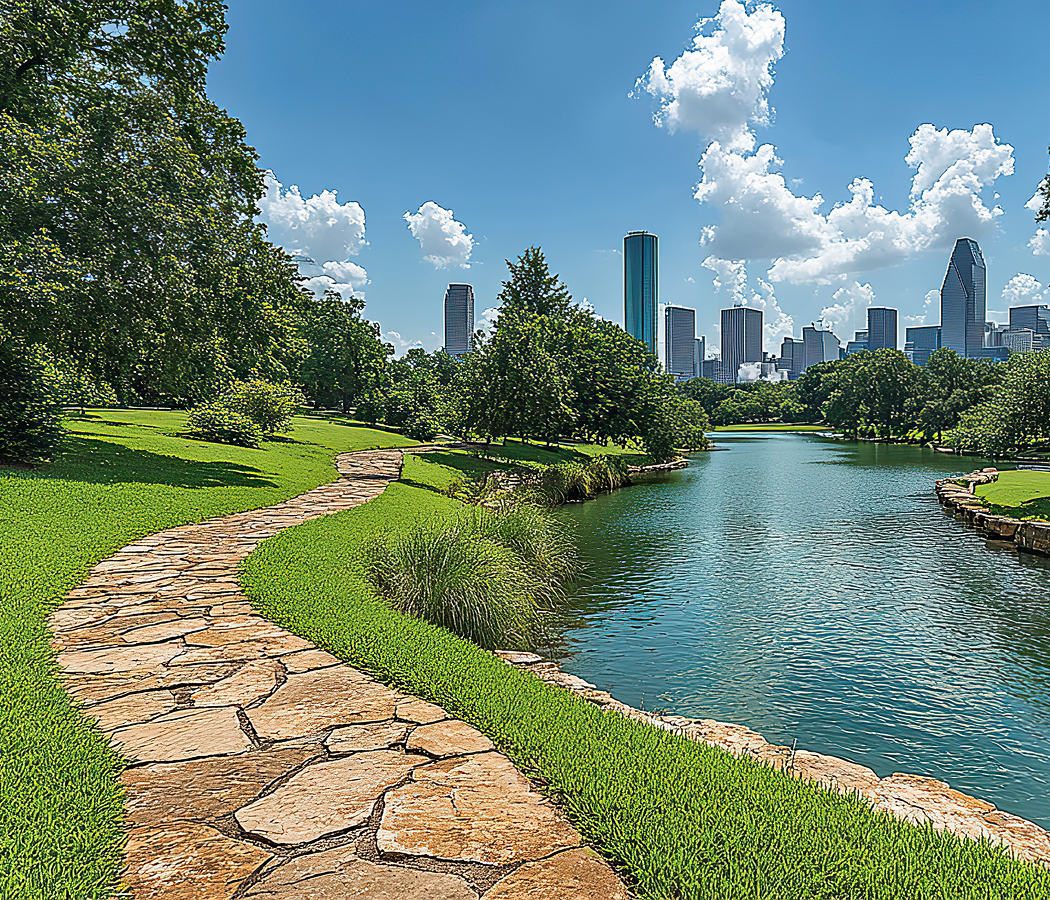
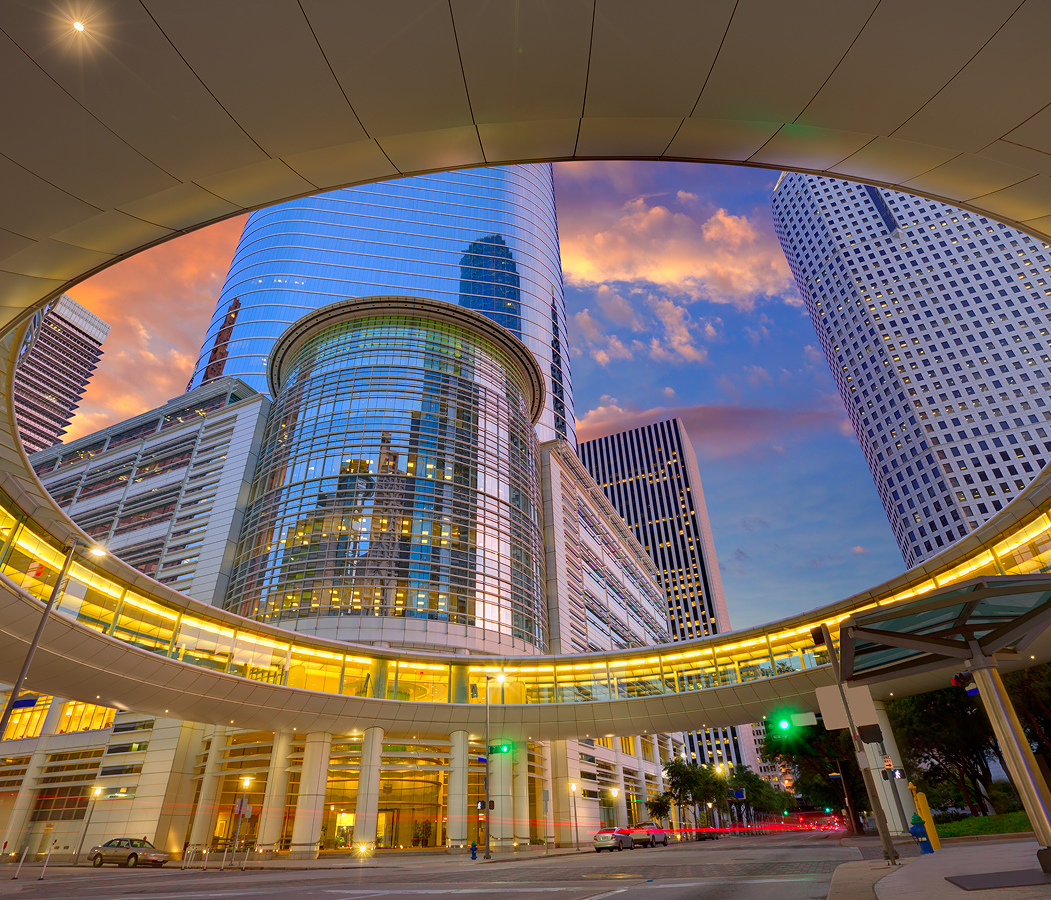
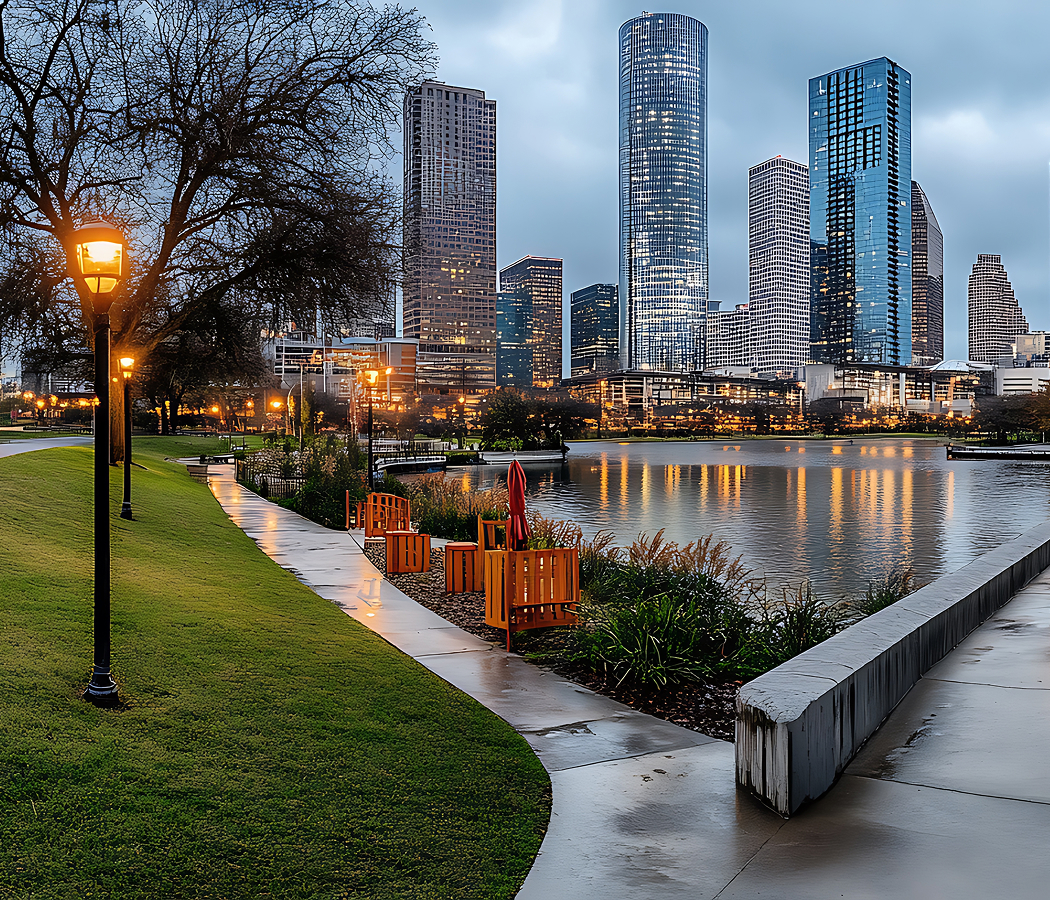
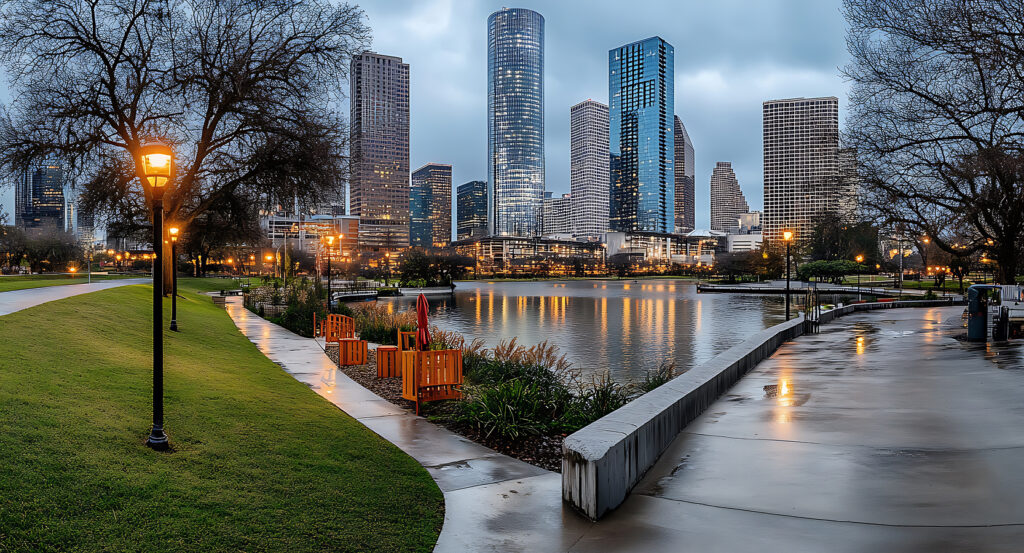
Running through Downtown between Memorial and East Downtown, this iconic bayou connects award-winning parks, historic neighborhoods, cultural institutions, skyline overlooks, recreational trails, and wildlife habitats that have shaped Houston's character for nearly two centuries. Forested banks, dramatic bridges, restored wetlands, public art, and expansive green spaces create a landscape where natural beauty and urban life exist in remarkable harmony. Long before Houston became a global metropolis, Buffalo Bayou served as the transportation corridor that made the city's founding possible while continuing to influence its growth, commerce, and recreation. The result is a waterway defined by history, resilience, and enduring civic significance.
What defines Buffalo Bayou.
Buffalo Bayou is best known for becoming the site where Augustus Chapman Allen and John Kirby Allen founded the City of Houston in 1836 after purchasing 6,642 acres along its banks, establishing the settlement that would become the largest city in Texas.
The Allen brothers completed their 6,642-acre purchase in 1836, recognizing the bayou's strategic value as a navigable transportation corridor connecting the interior of Texas with the Gulf of Mexico. Their decision established Houston on land that would rapidly develop into the commercial heart of the Republic of Texas before evolving into one of the world's great energy and port cities. Throughout the following generations, Buffalo Bayou supported shipping, commerce, industry, recreation, and environmental restoration while remaining inseparable from Houston's identity. Few waterways in America are so directly connected to the founding, growth, and continued evolution of a major city.
How Buffalo Bayou fits.
Buffalo Bayou works as an exploration of the landscapes, history, and public spaces that gave birth to modern Houston.
Begin at Buffalo Bayou Park, where beautifully restored trails, public art, and skyline views immediately establish the waterway's extraordinary civic importance. Continue to Allen's Landing, where the city's historic birthplace reveals why the Allen brothers selected Buffalo Bayou as the foundation for Houston in 1836. From there, conclude at Sabine Street Bridge, where panoramic views across the bayou and downtown skyline provide a memorable finale to an afternoon shaped by history, nature, and architecture. Along the route, native wetlands, pedestrian bridges, historic landmarks, public art installations, kayaking launches, recreational trails, and scenic overlooks demonstrate how Buffalo Bayou continues to connect Houston's remarkable past with its energetic present. The progression moves naturally from celebrated urban parkland to the city's birthplace before concluding with one of Houston's defining skyline vistas, revealing why Buffalo Bayou remains the most important natural landmark in the city's history.
Where your story begins.
Foresyte Travel reveals places that feel extraordinary long before you arrive.
Enjoy editorial crafted for luxury travelers.
Foresyte may earn a commission when you book.