Why Chez Pipo matters.
Chez Pipo is a historic Niçoise restaurant where Le Port's working-class culinary heritage meets the traditions of wood-fired socca, Mediterranean street food and the neighborhood dining culture that has preserved Nice's distinctive regional cuisine for generations.
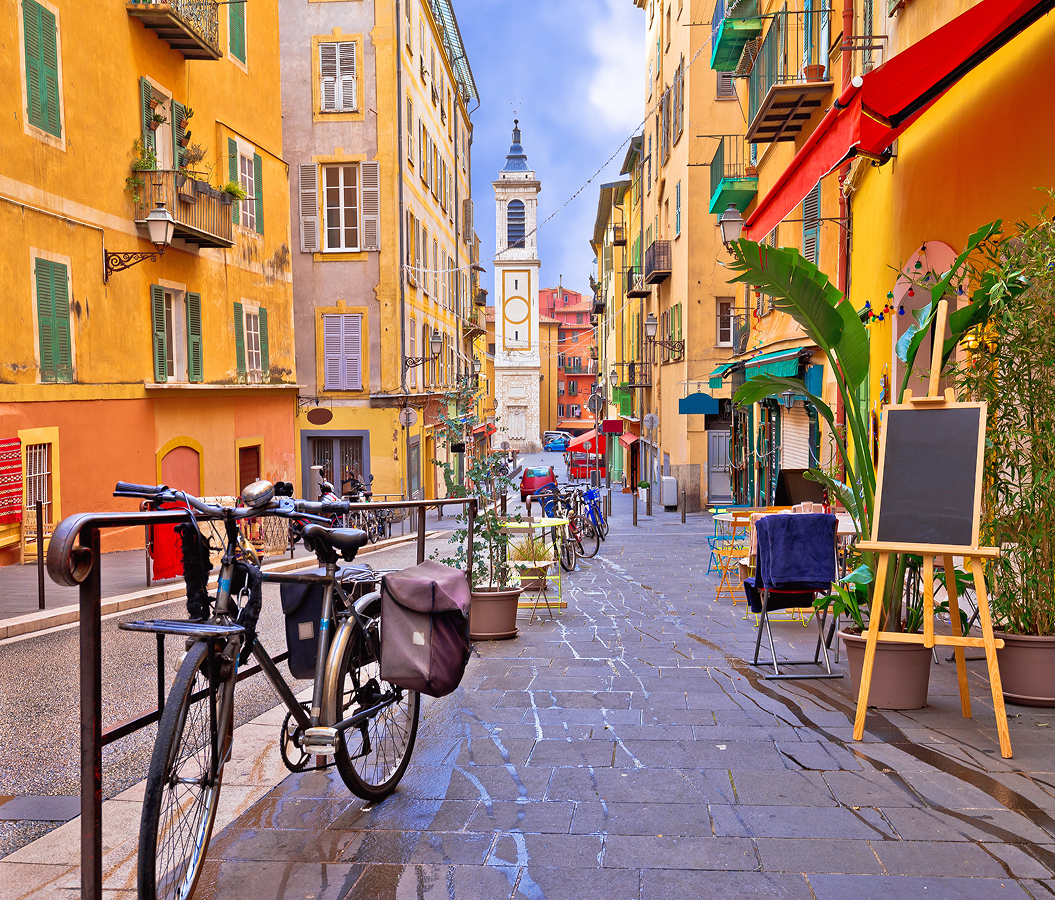
Situated on Rue Bavastro between Rue Arson and Rue Lascaris, a short distance from the commercial streets surrounding Port Lympia, the restaurant occupies a modest ground-floor premises within the dense residential fabric of Nice's historic harbor district. Its understated frontage opens into an intimate dining room organized around a substantial stone oven, with simple furnishings and closely arranged tables preserving the character of a traditional neighborhood eating house. The oven's masonry construction incorporates stone quarried in Biot, a Provençal town whose geological materials contribute to the structure's capacity to retain and distribute intense heat. An adjoining outdoor terrace extends the restaurant into the surrounding streetscape, establishing a direct relationship between the cooking activity inside and the social life of the neighborhood. The result is an enduring Niçoise dining establishment whose historic oven, intimate proportions and unpretentious physical character preserve the atmosphere of the city's traditional socca houses.
What defines Chez Pipo.
Chez Pipo is best known for preserving a distinctive chapter of Nice's working-class culinary history through a restaurant whose origins lie in the transformation of an early twentieth-century artisan workshop into a neighborhood socca establishment. The premises originally accommodated Établissements Folco, an ornamental ironworking business that operated until 1932, establishing the industrial foundations of a building subsequently devoted to one of the city's defining regional foods. In 1933, Françoise Otta, née Dalbera, began selling socca from the former workshop, becoming the first proprietor to establish the premises as a dedicated commercial outlet for the traditional chickpea preparation. Known locally as La Bimba, Otta operated the business until 1940, creating the foundation for the restaurant's enduring association with the culinary culture of Nice. Joseph Mazzone, nicknamed Pipo, subsequently assumed control and developed the establishment into a gathering place for residents of the surrounding harbor district. His contribution established the name through which the restaurant became known across the city, connecting the business to a recognizable local personality and the informal traditions of Niçoise hospitality. The restaurant expanded its offerings in 1945 by introducing pizza, becoming the first establishment in Nice to serve the Italian specialty and reflecting the longstanding cultural exchanges between the city and neighboring Liguria. Pipo also maintained the traditional practice of serving socca inside a small bread roll known as lou bout, preserving a substantial element of the inexpensive meals associated with local laborers. The restaurant's development coincided with a period when socca occupied an important place in the diets of dockworkers, fishermen and industrial employees, whose daily merenda, or afternoon snack, frequently consisted of the inexpensive chickpea preparation. The wider tradition had developed through generations of itinerant vendors, including the celebrated Theresa, who sold socca from a mobile brazier along the waterfront during the early twentieth century. During the 1960s, the dish faced declining popularity as changing dietary expectations increasingly associated traditional street foods with poverty and outdated eating habits. Chez Pipo became one of the relatively small number of establishments that preserved the preparation through this period, maintaining a direct connection with the culinary practices of the city's working population. Joseph Mazzone died on May 1, 1958, and his son Laurent Mazzone, known as Lolo, inherited the business, continuing the family's stewardship of the restaurant. Laurent discontinued pizza and concentrated the establishment's culinary character around socca and other regional preparations, reinforcing its association with the distinctive food traditions of Nice. His management continued until 1986, during which the restaurant developed a substantial following among residents, visiting performers, writers and public figures. Jacques Médecin, the influential mayor of Nice and an enthusiastic advocate of regional cuisine, became a regular patron, connecting the establishment to the political and cultural circles that promoted Niçoise gastronomic heritage. The restaurant's international reputation also developed through travel writing, including coverage in The New York Times on August 8, 1979, which introduced its traditional cooking methods to a broader audience. Steeve Bernardo entered the restaurant's history during the 1990s, working as a student waiter during weekends, school holidays and summer seasons. Raised in a family associated with the harbor district, Bernardo developed an early familiarity with the establishment through visits to his grandmother on Rue Lascaris. His subsequent education included engineering studies in Paris and a specialized master's degree from ESSEC Business School in 2004, followed by a management consulting career focused on Lean Manufacturing. Bernardo returned to Nice and acquired Chez Pipo on January 1, 2009, beginning another chapter in the restaurant's development. His stewardship preserved the historic cooking tradition and introduced a broader presentation of regional specialties, connecting the establishment's inherited culinary practices to the expectations of an increasingly international clientele. The business subsequently expanded beyond its original neighborhood location through a presence at Nice Côte d'Azur Airport, extending the recognition of its socca tradition into the region's principal international transportation gateway. Chez Pipo's significance rests on its transformation from an artisan workshop into a multigenerational culinary institution whose successive proprietors helped preserve and popularize one of Nice's most distinctive traditional foods.
Steeve Bernardo's approach to the restaurant centers on the preparation of socca as a shared culinary experience, preserving the essential relationship between intense heat, simple ingredients and immediate consumption. The traditional batter combines chickpea flour, water, olive oil and salt, creating a fluid mixture that develops its distinctive character through contact with a heavily heated cooking surface. Large circular copper pans distribute the batter into a thin layer, allowing the mixture to cook rapidly under the intense heat of a wood-fired oven. The combination of heated metal and direct radiant energy produces a golden surface marked by irregular blistering and darker roasted patches. Beneath the crisp exterior, the interior retains a softer consistency, establishing the contrast in texture that distinguishes carefully prepared socca. The cooking process requires close attention to the balance between browning and moisture, with the finished galette removed at the point when its surface has developed sufficient color and structural firmness. Individual portions are cut directly from the pan, preserving the irregular edges and rustic presentation associated with the traditional preparation. Black pepper introduces a sharp aromatic contrast to the mild chickpea flavor, and the custom of eating socca with the fingers reinforces its origins as an accessible neighborhood food. The immediacy of service is fundamental to the experience, as the galette's crisp surface gradually softens after leaving the oven. The restaurant's central cooking arrangement makes the preparation visible to diners, turning the production of a simple regional specialty into a continuous expression of culinary craftsmanship. Bernardo's dining program extends this foundation through complementary preparations that reflect the Mediterranean ingredients and informal social customs of Niçoise cuisine. Pissaladière develops the region's relationship with slow-cooked onions, olive oil and preserved fish, combining a bread-based preparation with the concentrated flavors of the Provençal coast. Its traditional seasoning derives from pissalât, a preparation of salted fish associated with the maritime food culture of Nice and neighboring Liguria. Contemporary versions incorporate anchovy fillets, preserving the savory character of the original condiment through a more recognizable presentation. The restaurant's selection of regional spreads introduces another aspect of local aperitif culture through olive-based preparations, anchovy cream and vegetable combinations served with toasted bread. These dishes support a style of dining organized around shared portions, conversation and the gradual development of contrasting Mediterranean flavors. The culinary experience also incorporates traditional sweet preparations, including tourte de blettes, whose combination of Swiss chard, fruit and nuts reflects the distinctive relationship between vegetables and pastry in regional Niçoise cooking. The restaurant's compact setting reinforces the communal character of the meal, with closely arranged tables and the activity surrounding the oven establishing an informal atmosphere. The resulting dining experience connects the technical discipline of wood-fired cooking with the social customs of the harbor district, preserving socca as both a culinary specialty and an expression of everyday Niçoise culture.
How Chez Pipo fits.
Chez Pipo works as the anchor for an outing connecting Nice's Savoyard urban planning, the religious institutions of its maritime community and the architectural development of the historic harbor district.
Begin at Place Garibaldi, the expansive eighteenth-century square developed during the expansion of Nice beyond its medieval fortifications. Architect Antonio Spinelli designed the formal urban composition, and construction between 1773 and 1792 established a substantial rectangular space surrounded by arcaded buildings inspired by the royal squares of Turin. The project created a ceremonial entrance to the city at the terminus of the historic road connecting Nice with the capital of the Savoyard territories, giving the square an important role in the movement of people and merchandise between the Mediterranean coast and Piedmont. Its uniform façades, painted architectural decoration and continuous porticoes preserve the influence of Italian urban planning on Nice during the final decades of the eighteenth century. The square subsequently acquired the name of Giuseppe Garibaldi, the Italian nationalist and military leader born in Nice in 1807, establishing a lasting connection between the city's architectural heritage and the political history of Italian unification. Continue to Chapelle du Saint-Sépulcre, the historic religious building occupying a prominent position within the square's architectural composition. The chapel belongs to the Pénitents bleus, a confraternity founded in Nice in 1431 whose charitable activities established an enduring association with the city's religious and social institutions. Antonio Spinelli designed the building, which was constructed between 1782 and 1784 by contractor André Laurenti and blessed on April 6, 1784. Its elevated sanctuary and expansive façade integrate the chapel into the surrounding urban composition, combining substantial stone pillars, classical architectural orders and a prominent pediment. The interior preserves religious paintings and traditional Cartelami, painted figures associated with Holy Week ceremonies that demonstrate the confraternity's devotional practices and artistic heritage. Conclude at Église Notre-Dame-du-Port, the expansive nineteenth-century church developed as the religious centerpiece of Nice's expanding harbor district. King Charles-Félix of Sardinia authorized its construction in 1830, and architect Joseph Vernier directed the principal building campaign between 1840 and 1853. The project encountered a major structural setback when the nearly completed building collapsed in 1845, requiring substantial reconstruction before the church could fulfill its intended role within the maritime community. Architect Jules Fèbvre subsequently introduced the expansive neoclassical façade in 1896, establishing the imposing colonnaded frontage that dominates the surrounding urban space. The church entered the French register of historic monuments in 1991, recognizing its architectural significance within the nineteenth-century development of Nice's port. The progression moves from Place Garibaldi's Savoyard commercial planning through Chapelle du Saint-Sépulcre's charitable religious traditions and culminates in Église Notre-Dame-du-Port's expansive expression of maritime community life, connecting the political, social and ecclesiastical institutions that shaped the historic harbor district.
Where your story begins.
Foresyte Travel reveals places that feel extraordinary long before you arrive.
Enjoy editorial crafted for luxury travelers.
Foresyte may earn a commission when you book.