
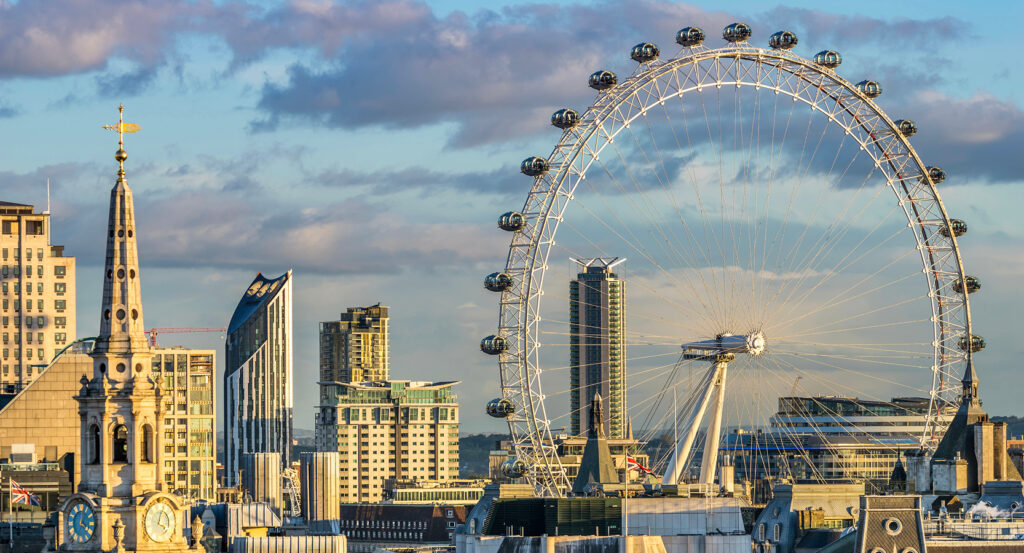
Why you should experience citizenM London Bankside in London, England.
citizenM London Bankside is an inventive design hotel where Bankside's contemporary-art culture, industrial reinvention, architectural experimentation and creative energy converge within a distinctly Dutch interpretation of urban hospitality.
Set along Lavington Street near Great Suffolk Street and just steps from Tate Modern, the hotel became citizenM's first London property in 2012, bringing the Dutch company founded by Rattan Chadha to a district being reshaped by major cultural investment. Concrete designed the building and interiors around two accommodation blocks enclosing citizenM's first internal courtyard, treating the ground floor as a sequence of interconnected living and working rooms furnished with Vitra pieces and contemporary art. Mark Titchner created artwork for the façade, Brazilian collective Assume Vivid Astro Focus contributed interior work and Amsterdam studio KesselsKramer extended the brand's graphic language through the property. The result is a hotel where Concrete, Mark Titchner, Assume Vivid Astro Focus and KesselsKramer turn Bankside's creative character into a building assembled through architecture, art, furniture and graphic design.
What you should know about citizenM London Bankside.
citizenM London Bankside is best known for officially opening on July 4, 2012 as citizenM's fourth hotel and first London address, introducing a 192-room property conceived by Concrete as an evolution of the Dutch company's design-led hospitality model before winning the Hotel and Leisure category at the 2013 World Architecture Festival. The project team under Concrete included Rob Wagemans, Erikjan Vermeulen, Michael Woodford, Jurjen van Hulzen, Sander Vredeveld, Marc Brummelhuis and Menno Baas, with AXIS architects serving as executive architect, Ramboll providing structural engineering and Battle McCarthy handling mechanical and electrical engineering. Peter Dan Associates engineered the room modules, Futureform executed their build-out and MBLD contributed technical lighting expertise, creating an unusually extensive design consortium around a hotel whose standardized guestrooms were paired with highly individualized communal interiors. World Architecture Festival judges ultimately selected the completed Bankside project over an international Hotel and Leisure shortlist that included work by Isay Weinfeld, WOHA, Aedas, NIKKEN SEKKEI and Rocco Design Architects, praising the design process for its immediacy.
Rattan Chadha provides the entrepreneurial origin of the citizenM concept, developing the company after his experience with fashion business Mexx exposed a recurring problem among design-conscious employees who disliked the hotels permitted by corporate travel budgets. Michael Levie became another formative figure as citizenM expanded from its 230-room Schiphol debut in 2008 through Amsterdam City and Glasgow before Bankside became the 192-room fourth property in 2012. Concrete translated that concept into public spaces using Belgian stone, Moso bamboo, Bembé oak parquet, a blue-steel helical staircase and furniture associated with Vitra, while the courtyard introduced an outdoor living room between the two accommodation blocks. Together, Rattan Chadha, Michael Levie, Concrete and World Architecture Festival place citizenM London Bankside within the early international expansion of a Dutch hotel concept that used architecture and design authorship to challenge conventional distinctions between limited-service and design hotels.
How to fold citizenM London Bankside into your trip.
citizenM London Bankside works as the anchor for an afternoon tracing contemporary art, reconstructed Elizabethan theater and a millennium of food commerce through Bankside.
Begin at Tate Modern, where Herzog & de Meuron transformed Sir Giles Gilbert Scott's former Bankside Power Station into the museum that opened on May 11, 2000, preserving the immense industrial presence of the brick building while turning its Turbine Hall into one of the defining spaces of contemporary art in London. Continue to Shakespeare's Globe, where Sam Wanamaker's decades-long campaign to reconstruct the 1599 playhouse culminated in the current 1,570-capacity open-air theater opening in 1997, four years after his death, extending Bankside's performance history into an architectural experiment grounded in Elizabethan playing conditions. Conclude at Borough Market, whose history reaches back a millennium before Parliament closed the congested street market in 1754 and local parishioners established its present site in 1756, later transformed by the railway viaduct of 1862 and revived as a specialist food market from the late 1990s. The progression moves from Herzog & de Meuron's reinvention of industrial architecture through Wanamaker's reconstruction of Shakespearean performance into centuries of London food commerce, revealing the unusually concentrated creative history surrounding citizenM London Bankside.
Where your story begins.
Foresyte Travel reveals places that feel extraordinary long before you arrive.
Experience premium editorial crafted for luxury travelers.














































































































