
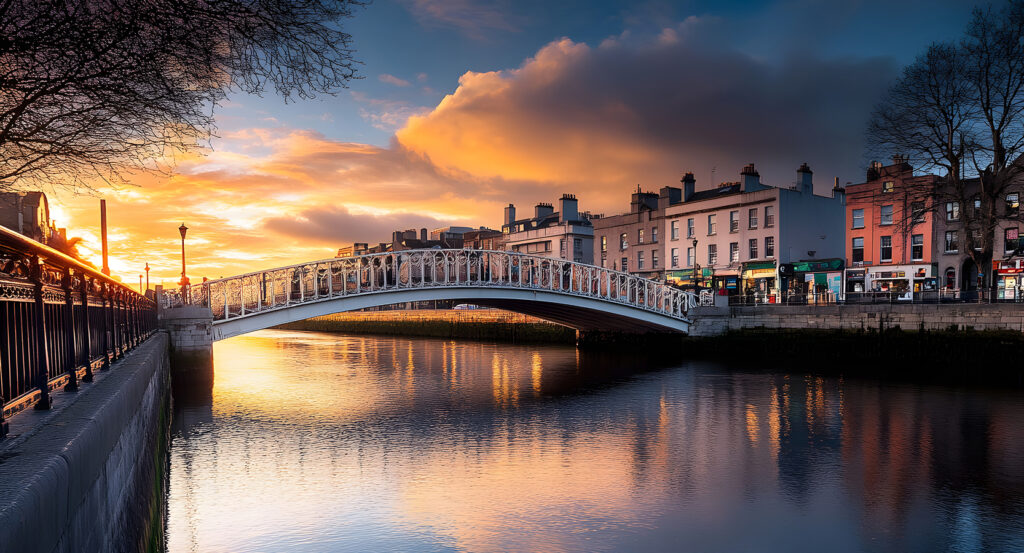
Why you should experience Clontarf in Dublin, Ireland.
Clontarf is a distinguished coastal district where sweeping waterfront views, historic landmarks, and affluent residential streets converge along the northern shores of Dublin Bay.
A long seaside promenade traces the edge of the bay beneath rows of elegant homes, mature parks, and landmark hotels that have made the neighborhood one of Dublin's most desirable addresses for generations. Walkers, runners, cyclists, and families gather along the waterfront throughout the day, taking in uninterrupted views stretching across the water toward the Dublin Mountains and the city skyline. The coastline defines the neighborhood's identity. Salt air drifts across landscaped parks and tree-lined avenues while sailing clubs, cafés, and waterfront gathering places animate the shoreline. Victorian and Edwardian architecture reinforces a sense of permanence and prestige rarely matched elsewhere in the city. The district balances residential tranquility with easy access to Dublin's urban core, creating an environment that feels both connected and distinctly separate from the pace of downtown life. To the west, Drumcondra's historic residential avenues extend naturally from Clontarf toward the city center, reinforcing the neighborhood's place within Dublin's most established northern districts. Every stretch of coastline reflects a community shaped by history, nature, and the sea.
What you should know about Clontarf.
Clontarf is best known for being the site of the Battle of Clontarf, the renowned 1014 conflict in which High King Brian Boru defeated Viking forces in one of the most significant events in Irish history.
The battle occupies a central place in Ireland's historical narrative and is widely regarded as a defining moment in the struggle for political control of the island. Although modern scholarship recognizes the conflict's complexity, the victory became a powerful symbol of Irish character and national memory. The association with Brian Boru elevated Clontarf's place within Irish cultural history, ensuring that the neighborhood's name would remain recognized throughout the country and beyond. Over the centuries, the district evolved from a coastal settlement into one of Dublin's most prestigious residential communities while maintaining its connection to this historic legacy. Few neighborhoods in Ireland are linked to an event of such enduring national significance.
How to fold Clontarf into your trip.
Clontarf works as an exploration of the coastline, historic landmarks, and green spaces that define one of Dublin's most picturesque neighborhoods.
Begin at Clontarf Promenade, where the neighborhood's defining relationship with Dublin Bay immediately comes into focus through expansive waterfront views and coastal pathways. Continue toward St. Anne's Park, among Dublin's largest and most beautiful public parks, whose gardens, woodlands, and historic features reveal another side of the district's character. From there, make your way to Clontarf Castle, a landmark property whose centuries of history connect visitors to the area's medieval past. Along the route, you'll encounter sailing clubs, waterfront cafés, historic monuments, landscaped gardens, and residential avenues that showcase the neighborhood's enduring appeal. The progression moves naturally from coastal scenery to parkland beauty to historic heritage, revealing the forces that shaped the district. Clontarf remains one of Dublin's most treasured coastal communities, preserving a remarkable balance between history, recreation, and seaside living.
Where your story begins.
Foresyte Travel reveals places that feel extraordinary long before you arrive.
Experience premium editorial crafted for luxury travelers.














































































































