
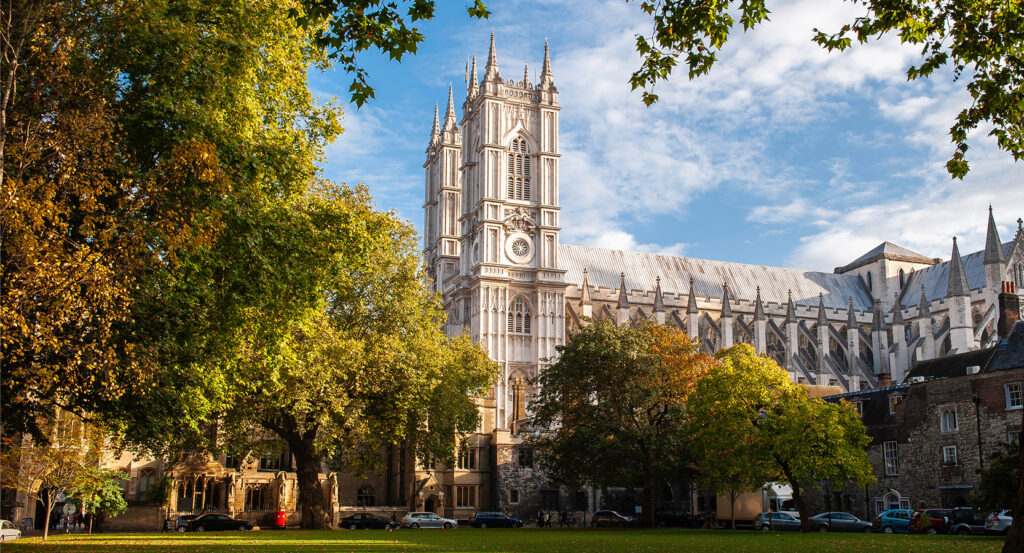
Why you should experience Coronation Chair in London, England.
The Coronation Chair stands as one of the most venerated artifacts in Westminster Abbey, an austere, gilded throne that has witnessed more than 700 years of British monarchy unfold before it.
Commissioned by King Edward I in 1296, the chair was crafted to house the Stone of Scone, the sacred Scottish coronation stone seized during England's conquest. Its Gothic oak frame, once overlaid with gold leaf and painted scenes of kings and saints, has long since weathered to a muted patina that carries the scars of time, and the signatures of mischievous schoolboys and visitors from centuries past. Every British monarch since 1308 has been crowned upon it, seated in near-perfect stillness beneath the Abbey's vaulted ceiling as the weight of history, and the crown itself, descends. When viewed up close, it emanates something almost spiritual: a paradoxical mix of simplicity and sanctity, its rough-hewn wood whispering that true power doesn't reside in splendor but endurance.
What you should know about Coronation Chair.
Few realize that the Coronation Chair has been more than a throne, it's been a political hostage, a target of rebellion, and a silent witness to national unity and division alike.
The Stone of Scone, its embedded relic, was stolen back to Scotland in 1950 by nationalist students who smuggled it out of the Abbey under cover of night. Though later returned, that act reignited centuries-old questions of sovereignty and identity, proving that even an inanimate object could stir a nation's soul. The chair itself has endured bombing raids, desecration, and royal reforms, yet remains immovable, a relic of continuity amid chaos. Restoration efforts have revealed faint traces of its original painted glory: energetic reds, blues, and gilded figures that would have once dazzled the coronation crowds. Today, it sits behind protective glass, not to distance visitors, but to preserve the palpable energy that seems to radiate from its ancient timber, a relic that refuses to be merely observed; it demands reverence.
How to fold Coronation Chair into your trip.
To weave the Coronation Chair into your Westminster Abbey visit, time your entry for early morning, when the Abbey's light is soft and the corridors echo only with footsteps and the quiet hum of awe.
Make your way to St. George's Chapel, where the chair now rests, the air around it dense with centuries of ceremony. Take a moment to study its asymmetry, its worn seat, the hollow where the Stone once lay, and try to imagine the enormity of that first coronation in 1308: incense burning, trumpets sounding, and the new monarch trembling under the gaze of divine authority. Afterward, step into the nave and look back, the Abbey stretches like a living timeline, every column a reminder that history isn't static. In that moment, you'll understand that the Coronation Chair isn't just a piece of furniture; it's the example of Britain's sacred continuity, a throne that has outlasted empires, revolutions, and even the fleeting relevance of kings.
Where your story begins.
Foresyte Travel reveals places that feel extraordinary long before you arrive.
Experience premium editorial crafted for luxury travelers.














































































































