Why Erie Street matters.
Erie Street is a sophisticated corridor where River North's industrial legacy, architectural reinvention, creative enterprise, and Chicago's downtown evolution converge along one of the Near North Side's defining streets.
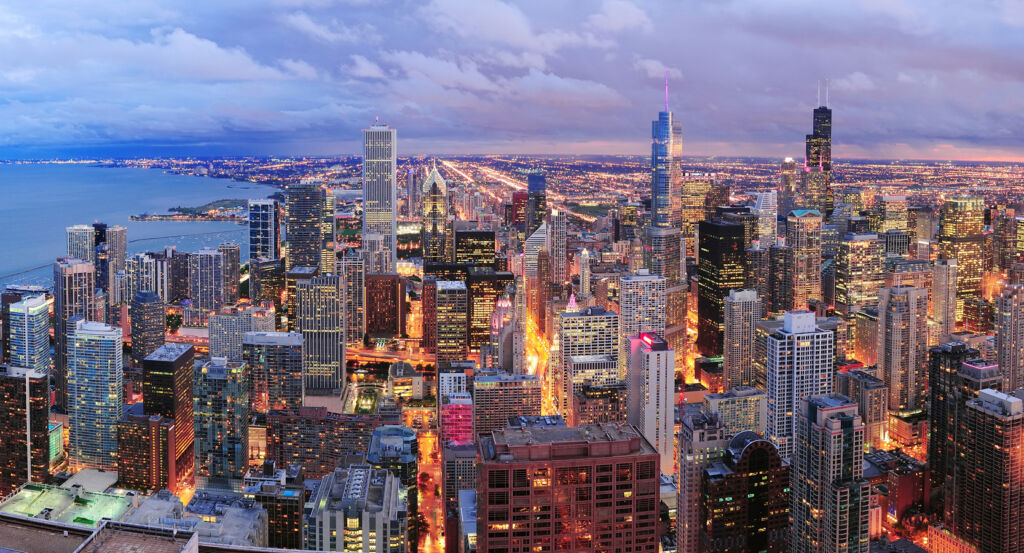
Running through River North between the Grand Mile and the Chicago River, Erie Street connects historic warehouse districts, contemporary residential towers, art galleries, design studios, hospitality destinations, and commercial institutions that collectively reflect more than 170 years of continuous urban transformation. The corridor reveals how river commerce, railroad expansion, manufacturing, and adaptive rehabilitation reshaped an industrial landscape into one of Chicago's foremost centers of architecture, culture, and entrepreneurship. Preserved masonry loft buildings, modern high-rises, and thoughtfully restored commercial structures continue defining the streetscape while reinforcing its enduring urban character. The result is a corridor distinguished by architectural continuity, economic vitality, and one of Downtown's most successful transformations.
What defines Erie Street.
Erie Street is best known for extending through River North, where proximity to the Chicago River, construction of the Illinois and Michigan Canal in 1848, expansion of the Galena and Chicago Union Railroad, and reconstruction following the Great Chicago Fire of 1871 accelerated the district's emergence as one of Chicago's foremost manufacturing and wholesale warehouse centers. Development between the 1870s and the 1930s introduced an extensive collection of heavy-timber loft buildings, brick warehouses, freight houses, machine shops, printing facilities, furniture manufacturers, and commercial showrooms that established the corridor's enduring industrial identity. Successive investment by the Chicago & North Western Railway, nearby freight terminals, and the Merchandise Mart, completed in 1930 as the world's largest commercial building at the time, reinforced Erie Street's importance within one of the nation's largest wholesale distribution districts. During the late twentieth century, preservation initiatives, adaptive reuse, and designation of portions of the surrounding River North Historic District retained significant industrial architecture while galleries, design firms, technology companies, hospitality venues, and residential development transformed former warehouses into a nationally recognized mixed commercial district. Continued investment by firms including Skidmore, Owings & Merrill, Perkins&Will, Gensler, and numerous adaptive reuse specialists has preserved the corridor's architectural integrity while supporting sustained economic growth.
Formation of the River North Residents Association strengthened neighborhood stewardship through planning advocacy, public safety initiatives, streetscape improvements, historic preservation, and community investment benefiting Erie Street and the surrounding district. Architect Holabird & Roche designed numerous loft buildings and commercial commissions throughout River North, while Burnham and Root, D. H. Burnham & Company, and Alfred S. Alschuler contributed warehouses, office buildings, and industrial architecture that continue defining the broader neighborhood. Expansion of the Montgomery Ward catalog empire, development of nearby printing and publishing industries, implementation of Chicago Department of Planning and Development adaptive reuse policies, continued National Register recognition of surrounding historic resources, and decades of private reinvestment collectively transformed obsolete industrial buildings into offices, galleries, hotels, restaurants, and residential towers. Together, the River North Residents Association, Holabird & Roche, Burnham and Root, Alfred S. Alschuler, Montgomery Ward, the Chicago Department of Planning and Development, the Merchandise Mart, railroad freight infrastructure, National Register preservation, and successive adaptive redevelopment demonstrate how industrial enterprise, architectural excellence, planning policy, preservation, and sustained private investment established Erie Street among Chicago's most historically significant urban corridors.
How Erie Street fits.
Erie Street works as an exploration of River North's industrial heritage, architectural innovation, and artistic culture.
Begin at Merchandise Mart, where expansive Art Deco architecture and one of the world's great commercial buildings introduce the wholesale history that shaped Erie Street before naturally expanding into the surrounding district. Continue to Chicago Gallery District, where dozens of contemporary galleries and creative spaces demonstrate the adaptive reuse that transformed former industrial buildings into one of the nation's premier arts neighborhoods before guiding the journey toward its conclusion. Conclude at Grand Mile, where celebrated architecture, historic commercial institutions, and internationally recognized retail streets provide the historical and cultural payoff, demonstrating how commerce, architecture, and urban reinvention continue defining River North. The progression moves naturally from industrial commerce to creative revitalization before concluding with one of Chicago's most enduring commercial corridors.
Where your story begins.
Foresyte Travel reveals places that feel extraordinary long before you arrive.
Enjoy editorial crafted for luxury travelers.
Foresyte may earn a commission when you book.