
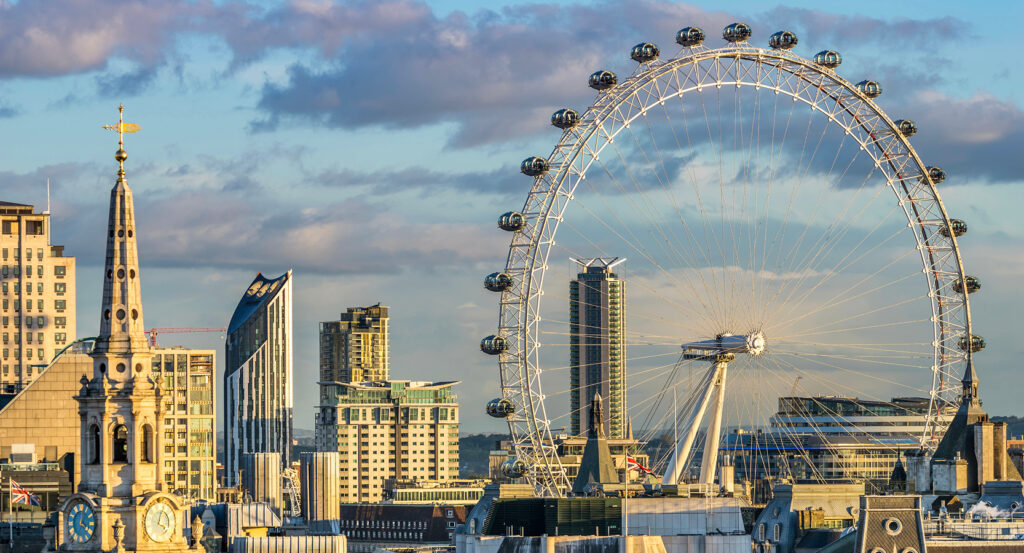
Why you should experience Essex Street in London, England.
Essex Street is a distinguished corridor where Temple's legal heritage, aristocratic estates, literary history, and riverside commerce converge along one of Central London's most historic streets.
Running through Temple between Strand and the Victoria Embankment, the corridor developed during the seventeenth century as the former Essex House estate gave way to planned urban development serving London's expanding legal, commercial, and residential communities. Townhouses, legal chambers, publishing offices, churches, and commercial premises established a lasting relationship between professional life and civic development that continues defining Essex Street today. Victorian infrastructure improvements and twentieth-century redevelopment introduced modern office accommodation while preserving the street's historic alignment and institutional character. The result is an experience defined by legal continuity, historical depth, and one of Westminster's most enduring historic corridors.
What you should know about Essex Street.
Essex Street is best known for occupying part of the former Essex House estate, the Strand residence acquired by Robert Devereux, 2nd Earl of Essex, during the late sixteenth century before its demolition and redevelopment after 1674 created the present street linking the Strand with the River Thames. The corridor formed part of speculative building undertaken by Nicholas Barbon, whose projects introduced one of London's earliest examples of planned post-Restoration urban development while replacing aristocratic grounds with residential terraces and commercial properties. Essex Street developed immediately beside the Inner Temple and Middle Temple, attracting barristers, solicitors, publishers, and professional societies, while nearby Somerset House, rebuilt by Sir William Chambers between 1776 and 1796, reinforced the district's administrative and cultural importance. The street also became associated with the Essex Head Club, founded by Samuel Johnson in 1783, reflecting the intellectual and literary life that flourished around the Strand during the eighteenth century.
Two Temple Place, completed in 1895 for William Waldorf Astor to designs by John Loughborough Pearson, preserves an elaborate Gothic Revival interior featuring carvings by Nathaniel Hitch, stained glass, hammerbeam roofs, and extensive decorative craftsmanship immediately adjoining Essex Street. King's College London occupies the nearby Strand Campus, whose origins date to the institution's foundation by royal charter in 1829 and whose academic buildings reinforce the corridor's longstanding educational connections. The Victoria Embankment, engineered by Sir Joseph Bazalgette and opened in 1870, reshaped the southern end of Essex Street through Thames embankment works that incorporated intercepting sewers, new roadways, and the District Railway beneath the carriageway. Westminster City Council, Historic England, and the Honourable Societies of the Inner Temple and Middle Temple continue preserving the architectural, legal, educational, and civic heritage that defines Essex Street.
How to fold Essex Street into your trip.
Essex Street works as an exploration of London's legal history, civic engineering, and institutional heritage.
Begin at Two Temple Place, where richly detailed Gothic Revival craftsmanship introduces the architectural history surrounding Essex Street. Continue to King's College London Strand Campus, whose academic traditions reflect the district's longstanding intellectual importance. Conclude at the Victoria Embankment, where nineteenth-century engineering provides a fitting conclusion within the riverside landscape that reshaped the lower end of Essex Street. The progression moves naturally from architectural craftsmanship through higher education before concluding with metropolitan engineering, revealing the successive phases of development that shaped Essex Street.
Where your story begins.
Foresyte Travel reveals places that feel extraordinary long before you arrive.
Experience premium editorial crafted for luxury travelers.














































































































