Why Fairmont Orchid matters.
Fairmont Orchid is a historic Kohala Coast resort where Mauna Lani's Hawaiian chiefly heritage meets the transformation of a private coastal retreat into an internationally owned luxury hotel shaped by successive periods of investment and architectural renewal.
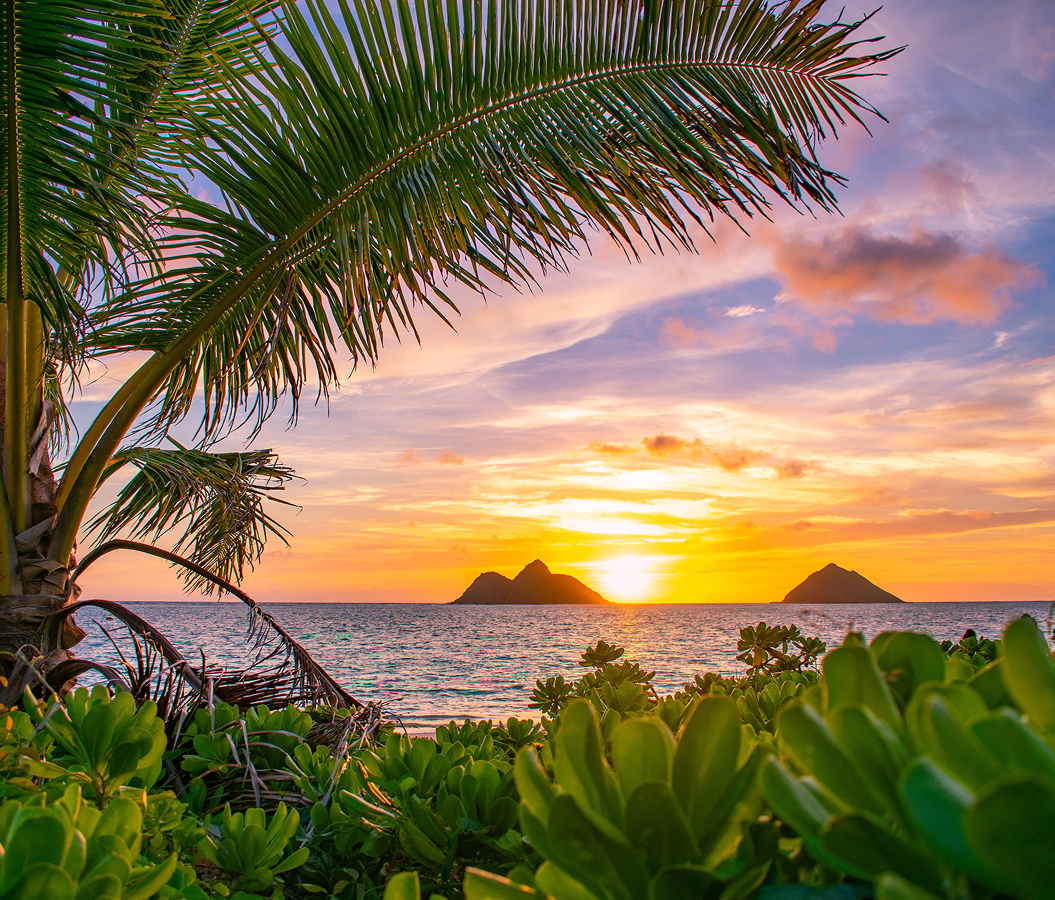
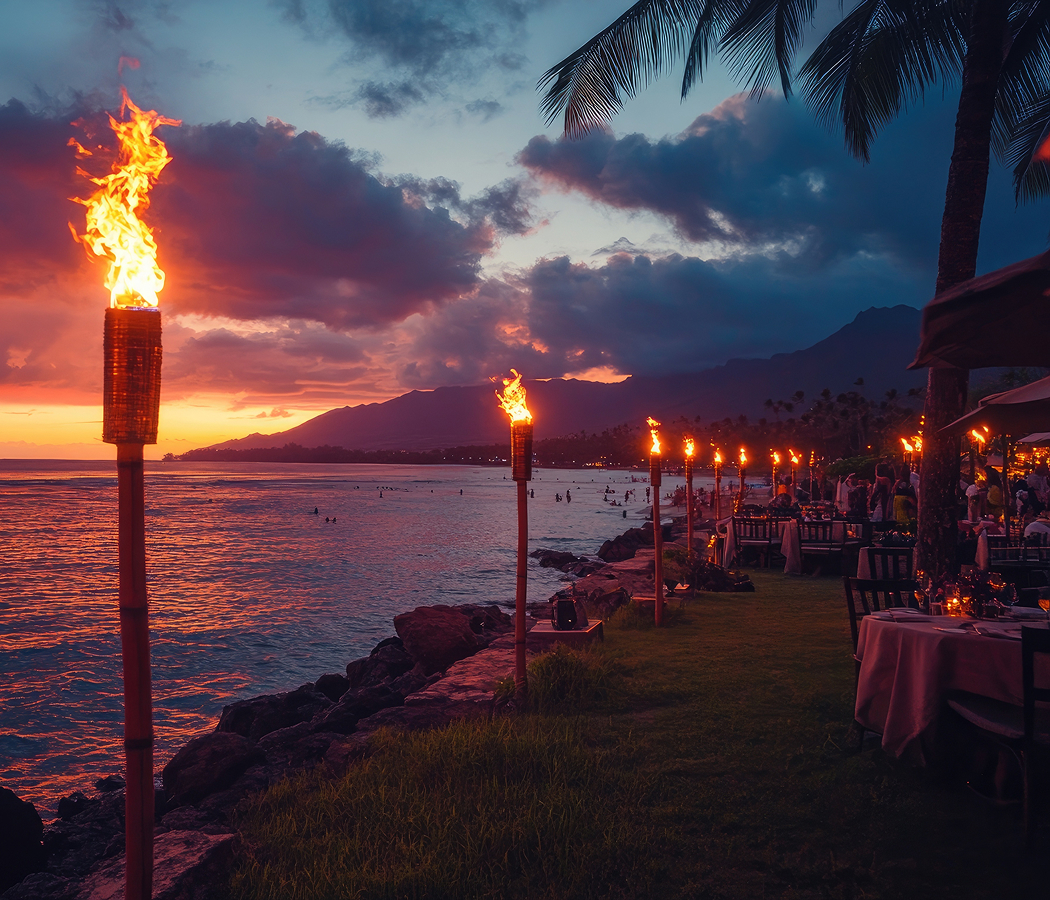
Occupying 32 oceanfront acres beside Pauoa Bay on Hawaiʻi Island's northwestern coast, Fairmont Orchid stands between the Pacific Ocean and the volcanic slopes of the Kohala Mountains, with the Mauna Lani resort district extending inland and the shoreline opening toward distant views of Maui. The principal building follows a broad U-shaped arrangement, placing an open-air lobby at the center of two six-story wings. Its architecture combines substantial concrete construction with pitched rooflines, shaded terraces and landscaped courtyards. The entrance establishes an elevated perspective through the central building toward the ocean, using an uninterrupted visual axis to connect the arrival area with the coastline. Stone flooring, timber finishes and broad roof overhangs establish a tropical architectural character. The two wings frame a central garden containing lawns, palms and ornamental planting. A large swimming pool occupies the seaward portion of the grounds, with landscaped terraces descending toward the sheltered beach. The coastline alternates between pale sand and dark volcanic rock, giving the property's oceanfront a distinct geological character. The result is an expansive coastal hotel whose symmetrical architecture, open-air circulation and volcanic surroundings connect international resort design with the physical character of western Hawaiʻi.
What defines Fairmont Orchid.
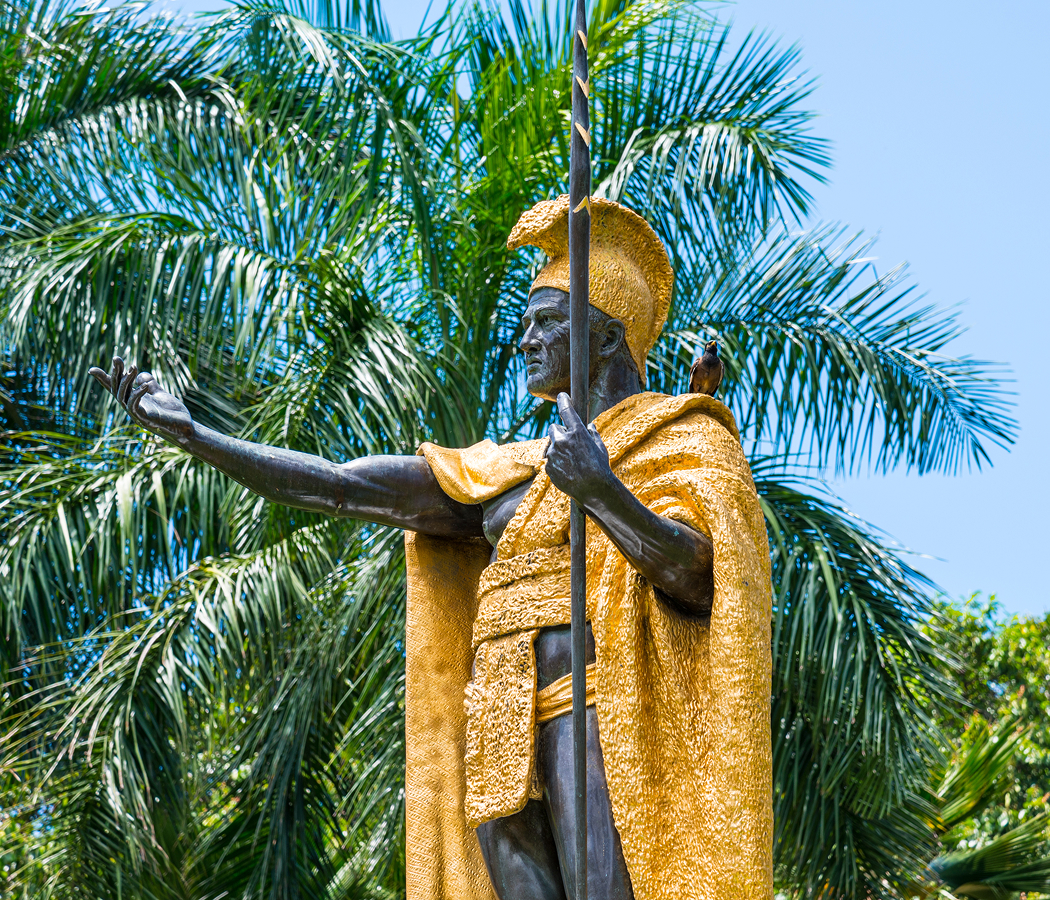
Fairmont Orchid is best known for evolving from the Ritz-Carlton Mauna Lani into a Fairmont resort through a succession of major ownership transactions rooted in the development of Hawaiʻi Island's Kohala Coast. The property's deeper history begins with Francis Hyde ʻĪʻī Brown, a descendant of the Hawaiian chiefly lineage associated with Kamehameha I and an influential figure in the island's twentieth-century sporting and social circles. Brown acquired Kalāhuipuaʻa as a private retreat in 1936, establishing a coastal gathering place that became associated with his hospitality and recreational interests. His ownership preserved a substantial section of the shoreline during the decades preceding the region's large-scale resort development. In 1972, Brown sold the property to the Japanese-backed Mauna Lani development organization, transferring land associated with Hawaiian chiefly traditions into an emerging international resort enterprise. The subsequent development introduced the Mauna Lani name, connecting the project with the volcanic mountains surrounding the district. The hotel opened in 1990 under the Ritz-Carlton brand, marking a major expansion of luxury hospitality along the Kohala Coast. A consequential ownership change followed in 1995 when Los Angeles investment firm Colony Capital acquired the property for $75 million. The transaction accompanied a change in the hotel's international affiliation, with the property operating as The Orchid at Mauna Lani during the following period. A $13 million renovation in 1996 introduced Brown's Beach House, connecting the hotel's culinary program with the former landowner whose private retreat preceded the resort. Fairmont Hotels & Resorts completed a $140 million acquisition in December 2002 and introduced the Fairmont Orchid name in January 2003. The transaction brought the property into a collection associated with historic hotels in San Francisco, Canada and other international destinations. Westbrook Partners subsequently acquired the resort for $250 million in 2005, marking a substantial increase in its transaction value over the preceding decade. South Korean investment manager Mirae Asset entered the property's ownership history in 2015 through a $200.3 million acquisition. Its investment introduced another chapter of international institutional ownership, extending the relationship between Asian capital and Hawaiʻi's luxury hospitality industry. Mirae Asset subsequently pursued a multiyear $110 million redevelopment, supported by a $136 million refinancing arranged by JLL through New York Life Real Estate Investors in May 2025. The transaction provided a five-year fixed-rate loan during a period of substantial reinvestment in the property. Fairmont completed the first major phase of its renovation in June 2025, updating the principal interiors through a design program drawing on Hawaiian craftsmanship and the island's natural landscape. The property's history connects Hawaiian chiefly ownership, Japanese resort development, American investment firms, Canadian hospitality management and South Korean institutional capital through a succession of transactions that shaped one of the Kohala Coast's established luxury hotels.
Where your story begins.
Foresyte Travel reveals places that feel extraordinary long before you arrive.
Enjoy editorial crafted for luxury travelers.