Why Flaveur matters.
Flaveur is a two-MICHELIN-starred gastronomic restaurant where Jean-Médecin's metropolitan dining culture meets the culinary heritage of the French Caribbean, the maritime traditions of the Côte d'Azur and the inventive partnership of brothers Gaël and Mickaël Tourteaux.
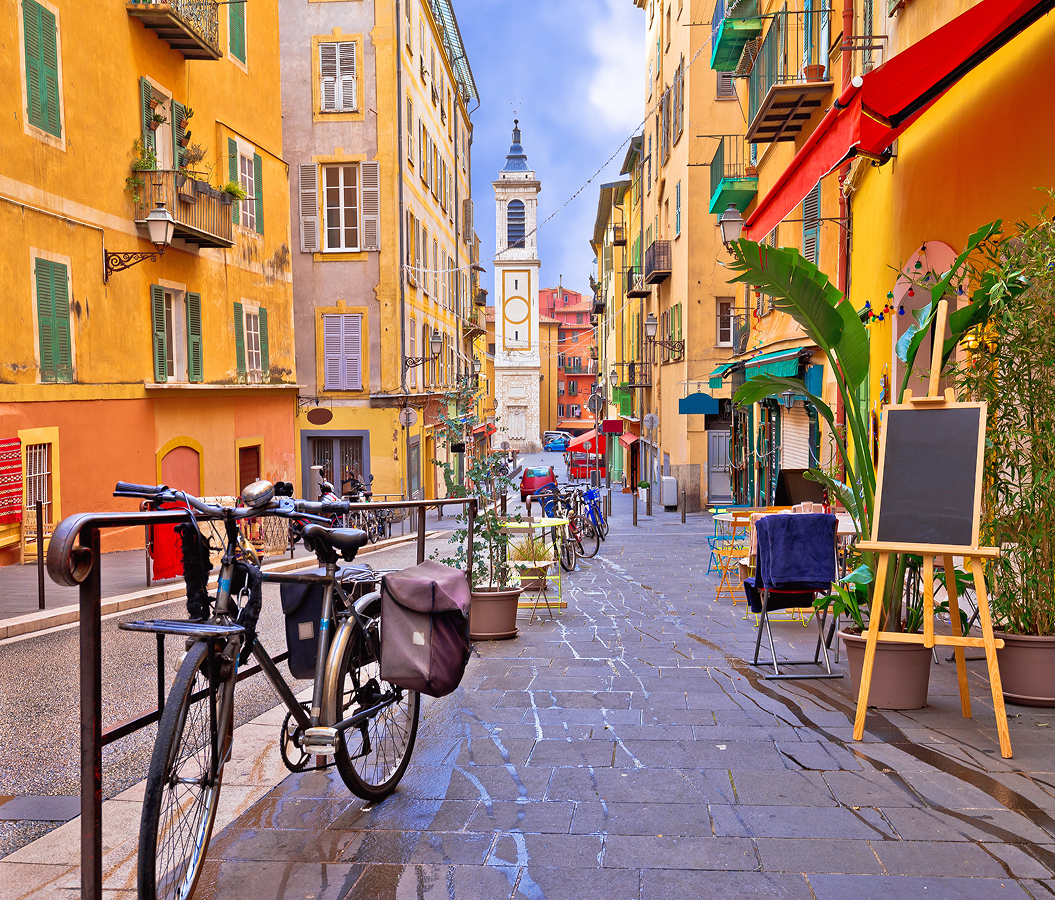
Occupying a compact ground-floor premises on Rue Gubernatis, between Rue de l'Hôtel des Postes and Rue de la Liberté, the restaurant stands within Central Nice's nineteenth-century commercial district, where narrow streets, traditional apartment buildings and independent businesses create a densely developed urban setting. Its intimate dining room combines pale surfaces, contemporary artwork and carefully arranged furnishings, establishing a restrained environment for an elaborate gastronomic service. Stylized fish decorations and mosaic-patterned chair backs introduce maritime references that connect the interior's visual character to the restaurant's coastal surroundings. Closely arranged tables and carefully controlled lighting give the dining room the proportions of a private salon, with decorative details contributing to a distinctive atmosphere of understated refinement. The result is a sophisticated culinary destination whose intimate scale, contemporary decoration and carefully composed dining environment provide an architectural counterpart to the ambitious cooking developed by its two chef-proprietors.
What defines Flaveur.
Flaveur is best known for the partnership of Gaël and Mickaël Tourteaux, whose professional development brought together Caribbean childhood influences, classical French culinary training and an independent gastronomic enterprise that earned two MICHELIN stars. Gaël was born in Reims in 1977, and his younger brother Mickaël was born in Les Abymes, Guadeloupe, in 1981, establishing the geographical foundations of a family history connected to metropolitan France and the French Caribbean. Their childhood in Guadeloupe introduced the brothers to a culinary culture shaped by tropical produce, aromatic spices, seafood and the historical connections between French, African and Indian cooking traditions. The island's agricultural heritage and maritime food culture subsequently became important influences on their professional development, particularly through their interest in combining concentrated spice preparations with the natural flavors of Mediterranean ingredients. Their formal education followed a shared path through hospitality school in Nice, where both brothers pursued culinary qualifications and completed examinations in the same room. Professional training continued at Le Negresco, the celebrated Riviera hotel whose gastronomic restaurant operated under chef Alain Llorca during an important period in the brothers' development. Llorca's cooking combined the technical foundations of French haute cuisine with the ingredients and culinary traditions of Provence, providing a demanding professional environment for the young chefs. Their subsequent careers included work with Michel Del Burgo and Pierre Gagnaire, two influential figures whose contrasting culinary approaches contributed to the development of their independent style. Del Burgo's professional background included leadership of the kitchens at Taillevent in Paris, a restaurant associated with the rigorous standards of classical French gastronomy. Gagnaire's career developed through a more experimental treatment of ingredients, flavor combinations and the structure of the gastronomic meal, extending the possibilities of contemporary French cooking. These professional influences contributed to the brothers' growing confidence in their ability to create a restaurant shaped by their shared culinary convictions. Gaël and Mickaël opened Flaveur in Nice in 2008, establishing their first independent business around a partnership in which both brothers contributed to the development of the kitchen's creative direction. The restaurant's early years required the coordination of ambitious cooking with the practical demands of operating a small independent establishment, giving the brothers direct responsibility for the culinary and commercial development of their enterprise. Gault&Millau recognized their emerging talent in its 2010 edition through the Grands de Demain distinction, placing the young restaurateurs among the most promising figures in French gastronomy. Flaveur received its first MICHELIN star in 2011, a significant achievement that confirmed the restaurant's position within the established hierarchy of French fine dining. The recognition followed three years of independent operation and strengthened the brothers' reputation for combining precise technique with an adventurous treatment of aromatic ingredients. Their professional standing advanced further in 2013 when they received the Gault&Millau d'Or trophy, acknowledging the quality and development of their cooking. The distinction reinforced the importance of the fraternal partnership, whose creative process depended on the exchange of ideas and the continual refinement of individual preparations. Flaveur received its second MICHELIN star in 2018, elevating the restaurant into a select group of French gastronomic establishments recognized for exceptional culinary achievement. The second star represented a substantial institutional achievement for a restaurant developed independently by two brothers whose professional ambitions had grown from shared hospitality training. Their reputation also expanded through inclusion in the World's 50 Best Discovery collection, extending international recognition of their cooking beyond the traditional French restaurant guides. Gault&Millau subsequently awarded Flaveur four toques, placing the establishment among the country's most highly regarded gastronomic restaurants. The guide's 2026 edition awarded the restaurant 17 points out of 20, confirming the sustained standing of the Tourteaux partnership within contemporary French cuisine. Its evaluation emphasized the brothers' continued commitment to the culinary relationship between maritime ingredients and aromatic influences associated with their Caribbean upbringing. The restaurant's development represents a sustained achievement in independent French gastronomy, connecting the professional discipline of major European kitchens with the distinctive culinary inheritance of Guadeloupe. Flaveur's significance rests on the brothers' ability to translate those influences into a coherent gastronomic style whose international recognition developed through successive stages of professional achievement.
Gaël and Mickaël Tourteaux's cooking develops through a distinctive relationship between the maritime ingredients of the Côte d'Azur and the aromatic complexity of Caribbean and international spice traditions. The kitchen's culinary direction, organized around the complementary themes of iodine and spices, begins with the natural salinity of seafood and develops through carefully calibrated combinations of herbs, vegetables, broths and aromatic seasonings. Mediterranean fish occupy a central position within this approach, with the selection of individual species contributing different textures, fat content and degrees of natural sweetness. Local fishing traditions supply a foundation for preparations that incorporate concentrated seafood reductions and carefully controlled cooking techniques, allowing the character of the principal ingredient to remain central to the composition. Vadouvan contributes an important aromatic reference through a spice blend associated with Indian culinary traditions, combining warm spices with the sweetness of dried alliums and the complexity of fermented or roasted seasonings. Its application to fish broth develops a relationship between Mediterranean seafood and the aromatic intensity of South Asian cooking, demonstrating the kitchen's interest in geographically distant culinary traditions. The brothers' approach to seasoning depends on the balance between concentrated spice flavors and the delicate character of fish, creating preparations whose complexity develops through successive layers of taste. Their use of combava, the aromatic citrus fruit associated with Southeast Asian cooking, contributes another dimension through the intense fragrance of its peel and leaves. The ingredient's sharp citrus character provides a counterpoint to richer preparations, supporting the restaurant's broader treatment of acidity as a structural component of gastronomic cooking. Turmeric introduces an earthy aromatic quality and distinctive coloration, connecting individual preparations to the spice traditions encountered during the brothers' Caribbean childhood. The kitchen's treatment of shellfish develops through a similar attention to the relationship between natural sweetness, salinity and concentrated sauces. Calamari contribute a particularly versatile ingredient through their delicate texture and suitability for precise cutting, allowing preparations that develop the visual and structural characteristics of pasta. The restaurant's interpretation of squid tagliatelle demonstrates this approach through carefully prepared strips of seafood combined with concentrated shellfish juices. Rice contributes another connection between Mediterranean and international culinary traditions, with Carnaroli varieties supporting preparations that depend on the gradual absorption of liquid and the controlled release of starch. The combination of rice, seafood and aromatic seasonings creates a substantial culinary foundation for the restaurant's more elaborate compositions. The brothers also incorporate ingredients associated with the agricultural traditions of Piedmont, strengthening the historical culinary relationship between Nice and the neighboring Italian region. Veal contributes a delicate foundation for preparations developed through aromatic sauces, allowing the kitchen to explore the relationship between European meat cookery and spice combinations associated with tropical cuisines. Green curry introduces another distinctive influence through its combination of fresh herbs, chili and concentrated aromatic ingredients, contributing a different character from the deeper spice preparations associated with vadouvan. The restaurant's tasting-menu structure develops these culinary ideas through carefully arranged courses whose sequence moves between seafood, vegetables, meat and desserts. Menu Exploration provides a six- or seven-service format, giving the kitchen opportunities to develop a substantial selection of its principal culinary themes. Menu Toutes Latitudes extends the composition to nine services, allowing additional preparations to develop the relationship between Mediterranean ingredients and international aromatic traditions. Smaller introductory preparations establish the kitchen's technical range through contrasts in texture, temperature and flavor concentration. The brothers' treatment of Niçoise culinary references contributes another dimension, incorporating familiar regional preparations into the technical language of contemporary French gastronomy. Their pastry program continues the international character of the meal through tropical fruit, aromatic spices and carefully controlled sweetness. Pineapple and aged rum develop a recognizable Caribbean association, connecting fruit acidity with the deeper aromatic qualities of mature spirits. Galabé, an unrefined cane sugar associated with Réunion, contributes another reference to the agricultural and culinary traditions of the French overseas territories. Its distinctive caramelized character supports combinations involving nuts, coffee and warm spices, extending the restaurant's culinary geography into the Indian Ocean. The wine program develops complementary relationships through producers associated with the Bellet appellation and other established French wine regions. Clos Saint-Vincent contributes a local viticultural reference through wines produced in the hills surrounding Nice, connecting the gastronomic program to the agricultural heritage of the Alpes-Maritimes. The resulting culinary composition preserves a clear relationship between the brothers' professional discipline, their Caribbean upbringing and the Mediterranean ingredients that define their adopted gastronomic home.
How Flaveur fits.
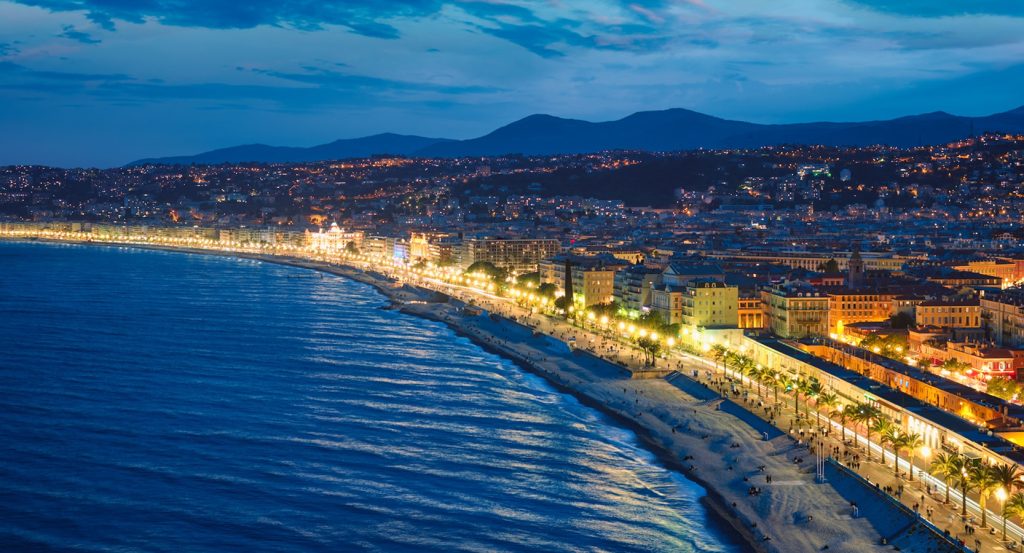
Flaveur works as the anchor for an outing connecting Nice's nineteenth-century urban expansion, the development of its public gardens and the theatrical culture that accompanied the city's emergence as an international Mediterranean resort.
Begin at Place Masséna, the historic public square developed during the expansion of Nice beyond its earlier urban boundaries under the Kingdom of Sardinia. Architect Joseph Vernier prepared the principal architectural composition during the 1840s, establishing a formal arrangement of arcaded buildings whose red façades and pale stone detailing drew on the urban traditions of Turin. The square developed around the former course of the Paillon River, whose successive engineering works transformed the relationship between the historic city and its expanding western districts. The Fontaine du Soleil, inaugurated in 1956, incorporates a seven-meter marble figure of Apollo surrounded by five bronze figures representing classical planetary deities, all designed by sculptor Alfred Janniot. Catalan artist Jaume Plensa contributed Conversation à Nice in 2007, installing seven illuminated human figures on elevated columns to represent the continents and the international character of the city. Continue to Jardin Albert Ier, the historic public garden whose development accompanied the transformation of Nice's coastal approaches during the nineteenth century. Municipal engineer Durandy contributed to the garden's design during a construction period extending from 1861 to 1890, creating landscaped grounds that connected the expanding resort district with the Mediterranean waterfront. The grounds acquired the name of King Albert I of Belgium in 1914, commemorating the monarch's position during the opening months of the First World War. A bandstand completed in 1868 and the Théâtre de Verdure developed in 1946 established important facilities for outdoor musical performances and public gatherings. Sculptor Bernar Venet installed his nineteen-meter steel Arc 115°5 in 1988, creating a substantial contemporary artwork whose curved geometry contrasts with the surrounding trees, lawns and ornamental planting. Conclude at Opéra de Nice, the historic theater whose development connects the city's eighteenth-century Sardinian administration with the expansion of European operatic culture. The site originated with the Théâtre Maccarani, a wooden performance building created in 1776 through the conversion of a private residence belonging to the Alli-Maccarani family. Municipal authorities acquired the theater in 1826 and commissioned a larger Italian-style auditorium, incorporating four tiers of boxes and a substantial royal enclosure. A devastating fire destroyed the building on March 23, 1881, during a performance of Donizetti's Lucia di Lammermoor, killing sixty-three people and prompting a major reconstruction. Architect François Aune directed the replacement project, with plans approved by Charles Garnier, and the theater reopened on February 7, 1885, with Verdi's Aida. Its horseshoe-shaped auditorium preserves an elaborate decorative program, including Emmanuel Costa's ceiling painting of the Chariot of the Sun and sculptural representations of the classical Muses by Raimondi. The progression moves from Place Masséna's formal nineteenth-century planning through Jardin Albert Ier's public landscape and outdoor performance traditions and culminates in Opéra de Nice's elaborate theatrical architecture, connecting the urban, recreational and cultural institutions that shaped the development of Central Nice.
Where your story begins.
Foresyte Travel reveals places that feel extraordinary long before you arrive.
Enjoy editorial crafted for luxury travelers.
Foresyte may earn a commission when you book.