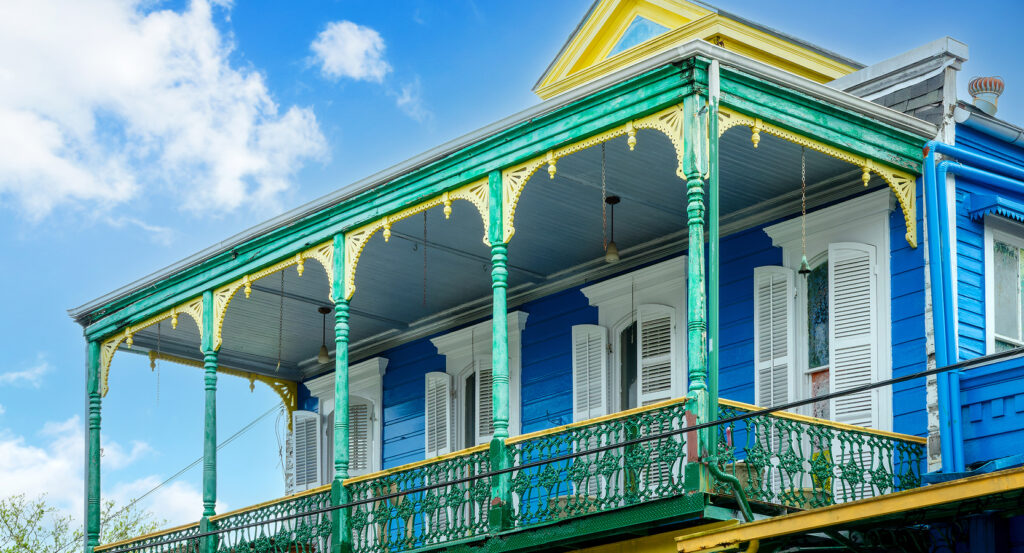
Why you should experience Franklin Avenue in New Orleans, Louisiana.
Franklin Avenue is a historic Gentilly corridor where Gentilly's neighborhood heritage, cultural resilience, community institutions, and everyday New Orleans life create one of the city's most significant thoroughfares.
Running through Gentilly between St. Claude Avenue and Paris Avenue, this important corridor connects historic residential neighborhoods, churches, schools, parks, locally owned businesses, and longstanding community institutions that have shaped generations of New Orleanians. Mature oak trees, neighborhood storefronts, civic landmarks, and an unmistakably local atmosphere reveal a side of the city rooted in everyday life. Every block reflects the resilience and character that have defined Gentilly for more than a century. The result is an experience defined by authentic neighborhood culture, historic continuity, and one of New Orleans' most important community corridors.
What you should know about Franklin Avenue.
Franklin Avenue is best known for serving as the historic spine of Gentilly, evolving alongside the neighborhood's rapid suburban expansion during the early and mid-twentieth century while becoming one of New Orleans' most important eastward transportation corridors beyond the traditional streetcar city. Named for Benjamin Franklin, the avenue developed as residential subdivisions spread into former plantation land following extensive drainage improvements engineered under A. Baldwin Wood, whose revolutionary pumping systems made large portions of Gentilly suitable for urban development. During the twentieth century, Franklin Avenue emerged as the location of numerous influential civic and cultural institutions, including Dillard University, Corpus Christi-Epiphany Catholic Church, St. Raymond and St. Leo the Great Parish, neighborhood schools, and commercial districts that anchored everyday life for surrounding communities. The corridor also became nationally recognized through Franklin Avenue Baptist Church, among Louisiana's largest congregations, whose remarkable recovery after Hurricane Katrina in 2005 became an internationally cited example of community resilience, rebuilding its heavily flooded campus while helping revitalize surrounding neighborhoods. Extending from the Bywater through St. Roch, Seventh Ward, and Gentilly, the avenue demonstrates New Orleans' changing patterns of residential growth across multiple generations while continuing to function as a vital connector between historic neighborhoods and modern institutions. Ongoing streetscape improvements, neighborhood investment, and locally owned businesses have reinforced Franklin Avenue's enduring importance as both a transportation corridor and a center of community life. Together, transformative urban development, remarkable institutional history, enduring neighborhood resilience, and more than a century of civic significance establish Franklin Avenue as one of New Orleans' defining historic corridors.
The avenue continues demonstrating how neighborhood streets can preserve the social, educational, and cultural character of a city across generations of change. Historic institutions, resilient communities, continual reinvestment, and the enduring legacy of Gentilly's development reinforce Franklin Avenue's standing among New Orleans' most significant urban corridors while illustrating the lasting impact of thoughtful planning and community leadership.
How to fold Franklin Avenue into your trip.
Franklin Avenue works as part of an exploration through Gentilly's historic neighborhoods.
Begin at Dillard University, where one of the nation's leading historically Black universities introduces the educational and cultural legacy surrounding Franklin Avenue before exploring the corridor. Continue to St. Roch Market, where one of New Orleans' most celebrated food halls reflects the surrounding neighborhoods' evolving culinary identity. Conclude at City Park, where one of America's great urban parks provides a memorable finale celebrating the remarkable blend of history, education, and community that defines this part of New Orleans. The progression moves naturally from higher education to neighborhood culture before concluding amid one of the city's greatest public landscapes, revealing why Franklin Avenue remains one of New Orleans' most important community corridors.
Where your story begins.
Foresyte Travel reveals places that feel extraordinary long before you arrive.
Experience premium editorial crafted for luxury travelers.