
Why Proclamation of the Irish Republic matters.
Proclamation of the Irish Republic inside Dublin's GPO Museum: Witness History is where Ireland's soul speaks in print, quietly, powerfully, and forever.
Displayed beneath the same roof where it was first read aloud in 1916, this document is not just paper and ink; it is the moment Ireland found its voice. Written by Patrick Pearse and signed by six other leaders of the Easter Rising, the Proclamation called for freedom, equality, and self-determination in the midst of war and occupation. Inside the softly lit exhibit, the replica stands under glass, illuminated with reverence. You can see the imperfections of the type, the uneven letters pressed on an old press as rebels worked under immense pressure. Each word, “Irishmen and Irishwomen,” “cherishing all the children of the nation equally”, still vibrates with dramatic hope. Standing before it, you sense both the audacity and fragility of the dream it represents. The Proclamation is more than an artifact; it is a promise kept alive through a century of struggle, resilience, and renewal.
What defines Proclamation of the Irish Republic.
The Proclamation Exhibit reveals a story of extraordinary improvisation, and enduring faith.
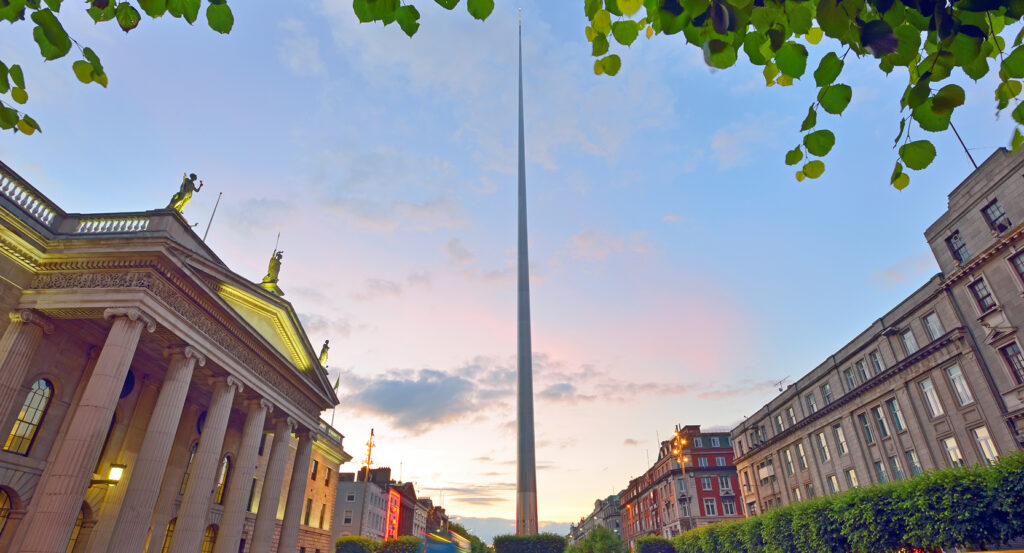
The original 1916 document was printed in secret at Liberty Hall, using a small press normally reserved for trade union leaflets. When the rebels realized they lacked enough type for the entire text, they broke and rearranged existing letters between lines, meaning no two sections are perfectly aligned. The paper used was of poor quality, the ink inconsistent, and yet what emerged from that press changed history. Only a few surviving originals exist today, each one a national landmark. The exhibit's display at the GPO replicates not just the text but the texture, the smell of metal type, the dim light, the tension of creation on the eve of rebellion. Around the document, interactive screens and archival footage place visitors inside that moment: the printing, the reading, the ensuing chaos as Dublin erupted. Few realize that the Proclamation's first public reading took place right outside these same walls, on O'Connell Street (then Sackville Street), beneath the GPO's colonnade as smoke from nearby fires curled into the sky. Each signature, Pearse, Connolly, Clarke, MacDonagh, MacDermott, Plunkett, and Ceannt, represents a man who would be executed within weeks. Their handwriting may have faded, but their conviction endures in every line.
How Proclamation of the Irish Republic fits.
To experience the Proclamation Exhibit properly, approach it not as a museum stop, but as a moment of communion.
Begin your visit in the GPO Witness History Museum, walking through the interactive galleries that build context for 1916, Dublin's streets under siege, the voices of ordinary citizens, the telegrams that carried word of rebellion. When you reach the chamber where the Proclamation is displayed, pause before entering. The lighting dims, the sound softens, as if inviting silence. Stand close enough to read the first line aloud under your breath; even whispered, it carries weight. Spend a few minutes tracing the type, noticing its uneven edges and smudges, small imperfections that make the document feel alive. Step back, then look around the room at the digital timeline tracing Ireland's evolution from colony to republic. When you leave, walk outside to the GPO Colonnade, the same spot where the Proclamation first met the world, and let the two experiences merge, words and walls, past and present. The exhibit doesn't simply commemorate history; it reawakens it, reminding every visitor that freedom begins as an idea whispered into courage.
Where your story begins.
Foresyte Travel reveals places that feel extraordinary long before you arrive.
Enjoy editorial crafted for luxury travelers.
Foresyte may earn a commission when you book.














































































































