Why you should experience Green Street in Chicago, Illinois.
Green Street is an enterprising corridor where the West Loop's industrial legacy, architectural reinvention, culinary influence, and Chicago's enduring entrepreneurial spirit continue shaping one of the city's defining urban streets.
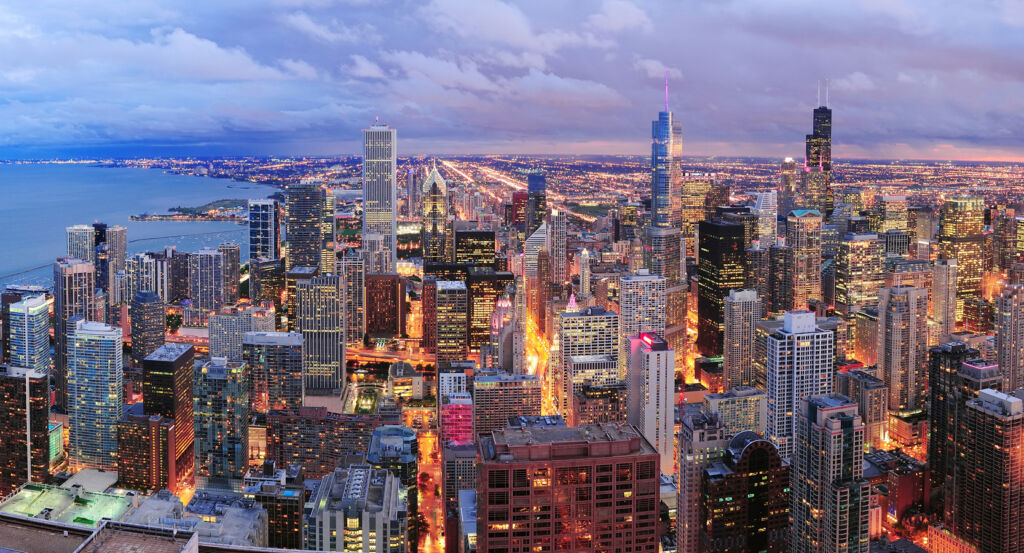
Running through the West Loop between Fulton Market and the Illinois Medical District, Green Street connects former warehouse districts, timber loft buildings, contemporary offices, restaurants, residential developments, and technology workplaces that collectively reflect more than 150 years of urban evolution. The corridor reveals how rail freight, food processing, manufacturing, and adaptive rehabilitation transformed an industrial landscape into one of Chicago's foremost centers of innovation and commerce. Heavy masonry architecture and contemporary development remain closely integrated throughout the streetscape while preserving the district's industrial character. The result is a corridor distinguished by architectural continuity, commercial vitality, and an enduring place within Chicago's Near West Side.
What you should know about Green Street.
Green Street is best known for extending through the West Loop, where proximity to the Chicago & North Western Railway, the Chicago River, and the city's wholesale produce and meat distribution districts accelerated industrial growth during the late nineteenth and early twentieth centuries. Construction between the 1880s and the 1930s introduced heavy-timber warehouses, brick loft buildings, cold-storage facilities, manufacturing plants, freight houses, and commercial offices that established the corridor's enduring architectural identity. Continued investment by food wholesalers, produce merchants, and manufacturing firms reinforced Green Street's importance within the Fulton Market District, while late twentieth-century adaptive rehabilitation transformed former industrial buildings into offices, hospitality venues, and creative workplaces without erasing the corridor's historic masonry fabric. Ongoing preservation has retained much of Green Street's warehouse architecture while supporting sustained commercial reinvestment.
Creation of the Fulton Market Innovation District established coordinated economic development, infrastructure investment, workforce initiatives, and business recruitment that strengthened long-term growth throughout the surrounding area. Designation of the Fulton-Randolph Market Historic District on the National Register of Historic Places documented one of Chicago's most significant concentrations of food industry and warehouse architecture while preserving the broader historical record beyond the itinerary. Architect Alfred S. Alschuler designed influential commercial and industrial buildings throughout the West Loop, contributing durable masonry architecture that helped define the district surrounding Green Street during its principal era of expansion. Together, the Fulton Market Innovation District, the Fulton-Randolph Market Historic District, the National Register of Historic Places, and Alfred S. Alschuler demonstrate how industrial enterprise, historic preservation, and architectural craftsmanship have collectively reinforced Green Street's enduring identity.
How to fold Green Street into your trip.
Green Street works as an exploration of the West Loop's industrial heritage, architectural evolution, and creative energy.
Begin at Time Out Market Chicago, where dozens of locally recognized culinary concepts establish the neighborhood's contemporary character before naturally introducing the broader story of Green Street and its commercial revival. Continue to McDonald's Global Headquarters, where thoughtfully integrated public spaces and one of the city's most prominent corporate relocations expand the experience from industrial history into the West Loop's continuing economic evolution before leading toward the final destination. Conclude at Mary Bartelme Park, where award-winning landscape architecture, inviting gathering spaces, and surrounding warehouse conversions provide the historical and civic payoff, demonstrating how adaptive rehabilitation, public investment, and neighborhood stewardship continue defining the West Loop. The complete sequence reveals how industrial enterprise, architectural reinvention, and civic investment together explain why Green Street remains one of Chicago's most compelling corridors.
Where your story begins.
Foresyte Travel reveals places that feel extraordinary long before you arrive.
Experience premium editorial crafted for luxury travelers.