Why Harry Potter Butterbeer Bar matters.
Harry Potter Butterbeer Bar is a theatrical refreshment room where Grand Mile's architectural performance meets Wizarding World confectionery, all-ages Butterbeer and Chicago speakeasy design.
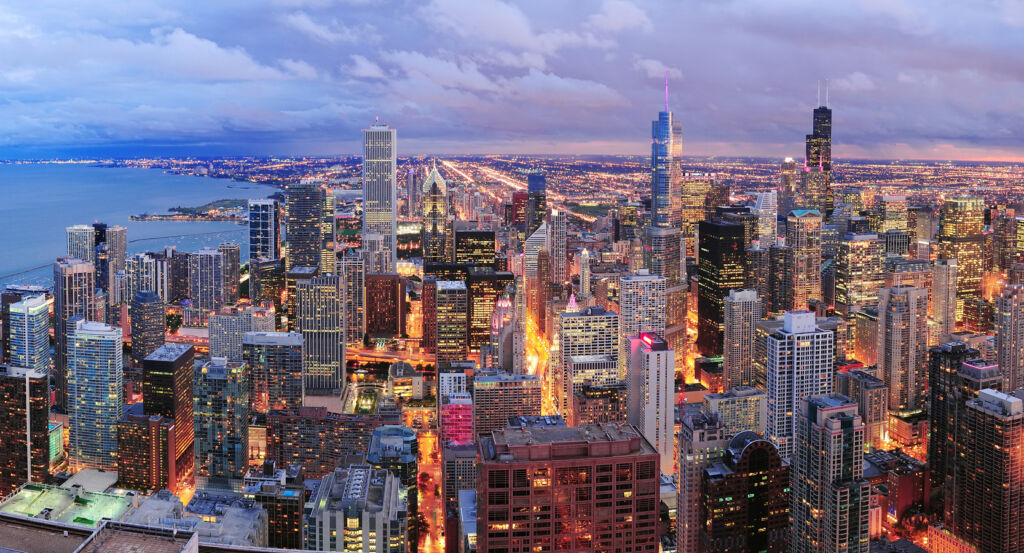
Set along North Michigan Avenue near East Huron Street and just steps from Omni Chicago Hotel, the bar occupies the center of Harry Potter Shop Chicago within the dense retail canyon extending north from the Chicago River toward Water Tower Square and the high-rise core of Streeterville. Dark finishes, warm illumination and bar-height service counters give the room a club-like physical character inside the larger retail environment. Draft Butterbeer supplies the primary encounter, arriving from the counter with its pale butterscotch body capped by dense foam. Seating around the bar slows movement through a store otherwise organized around merchandise, film references and interactive installations, giving the drink its own dedicated room within the Wizarding World setting. The result is a confectionery bar whose scale, theatrical enclosure and central position turn Butterbeer into a destination inside one of North Michigan Avenue's most elaborate entertainment-retail interiors.
What defines Harry Potter Butterbeer Bar.
Harry Potter Butterbeer Bar is best known for forming the food-and-drink centerpiece of Warner Bros. Discovery's second standalone Harry Potter shop in the United States and third worldwide standalone location when Harry Potter Shop Chicago debuted on April 10, 2025. Warner Bros. Discovery Retail Experiences developed the Chicago project after the Harry Potter New York flagship, placing the new operation inside more than 11,000 square feet on the Grand Mile. Actor Tom Felton, who portrayed Draco Malfoy across the Harry Potter films, joined the Chicago launch and toured a retail environment built around Harry Potter and the Goblet of Fire. The fourth Harry Potter story shaped the larger interior through a moving mermaid stained-glass window, suspended flaming broomsticks, a Golden Egg, a maze-patterned floor and the Goblet of Fire itself. The Chicago operation also became home to America's second House of MinaLima, extending the work of graphic designers Miraphora Mina and Eduardo Lima into a dedicated section containing artwork connected with their film design and a Chicago-exclusive print. Warner Bros. staffed the opening operation with 75 full- and part-time retail positions alongside 24 positions devoted specifically to the Butterbeer Bar, indicating the scale assigned to food and drink within the project. The bar itself became the largest Butterbeer Bar in the United States, giving a beverage introduced through the Harry Potter books and films a dedicated Chicago room shaped around the city's speakeasy tradition.
Draft Butterbeer centers the menu on a nonalcoholic butterscotch-flavored soft drink finished with a thick layer of foam, translating the Wizarding World beverage into a cold fountain preparation. The Chicago debut served the drink in a souvenir glass mug, making the vessel part of the presentation and preserving the tankard form associated with Butterbeer across Harry Potter fiction. Butterbeer ice cream takes the same flavor profile into a frozen preparation, concentrating the butterscotch character through a denser texture. Chicago-exclusive Butterscotch Popcorn extends that profile into a crisp format whose caramelized sweetness connects the bar with the city's deep association with flavored popcorn. The adjoining confectionery carries Chocolate Frogs and Bertie Bott's Every Flavor Beans, extending the food program through sweets originating in the Harry Potter world. An oversized interactive jellybean installation gives the confectionery another physical connection with Bertie Bott's, placing the packaged sweet inside a larger visual treatment. The entirely nonalcoholic menu keeps the speakeasy-inspired room focused on Butterbeer, frozen confectionery and Wizarding World sweets, making flavor and fictional provenance the organizing principles of the bar.
How Harry Potter Butterbeer Bar fits.
Harry Potter Butterbeer Bar anchors a compact Near North Side route connecting Gothic architecture, postwar contemporary art and the domestic craftsmanship of Chicago's Gilded Age.
Begin at Fourth Presbyterian Church, whose congregation formed in February 1871 through the merger of North Presbyterian Church and Westminster Presbyterian Church, then lost its newly renovated sanctuary during the Great Chicago Fire only hours after worship there on October 8 of that year. The congregation moved to Pine Street during the next major chapter of its growth, laying the cornerstone of its present church in 1912 before dedicating the building in 1914. Ralph Adams Cram designed the Gothic Revival sanctuary, Howard Van Doren Shaw handled the parish buildings around the courtyard, Charles J. Connick created the stained glass and Frederic C. Bartlett directed the sanctuary decoration, concentrating four major designers inside a complex that predates the 1920 Michigan Avenue Bridge. Continue to Museum Of Contemporary Art Chicago, an institution founded in 1967 to advance contemporary art and expanded in 1974 through the creation of a permanent collection that has grown beyond 3,700 works. Berlin architect Josef Paul Kleihues won the commission for its new home in 1991, his first American project, placing a cast-aluminum and limestone building on the former site of a National Guard Armory. The museum opened the Kleihues building on the 1996 summer solstice with a 24-hour public preview drawing more than 25,000 people, then closed the decade with major exhibitions devoted to Cindy Sherman, Chuck Close, Sarah Sze and Charles Ray. Conclude at The Richard H. Driehaus Museum, centered on the Nickerson Mansion commissioned in 1879 by First National Bank of Chicago president Samuel M. Nickerson. Burling & Whitehouse designed the residence with iron beams and brick arches engineered for fire resistance, and its interior eliminated conventional plaster in favor of marble, tile, ornamental woods, hangings and tapestries. Completed in 1883 for $450,000, the residence became known as the Marble Palace, with R. W. Bates & Co., William August Fiedler and George A. Schastey & Co. contributing to interiors created partly to display the art assembled by Samuel and Matilda Nickerson. The progression moves from a congregation rebuilt after the Great Chicago Fire through Kleihues's late-twentieth-century museum and culminates inside the Nickerson Mansion, revealing three sharply different chapters of architectural patronage concentrated around North Michigan Avenue.
Where your story begins.
Foresyte Travel reveals places that feel extraordinary long before you arrive.
Enjoy editorial crafted for luxury travelers.
Foresyte may earn a commission when you book.