
Why Hestia matters.
Hestia is an acclaimed contemporary American restaurant where Downtown's ambitious dining culture meets the elemental traditions of live-fire cooking, Texas agricultural craftsmanship and chef Kevin Fink's inventive approach to modern fine dining.
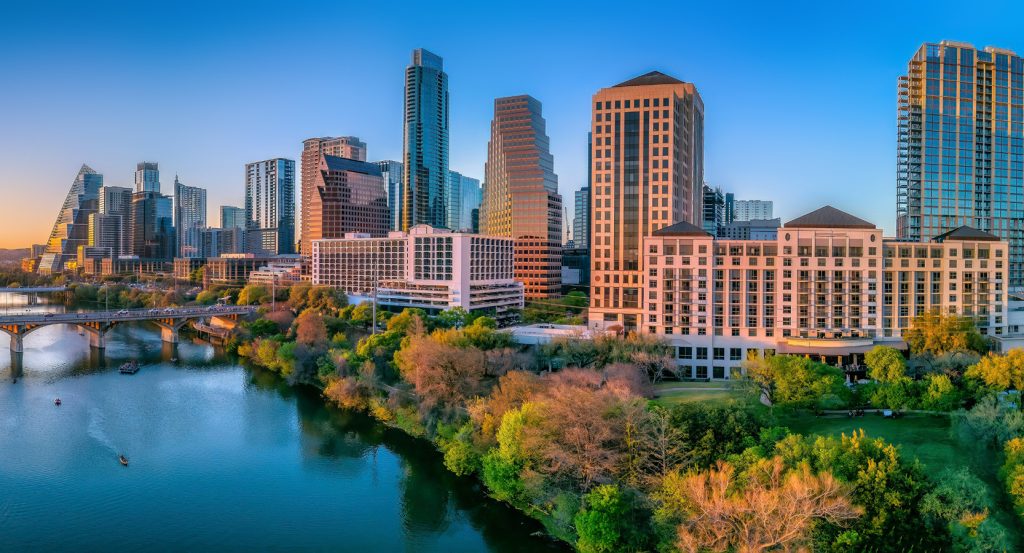
Set along West 3rd Street near Nueces Street and just south of the Market District, the restaurant occupies the ground floor of a contemporary residential tower in Downtown's Seaholm District, where former industrial properties, landscaped pedestrian corridors and modern commercial buildings define the redeveloped western waterfront. Floor-to-ceiling windows introduce natural light into an intimate dining room distinguished by dark wood, warm metallic finishes and carefully arranged seating. An open kitchen centers on a substantial wood-burning hearth, placing the movement of flames and the preparation of ingredients within direct view of diners. A chef's counter provides an especially close perspective on the cooking process, with polished surfaces and restrained decorative details emphasizing the kitchen's architectural presence. The result is a sophisticated urban restaurant whose carefully organized dining room and commanding central hearth establish a distinctive setting for contemporary American cooking.
What defines Hestia.
Hestia is best known for its ambitious live-fire cooking, which places a substantial wood-burning hearth at the center of an inventive contemporary American tasting-menu program. Chef Kevin Fink developed his professional approach through extensive experience in acclaimed restaurant kitchens, including work at The French Laundry in California. His training introduced techniques associated with precise preparation, carefully composed dishes and the close examination of ingredient quality. Fink subsequently worked at Noma in Copenhagen, gaining exposure to the restaurant's influential approach to fermentation, preservation and regional sourcing. He also developed professional experience at restaurants including Per Se in New York, strengthening his command of contemporary fine-dining techniques. His career brought him to Austin, where he established Emmer & Rye in 2015 with a culinary program devoted to heritage grains, seasonal ingredients and in-house milling. The restaurant's distinctive approach to contemporary American cooking introduced an influential connection between agricultural production and sophisticated restaurant preparation. Fink subsequently expanded his culinary enterprises through the development of additional Austin restaurants, including Henbit and Kalimotxo. Hestia opened in 2019 as a more intimate and technically ambitious expression of his cooking, introducing a substantial live-fire kitchen and a structured tasting-menu format. The restaurant took its name from the ancient Greek goddess of the hearth, establishing a direct connection between its culinary focus and the historical significance of fire in domestic and communal life. Fink and his culinary partners developed the restaurant around the relationship between open-flame cooking, carefully sourced ingredients and the technical possibilities of contemporary gastronomy. The MICHELIN Guide awarded Hestia one star in its inaugural Texas selection in 2024, recognizing the precision and ambition of its culinary program. The restaurant retained its MICHELIN star in subsequent Texas selections, establishing its place among Austin's most distinguished fine-dining establishments.
The central hearth accommodates an extensive range of cooking techniques, including direct grilling, ember roasting, smoking and the careful management of radiant heat. Chefs work with varying temperatures and different stages of combustion, developing flavors through controlled exposure to flame, smoke and hot coals. Seasonal vegetables receive particular attention, with roasting techniques concentrating their natural sweetness and introducing complex caramelized surfaces. Seafood preparations incorporate delicate cooking methods that preserve texture and moisture alongside the distinctive flavors produced by the hearth. Dry-aged meats contribute another important dimension to the menu, introducing concentrated savory characteristics through controlled maturation before cooking. The kitchen also employs fermentation, curing and other preservation techniques associated with Fink's broader culinary interests. A tasting menu develops through a carefully arranged succession of courses, beginning with smaller preparations before progressing toward substantial dishes and composed desserts. The restaurant's à la carte selections provide another opportunity to explore its cooking through individual dishes organized around seasonal availability. Hestia's wine program incorporates carefully selected bottles from established European regions and contemporary producers, supporting the kitchen's varied preparations. Beverage pairings introduce an additional relationship between the sequence of dishes and the flavors developed through live-fire cooking. The restaurant's pastry program extends the culinary approach into desserts that incorporate seasonal fruit, refined textures and carefully controlled sweetness. The open kitchen permits diners to observe the handling of ingredients, the management of the fire and the precise coordination required for an elaborate multicourse meal. Service emphasizes detailed explanations of culinary techniques and ingredients, maintaining an attentive pace throughout the meal. Hestia's significance rests in its sophisticated integration of ancient cooking methods, contemporary technical precision and the agricultural resources of Central Texas.
How Hestia fits.
Hestia works as the culinary anchor for a Downtown outing connecting the city's industrial heritage, its contemporary waterfront redevelopment and the cultural institutions associated with the western edge of the central business district.
Begin at Austin Central Library, the major civic institution overlooking Shoal Creek and Lady Bird Lake. The building opened in 2017 and was designed by the architectural firms Lake|Flato and Shepley Bulfinch. Its contemporary structure incorporates extensive glass walls, landscaped terraces and a six-story atrium that introduces natural light deep into the interior. A rooftop garden provides views across the surrounding waterfront and downtown skyline, establishing an important connection between public architecture and the city's outdoor landscape. The library's collections, reading spaces and public programming support its role as a major cultural and educational resource. Continue to Seaholm Power Plant, the historic industrial complex constructed during the mid-twentieth century to supply electricity to Austin. Its expansive Art Deco architecture incorporates substantial masonry surfaces, tall windows and distinctive industrial proportions associated with municipal infrastructure. The facility ceased generating electricity in 1989, eventually becoming the centerpiece of a major downtown redevelopment project. Preservation of the principal structure established an important architectural connection between Austin's industrial past and its expanding contemporary waterfront district. The surrounding plazas and pedestrian routes introduce landscaped public spaces within the former utility complex. Conclude at Butler Hike-and-Bike Trail, the extensive recreational pathway encircling Lady Bird Lake. The trail extends ten miles through interconnected parkland, waterfront landscapes and established urban neighborhoods. Its paved and natural-surface sections accommodate walking, running and cycling beneath mature trees and along carefully maintained shoreline corridors. Pedestrian bridges and lakeside pathways connect prominent public spaces across the northern and southern banks. The trail's relationship with the Colorado River establishes one of Austin's most important continuous recreational landscapes. The progression moves from Austin Central Library's contemporary civic architecture through Seaholm Power Plant's preserved industrial complex and culminates along Butler Hike-and-Bike Trail's waterfront landscape, connecting three distinctive dimensions of Downtown's architectural and recreational development.
Where your story begins.
Foresyte Travel reveals places that feel extraordinary long before you arrive.
Enjoy editorial crafted for luxury travelers.
Foresyte may earn a commission when you book.














































































































