
Why Honest Burgers South Bank matters.
Honest Burgers South Bank is a grounded British burger restaurant where South Bank's postwar cultural quarter meets chopped native-breed beef, handmade rosemary chips and the ingredient-led simplicity Tom Barton and Philip Eeles developed from a Brighton street-food operation.
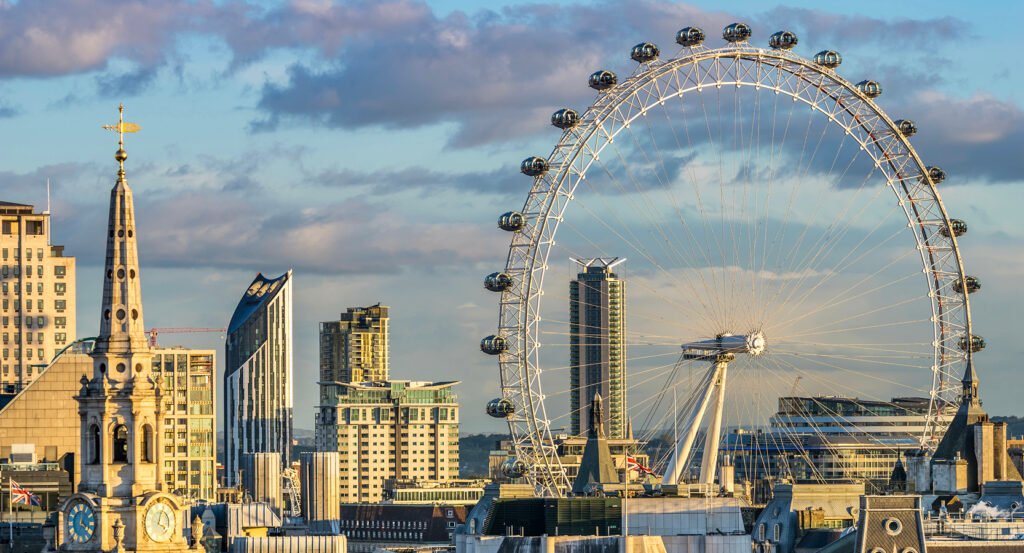
Set along Festival Terrace near Belvedere Road and just steps from Jubilee Gardens, the restaurant occupies the South Bank between Royal Festival Hall's riverfront complex to the west, Waterloo's rail approaches to the south and the pedestrian arts corridor extending east beneath Hungerford Bridge. Large windows draw daylight across a compact dining room whose straightforward tables and banquettes keep attention on the kitchen and surrounding riverside movement. An outdoor terrace carries service onto the pedestrian route behind Royal Festival Hall, placing diners directly within the flow between Waterloo and the Thames. The modest scale keeps the room close to Honest's original neighborhood-restaurant model even amid one of Central London's busiest cultural districts. The result is an unfussy burger restaurant whose compact interior and pavement seating place a deliberately simple format inside the expansive architecture and pedestrian circulation of the South Bank.
What defines Honest Burgers South Bank.
Honest Burgers South Bank is best known for carrying Tom Barton and Philip Eeles's homemade burger model into the South Bank while preserving production practices developed during the company's earliest years. Barton and Eeles met working at a Brighton restaurant during university and decided over a pint to establish their own business. They each committed £3,000, bought a marquee, fryer and grill, and began cooking at private events and festivals during 2010. Brighton Food Festival tested the operation at greater volume, forcing the pair to prepare another batch of chips overnight after selling their original supply in a single day. A permanent opportunity followed at Brixton Village in 2011, where they fitted much of the first restaurant themselves and established rosemary-salted chips as part of every burger order. Dorian Waite joined during the company's formative stage, bringing senior operational experience from Strada and Côte as Honest expanded beyond its founders' street-food background. Soho became the second restaurant in 2012, followed by Camden, Portobello Road and King's Cross as the business developed across London. Active Partners invested £7 million for a substantial stake at the beginning of 2015, valuing the company at £16 million and providing capital for expansion during the growth of Britain's specialist burger sector. Honest subsequently established its own butchery, bringing the preparation of its British native-breed beef directly into the company and replacing conventional repeated mincing with coarse chopping. That control over beef, potatoes, sauces, pickles and other house preparations gives the South Bank restaurant the same production principles established from the first Brixton dining room.
Appleby's Cheshire cheese gives head chef Paulina's South Bank burger a producer-specific connection to British cheesemaking, joining bacon, barbecue sauce, crispy onions, ranch mayonnaise, lettuce and pickles over a choice of chopped beef, fried chicken or double-smashed patties. Neal's Yard Dairy champions the cheese, whose Appleby family recipe dates to 1952 and produces a naturally deep orange cheese with a rich flavor and strong melting behavior. Honest's beef begins with native-breed cattle raised in Great Britain and Northern Ireland, grass-fed through the grazing seasons before the meat reaches the company's butchery. Coarse chopping preserves larger pieces of muscle and fat than repeated mincing, creating a patty whose looser internal structure stays tender as heat browns the exterior. Direct contact with a hot cooking surface drives browning across the beef, concentrating roasted flavors around a center capable of retaining substantial moisture. Bacon adds cured pork fat and salt, then melted Cheshire cheese binds those browned surfaces to the sweeter barbecue sauce. Crispy onions introduce a brittle fried layer above the softer meat and cheese, and pickles cut through their fat with acidity. Ranch mayonnaise carries the burger toward a cooler, creamy finish as lettuce supplies fresh resistance between the cooked components and bun. Honest's potatoes undergo a separate double-cooking process before rosemary salt coats their crisp exterior, a preparation the founders have served with burgers since Brixton. House production also extends to the rosemary salt, pickles, relish, lemonade, vegetable fritters and sauces, keeping multiple supporting elements under the company's own kitchens. Honest Burgers South Bank builds its food around this control of texture and preparation, moving British beef, handmade condiments, regional cheese and double-cooked potatoes through a compact format in which small production decisions carry much of the flavor.
How Honest Burgers South Bank fits.
Honest Burgers South Bank works as the meal anchor for a South Bank route connecting Britain's great postwar festival auditorium, a film institution descended from an experimental 1951 cinema and the purpose-built home created for the National Theatre company after decades of campaigning.
Begin at Royal Festival Hall, whose foundation stone was laid by Clement Attlee in 1949 as construction began for the centerpiece of the Festival of Britain. King George VI opened the hall on May 3, 1951, with Sir Adrian Boult and Sir Malcolm Sargent conducting its first evening concert. The wider festival grounds were dismantled after the exhibition, leaving the hall as the South Bank site's sole permanent building. Its architects wrapped foyers and ancillary rooms around a suspended central auditorium, using that arrangement to isolate performances from surrounding urban noise. Grade I listing followed in 1988, giving statutory protection to one of Britain's earliest major postwar modernist public buildings. Continue to BFI Southbank, whose lineage begins with the 410-seat Telekinema constructed for the same 1951 festival. The temporary cinema presented film, television, stereoscopic projection and stereophonic sound before functioning as the National Film Theatre between 1952 and 1957. A permanent National Film Theatre opened beneath Waterloo Bridge in 1957, with Princess Margaret attending an inaugural evening that brought John Ford, René Clair, Akira Kurosawa and G. A. Smith into the auditorium. The first London Film Festival followed there that October, opening with Kurosawa's Throne of Blood as part of a 15-film international program. Conclude at National Theatre, the South Bank home of a company founded in 1963 after a campaign for a national theatre stretching through much of the twentieth century. The company spent its first years at the Old Vic before moving into Denys Lasdun's purpose-built South Bank complex in 1976. Lasdun's design incorporated the Olivier, Lyttelton and Cottesloe theatres alongside extensive foyers conceived for performances and public activity beyond the auditoria. Hamlet, the play that inaugurated the company at the Old Vic in 1963, became the first production staged on the South Bank in 1976, creating a direct link between the institution's two principal London homes. The progression moves from a modernist concert hall built as the permanent legacy of a national festival through an experimental cinema transformed into Britain's principal public film venue and culminates in a purpose-built theatre complex that gave a decades-long national campaign its architectural home.
Where your story begins.
Foresyte Travel reveals places that feel extraordinary long before you arrive.
Enjoy editorial crafted for luxury travelers.
Foresyte may earn a commission when you book.














































































































