
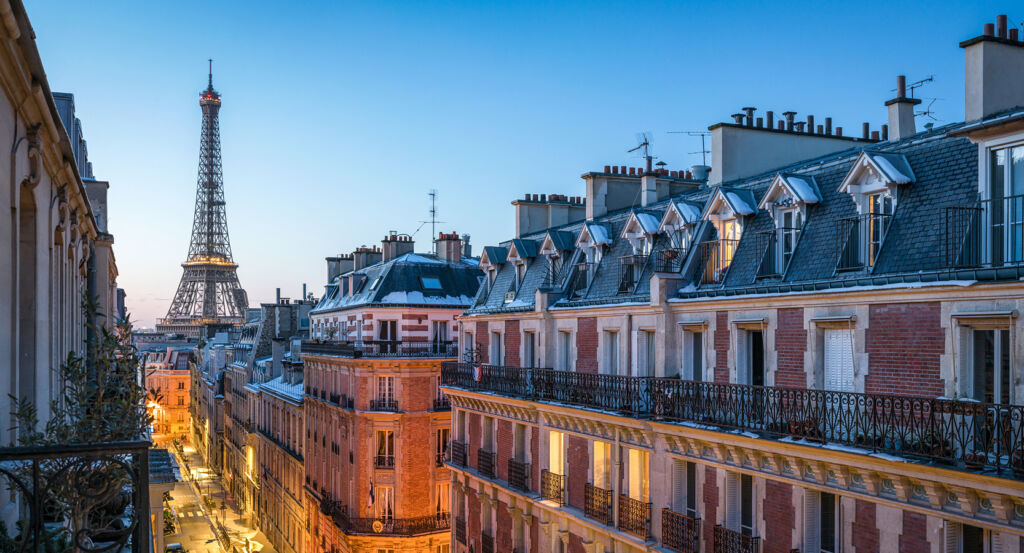
Why you should experience Hôtel Aulivia Opéra in Paris, France.
Hôtel Aulivia Opéra is a sociable four-star hotel where Porte-Saint-Denis's immigrant cultures, independent nightlife, culinary cross-pollination and rebellious creative energy converge within an intimate base for one of Paris's most animated northern quarters.
Set along Rue des Petites Écuries near Rue du Faubourg Saint-Denis and just steps from the neighborhood's restaurant-lined passages, the 32-room hotel sits inside a street whose contemporary character has been shaped by an unusually concentrated culture of independent food, wine and nightlife. Compact guestrooms and relaxed communal spaces keep the property deliberately informal, with a lobby bar and lounge reinforcing its role as a place for gathering before moving into the surrounding streets. The location places the hotel between the multicultural commercial world of Faubourg Saint-Denis and the increasingly culinary character of Rue des Petites Écuries, where independent restaurateurs have turned former workshops and storefronts into one of the Arrondissement's most distinctive evening ecosystems. The result is a hotel where an uncomplicated hospitality model feels completely native to Porte-Saint-Denis, a quarter whose personality comes from people eating, drinking, creating and exchanging ideas within remarkably close quarters.
What you should know about Hôtel Aulivia Opéra.
Hôtel Aulivia Opéra is best known for operating as an intimate 32-room hotel at 4 Rue des Petites Écuries, placing its contemporary hospitality directly within a street whose modern culinary reputation accelerated when restaurateur Arnaud Lacombe concentrated Vivant, Déviant, Da Graziella and Hôtel Bourbon within the same immediate block. Lacombe developed the group with a deliberately fluid approach to dining and nightlife, while chef Pierre Touitou became closely associated with Vivant and Déviant and Da Graziella introduced Neapolitan pizza into the interconnected collection of addresses. Hôtel Bourbon extended the ecosystem beyond restaurants through late-night parties, effectively allowing a few neighboring premises to move through wine bar, restaurant, pizzeria and nightlife functions as the evening progressed. The concentration gave Rue des Petites Écuries a particularly strong contemporary character within the tenth Arrondissement, placing Hôtel Aulivia Opéra inside a micro-district where independent hospitality became a significant creative force in its own right.
HappyCulture connects Hôtel Aulivia Opéra with a wider French collection of independently styled urban hotels while preserving the compact scale and neighborhood orientation that distinguish the Rue des Petites Écuries property. The hotel's 32 accommodations progress through Single, Double, Twin and Triple configurations, allowing its room program to serve solo stays, couples and small groups within the same relatively intimate footprint. Hôtel Aulivia Opéra develops its communal character through a ground-floor lounge and bar, extending the property beyond sleeping accommodation into a social space consistent with the convivial culture immediately outside. Together, HappyCulture, Rue des Petites Écuries and the hotel's compact 32-room configuration establish Hôtel Aulivia Opéra as a deliberately approachable base whose strongest asset is its immersion within the independent hospitality culture of Porte-Saint-Denis.
How to fold Hôtel Aulivia Opéra into your trip.
Hôtel Aulivia Opéra works as the anchor for an afternoon tracing royal performance, nineteenth-century commercial ingenuity and fiercely independent cinema through three institutions that explain the unusual cultural layering of Porte-Saint-Denis.
Begin at Porte Saint-Denis, where Louis XIV commissioned François Blondel and sculptor Michel Anguier in 1672 to replace a medieval gate with a triumphal arch celebrating French victories on the Rhine and Meuse, its sculptural program including the Passage of the Rhine and Capture of Maastricht. Continue through Passage Brady, begun in 1825 and completed in 1828 by merchant developers including M. Briavoine, creating a 216-meter covered commercial passage between Faubourg Saint-Denis and Faubourg Saint-Martin that later became deeply associated with South Asian restaurants and businesses. Conclude at Le Brady, the fiercely individual cinema opened on June 25, 1956, frequented by François Truffaut and acquired by filmmaker Jean-Pierre Mocky in 1994 before evolving into a two-screen art-house venue retaining 35mm projection alongside contemporary digital technology. The progression moves from Blondel and Anguier's architecture of royal power through the entrepreneurial logic of the covered passage into the cinematic independence of Truffaut and Mocky, revealing the repeated reinvention that gives Hôtel Aulivia Opéra's surroundings their restless character.
Where your story begins.
Foresyte Travel reveals places that feel extraordinary long before you arrive.
Experience premium editorial crafted for luxury travelers.














































































































