
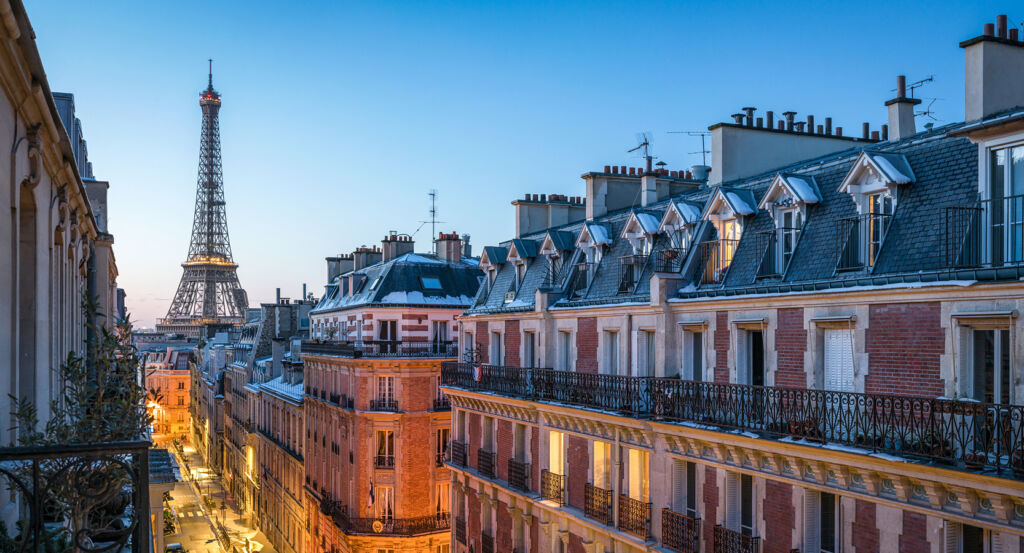
Why you should experience Hôtel Mercure Paris Malakoff Parc des Expositions in Paris, France.
Hôtel Mercure Paris Malakoff Parc des Expositions is an electric four-star hotel where Malakoff's inventive character, engineering heritage, independent cultural life and century-long fascination with changing technologies of light converge within a 52-room property conceived around electricity.
Set along Avenue Pierre Brossolette near Avenue Augustin Dumont and just steps from Maison des Arts, the hotel translates a striking piece of Malakoff history into interiors shaped by illuminated surfaces, vivid lighting and an electricity motif rooted in the commune. Malakoff housed École Supérieure d'Électricité, known as Supélec, from 1927 to 1975, while a surviving gas lamp provides a counterpoint from an earlier era of urban illumination that Accor explicitly identifies as inspiration for the property. The 52-room scale keeps the experience intimate, with 15-square-meter Classic and Privilege accommodations overlooking the garden and private terraces extending selected Privilege rooms into the greenery behind the building. The result is a hotel where lighting, engineering history and a secluded garden turn Malakoff's unusual relationship with electricity into the defining language of the property.
What you should know about Hôtel Mercure Paris Malakoff Parc des Expositions.
Hôtel Mercure Paris Malakoff Parc des Expositions is best known for building its renovated character around Malakoff's electrical history, specifically the 48-year presence of Supélec between 1927 and 1975 and the commune's surviving gas lamp, two local artifacts that Accor explicitly identifies as the inspiration for the hotel's electricity leitmotif. Supélec itself was founded in 1894 by physicist Éleuthère Mascart with support from the International Society of Electricians, adopted the École Supérieure d'Électricité name in 1896 and moved from Paris to its purpose-built Malakoff campus in 1927, the same year two women earned the school's engineering degree for the first time. The Malakoff campus was created on a former brickworks after a 1924 decision to expand beyond Paris, with architects André Raimbert and Jean Papet designing an Art Deco complex whose entrance incorporated glazed stoneware reliefs by sculptor Paul Moreau-Vauthier depicting Zeus and the personification of electricity, while ceramicists Alphonse Gentil and François Eugène Bourdet supplied gilded glazed stoneware across the façades. Supélec's Malakoff period also encompassed the April 24, 1931 vision-phonie experiment directed by René Barthélemy, an two-hour demonstration associated with the development of French television, before the school relocated its principal campus to Gif-sur-Yvette in 1975. The hotel's 52-room electricity concept draws from a local scientific record encompassing Éleuthère Mascart, nearly five decades of Supélec, Raimbert and Papet's Art Deco architecture, Moreau-Vauthier's electrical imagery and René Barthélemy's early television experimentation.
Leonel Botelho Alves currently directs a property whose compact accommodation program divides 52 rooms across categories including Superior, Classic, Single, Privilege and family configurations, with standard double accommodations documented at 15 square meters and Single rooms at 12 square meters. Accor extends the electricity narrative into guestrooms and public areas through deliberately luminous interiors, while Privilege rooms add private terraces and garden views that connect the design concept to the quieter rear of the property. Green Key certification places the hotel within the international Foundation for Environmental Education program, while Accor identifies the designation as France's leading sustainable-tourism standard for accommodation and continues to foreground the property's garden, private parking and 700-meter connection to the metro. Leonel Botelho Alves, the 52-room inventory, private-terrace Privilege accommodations and Green Key program give the contemporary hotel a practical second character alongside the scientific narrative that distinguishes its design.
How to fold Hôtel Mercure Paris Malakoff Parc des Expositions into your trip.
Hôtel Mercure Paris Malakoff Parc des Expositions works as the anchor for an afternoon tracing the scientific, artistic and performance cultures that have given Malakoff an unusually independent character beside Paris.
Begin at the former Supélec campus, where the engineering school arrived in 1927 after architects André Raimbert and Jean Papet transformed a former brickworks into an Art Deco complex decorated with gilded ceramics by Alphonse Gentil and François Eugène Bourdet and sculptural reliefs by Paul Moreau-Vauthier, before René Barthélemy directed a pioneering vision-phonie experiment there in 1931. Continue to Maison des Arts, where a neoclassical residence constructed around 1830 to 1840 was noticed decades later by culture minister André Malraux, had its façades and roof entered into the supplementary inventory of historic monuments on October 28, 1980, became municipal property in 1993 and opened as a contemporary art center in 1997. Conclude at Théâtre 71, created as a cultural center in 1971 and named for the centenary of the Paris Commune, before becoming a Scène nationale in 1991 and moving into a building by architects Lana and Rozen inaugurated on February 16, 1992. The progression moves from Malakoff's electrical engineering heritage through the preservation and production of contemporary art into a performance institution born from the cultural ambitions of the 1970s, revealing the intellectual independence that gives Hôtel Mercure Paris Malakoff Parc des Expositions its strongest local context.
Where your story begins.
Foresyte Travel reveals places that feel extraordinary long before you arrive.
Experience premium editorial crafted for luxury travelers.














































































































