Why Hudson Avenue matters.
Hudson Avenue is an intimate corridor where Near North Side's industrial heritage, residential elegance, architectural continuity, and Chicago's enduring spirit of reinvention remain closely intertwined.
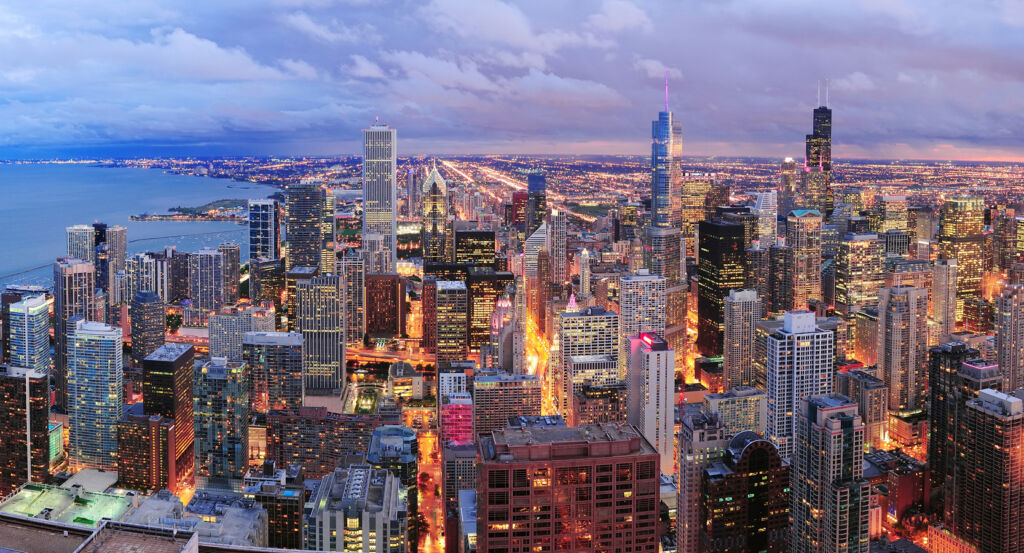
Running through the Near North Side between Old Town and River North, Hudson Avenue connects historic cottages, warehouse conversions, churches, residential blocks, and contemporary infill that collectively reflect more than 150 years of urban evolution. The corridor reveals how post-fire rebuilding, manufacturing, commerce, and thoughtful preservation reshaped former industrial blocks into one of Chicago's most architecturally layered neighborhoods. Nineteenth-century masonry buildings and modern residences coexist throughout the streetscape while reinforcing the avenue's distinctive sense of continuity. The result is a corridor distinguished by architectural richness, neighborhood character, and an enduring role within Chicago's Central North Side.
What defines Hudson Avenue.
Hudson Avenue is best known for extending through the Near North Side, where reconstruction following the Great Chicago Fire of 1871 accelerated residential growth, warehouse construction, and commercial expansion across land formerly occupied by scattered cottages and industrial enterprises. Building activity between the 1880s and the 1930s introduced brick row houses, warehouse lofts, manufacturing buildings, Romanesque commercial structures, and early apartment houses that established the corridor's enduring architectural identity. Expansion of nearby rail freight facilities, improvements along the North Branch of the Chicago River, and continued investment in surrounding neighborhoods reinforced Hudson Avenue's importance within one of the city's principal residential and commercial districts. Continued adaptive reuse and preservation have retained much of the corridor's historic masonry fabric while supporting its evolving residential character.
Creation of the Near North Unity Program strengthened neighborhood cooperation through housing initiatives, preservation advocacy, beautification projects, and community planning that encouraged sustained investment surrounding Hudson Avenue. Designation of the Old Town Triangle Historic District on the National Register of Historic Places protected one of Chicago's finest collections of Victorian-era residential architecture while documenting the broader evolution of the surrounding community. Architect Henry Ives Cobb designed influential residences, churches, and institutional buildings throughout the Near North Side, helping define the architectural character of neighborhoods surrounding Hudson Avenue during the late nineteenth century. Together, the Near North Unity Program, the Old Town Triangle Historic District, the National Register of Historic Places, and Henry Ives Cobb demonstrate how neighborhood stewardship, historic preservation, and architectural accomplishment have collectively reinforced Hudson Avenue's enduring identity.
How Hudson Avenue fits.
Hudson Avenue works as an exploration of the Near North Side's architectural heritage, artistic traditions, and residential evolution.
Begin at St. Michael's Church, where soaring Gothic Revival architecture and one of the few churches to survive the Great Chicago Fire establish the historical foundations that shaped the surrounding neighborhood before continuing along Hudson Avenue. Continue to The Second City, where generations of performers, writers, and improvisational innovation expand the experience from architectural history into one of Chicago's defining cultural traditions before leading toward the neighborhood's residential heart. Conclude at Old Town Art Fair, where historic streets, carefully preserved homes, and one of Chicago's longest-running juried art festivals provide the historical and cultural payoff, demonstrating how preservation, creativity, and neighborhood stewardship continue defining the Near North Side. The complete sequence reveals how historic architecture, creative expression, and community preservation together explain why Hudson Avenue remains one of Chicago's most distinctive corridors.
Where your story begins.
Foresyte Travel reveals places that feel extraordinary long before you arrive.
Enjoy editorial crafted for luxury travelers.
Foresyte may earn a commission when you book.