Why InterContinental Le Moana Bora Bora Resort matters.
InterContinental Le Moana Bora Bora Resort is a pioneering Polynesian beachfront hotel where Matira Point's celebrated lagoon geography meets the early development of overwater hospitality and the preservation of Bora Bora's cultural and marine heritage.
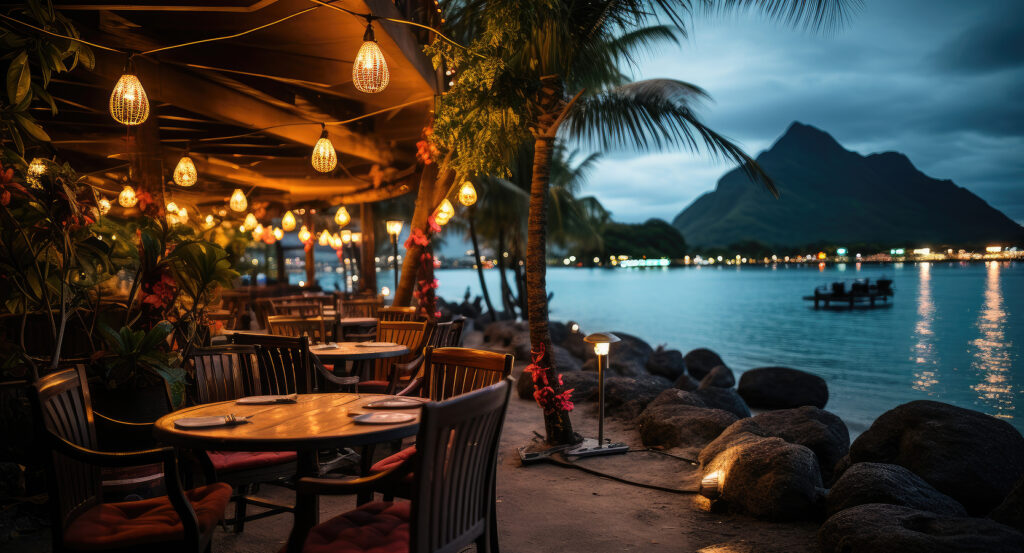
Occupying the southernmost peninsula of Bora Bora's principal island, InterContinental Le Moana Bora Bora Resort stands between two sheltered stretches of lagoon, with the island's volcanic mountains rising northward and the coral barrier reef enclosing the surrounding turquoise waters. The property's low-rise thatched buildings and branching overwater pontoons follow the peninsula's narrow coastal geography, establishing a distinctive architectural composition directly above the shallow lagoon. Arrival through the principal beachfront buildings leads toward landscaped gardens and open-air gathering spaces, where traditional Polynesian roof forms frame views across the water. Beyond the shoreline, wooden walkways extend toward individual overwater bungalows, creating a second encounter with the lagoon through elevated terraces and glass viewing panels positioned above the marine environment. The result is a resort whose intimate architectural scale and direct relationship with Bora Bora's principal island distinguish it within a destination increasingly associated with isolated private-islet developments.
What defines InterContinental Le Moana Bora Bora Resort.
InterContinental Le Moana Bora Bora Resort is best known for opening in 1987 as the Moana Beachcomber Hotel, establishing one of Bora Bora's early international overwater resorts during the expansion of French Polynesia's luxury hospitality industry. Its development followed the transformation of the Society Islands' tourism economy through commercial aviation, international investment, and the introduction of bungalow accommodation extending above tropical lagoons. The original project occupied a position on Bora Bora's principal island, connecting an established coastal settlement with the emerging architectural conventions of Polynesian resort development. Its Beachcomber affiliation placed the property within a hospitality organization that subsequently became central to the expansion of international hotels across French Polynesia. Richard H. Bailey entered the Beachcomber organization during the late 1980s, establishing a professional relationship that developed into ownership of the group's principal properties. Bailey acquired Tahiti Beachcomber SA in 1998, bringing the Tahiti and Bora Bora operations under his control and establishing the commercial foundation for Pacific Beachcomber. The acquisition formed part of a broader strategy to develop an integrated Polynesian hospitality organization combining locally established ownership with international hotel management. A major institutional transition followed in 2001 when the Moana Beachcomber adopted the InterContinental Bora Bora Le Moana Resort name. The affiliation connected the established property with InterContinental Hotels Group's international reservation, marketing, and hospitality systems. Pacific Beachcomber subsequently expanded its portfolio through additional properties in the Society Islands, including the InterContinental Bora Bora Resort & Thalasso Spa, which opened on Motu Piti Aau in 2006. The development of the second Bora Bora property established a complementary relationship between Le Moana's original beachfront setting and a newer generation of private-islet resort architecture. Le Moana received a place on Condé Nast Traveler's Gold List in 2014, extending its international recognition during a period of substantial competition among South Pacific luxury resorts. Condé Nast Traveler subsequently ranked the property fifth among resorts in Australia and the South Pacific in its 2016 Readers' Choice Awards. Travel + Leisure placed the hotel fifth among South Pacific resort hotels in its 2017 World's Best Awards, reinforcing its established position within the region's hospitality market. The property also received Booking.com's Guest Review Award in 2018, reflecting its sustained performance within international accommodation platforms. Its historical development connects the early expansion of overwater resort architecture with the growth of Pacific Beachcomber and the long-term integration of locally owned Polynesian hotels into an international hospitality network.
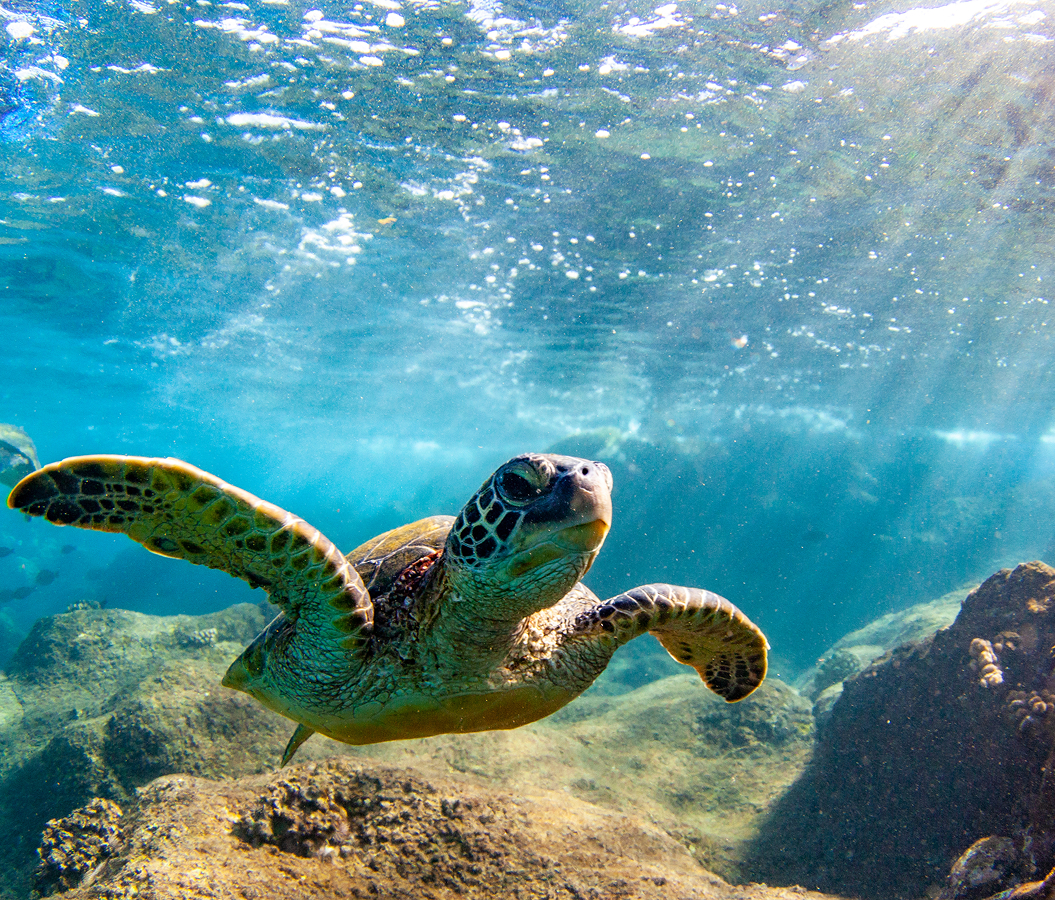
Denis Schneider developed an important conservation relationship with the property through Tahiti Biorock, an organization dedicated to coral restoration using electrically assisted mineral accretion. A destructive red-tide event in 2002 damaged eighteen kilometers of Bora Bora's coral reef, creating substantial ecological consequences for the surrounding marine environment. The resort subsequently collaborated with Schneider to restore damaged coral colonies through an experimental program using artificial underwater structures. Biorock technology passes a low-voltage electrical current through submerged metal structures, encouraging dissolved minerals to accumulate on their surfaces and providing a substrate for coral growth. The property's restoration program incorporates coral fragments attached to these structures, supporting the development of new colonies within a controlled underwater environment. Solar panels supply the electrical current required by the structures, connecting the restoration process with renewable energy. Individual reef units measure one meter in diameter and sixty centimeters in height, establishing manageable structures for coral cultivation and subsequent relocation. The program organizes the structures into groups of ten, maintaining electrical support for two years before transferring the cultivated reefs into the surrounding environment. Several installations incorporate heart-shaped and star-shaped structures, creating distinctive underwater structures that support the growth of coral and the establishment of associated marine organisms. The restored habitat attracts fish, sea cucumbers, and giant clams, extending the project's ecological significance beyond individual coral colonies. A specialized marine conservation organization conducts monthly maintenance of the resort's coral installations, supporting the continued development of the underwater habitat. The property also participates in Reef Check, an international marine monitoring organization whose Bora Bora program encompasses nineteen observation sites. Its involvement connects the local restoration project with a wider scientific effort to understand reef health and changes in marine biodiversity. The resort's botanical trail provides a complementary terrestrial conservation initiative, preserving an area of indigenous and introduced tropical vegetation within the grounds. These programs establish a sustained relationship between the property's hospitality operations and the protection of the marine and botanical environments that define Bora Bora's coastal geography.
How InterContinental Le Moana Bora Bora Resort fits.
InterContinental Le Moana Bora Bora Resort works as the starting point for an exploration connecting the island's public coastal traditions, the development of its principal settlement, and the religious institutions established during the nineteenth-century transformation of Polynesian society.
Begin at Matira Beach, Bora Bora's principal public beach and an important coastal gathering place at the southern end of the island. The shoreline extends across a long crescent of white coral sand, with shallow lagoon waters protected by the surrounding barrier reef. Its name is associated with a whaling vessel that entered Polynesian waters during the late eighteenth century, preserving a maritime reference within the island's coastal geography. The beach also serves as the finishing location for Hawaiki Nui Va'a, the annual outrigger canoe competition connecting the Leeward Islands through traditional Polynesian maritime sport. Established in 1992, the race developed into one of French Polynesia's principal sporting events, drawing competitors from across the Pacific and beyond. The public shoreline preserves an important connection between Bora Bora's coastal environment and the island's resident community. Continue to Vaitape, the principal settlement and administrative center of Bora Bora, whose development accelerated during the arrival of Protestant missionaries in the early nineteenth century. British missionary John Muggridge Orsmond established a mission settlement in the area during the 1820s, developing a community that incorporated a church, school, wharf, and residential buildings constructed with locally available coral stone. The settlement became an important center for the expansion of Christianity throughout the island, connecting religious instruction with the introduction of new educational and administrative institutions. Vaitape subsequently developed into the island's principal commercial port, supporting maritime transportation, municipal government, and the exchange of agricultural and manufactured goods. Its waterfront commercial district retains an important relationship with Polynesian pearl cultivation, with local merchants participating in the international trade in Tahitian cultured black pearls. Conclude at Église Saint-Pierre-Célestin, the principal Catholic church serving Vaitape and an institution associated with the development of Roman Catholicism in the Leeward Islands. Catholic missionary activity expanded through French Polynesia during the nineteenth century, developing alongside the political consolidation of French colonial authority. The church's dedication to Pope Celestine I connects the local parish with the wider historical traditions of the Roman Catholic Church. Its religious functions encompass the celebration of Mass, baptism, marriage, and other ceremonies associated with the island's Catholic community. The parish operates within the ecclesiastical jurisdiction of the Archdiocese of Papeete, connecting Bora Bora's local religious institutions with the broader organization of Catholic worship across French Polynesia. Its position within Vaitape preserves the coexistence of Catholic and Protestant institutions established through successive periods of missionary activity. The progression moves from Matira Beach's public maritime traditions through Vaitape's nineteenth-century settlement history and culminates at Église Saint-Pierre-Célestin's religious heritage, connecting three distinct dimensions of Bora Bora's coastal and community development.
Where your story begins.
Foresyte Travel reveals places that feel extraordinary long before you arrive.
Enjoy editorial crafted for luxury travelers.
Foresyte may earn a commission when you book.