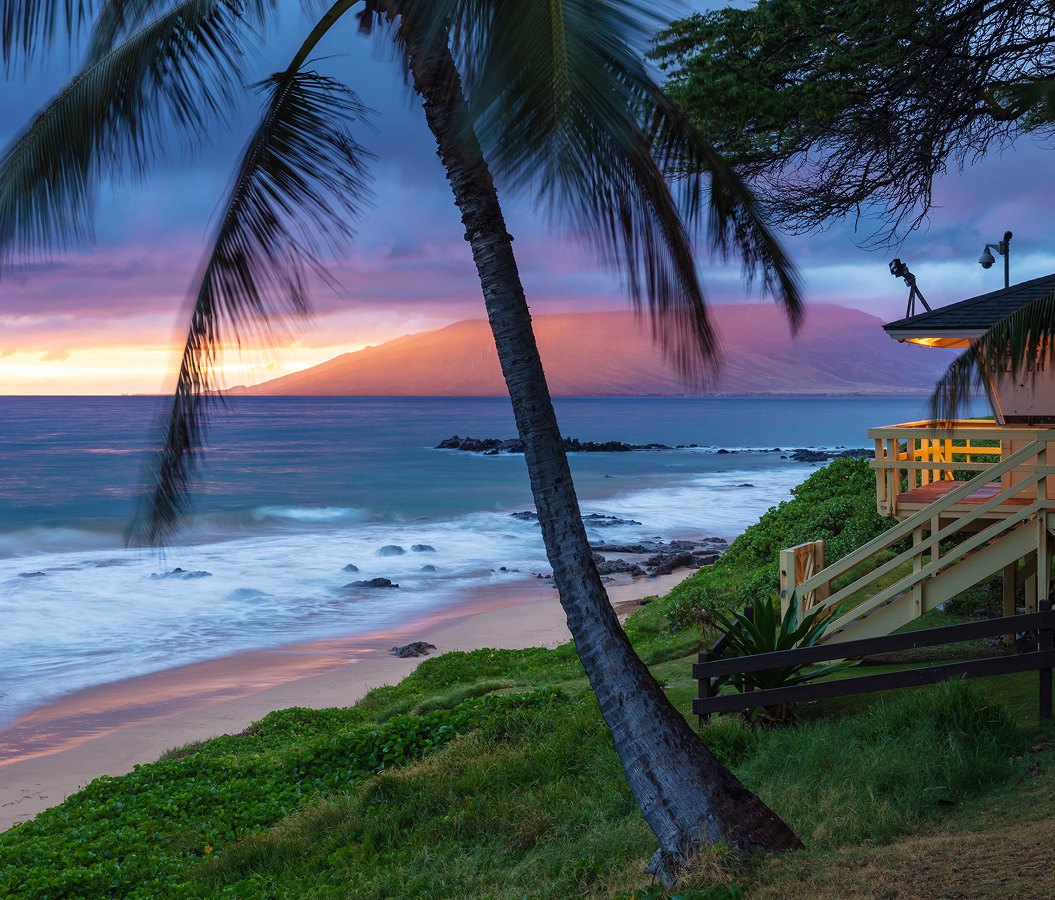
Why Kealakekua Bay State Historical Park matters.
Kealakekua Bay State Historical Park is a sacred coastal heritage site where South Kona's Hawaiian royal traditions meet Polynesian religious architecture, the history of Pacific exploration, and one of Hawaiʻi Island's most consequential encounters between indigenous society and European maritime expansion.
Occupying the sheltered waters and volcanic shoreline of Kealakekua Bay, the park extends across two coastal precincts beneath the steep slopes of South Kona, southwest of Captain Cook and the agricultural uplands surrounding Kealakekua. The southern precinct occupies Nāpōʻopoʻo, where a narrow shoreline of volcanic stones borders the bay beneath densely vegetated coastal cliffs. Across the water, the northern precinct encompasses Kaʻawaloa Flats, a secluded coastal terrace reached by the descending Kaʻawaloa Trail or permitted watercraft. The white Captain Cook Monument stands near the water at Kaʻawaloa, forming a prominent vertical feature against the dark volcanic coastline. At Nāpōʻopoʻo, the substantial basalt platform of Hikiau Heiau rises above the surrounding ground, preserving the imposing stone foundation of a traditional Hawaiian ceremonial structure. The bay's protected waters extend between these historic precincts, with coral formations visible beneath the surface and the dramatic Pali Kapu O Keōua cliffs defining the northern coastline. The result is a historically significant marine landscape where sacred Hawaiian architecture, rugged volcanic geography, and the physical setting of eighteenth-century Pacific exploration occupy a remarkably concentrated coastal environment.
What defines Kealakekua Bay State Historical Park.
Kealakekua Bay State Historical Park is best known as the setting of Captain James Cook's death on February 14, 1779, following a confrontation that transformed the history of European engagement with the Hawaiian Islands. Long before European arrival, Kealakekua functioned as an important political and religious center within the Kona district, supported by extensive agricultural production in the surrounding uplands and abundant marine resources along the coast. Hawaiian society organized the landscape through the ahupuaʻa system, connecting agricultural lands, settlements, and coastal fishing grounds within established territorial divisions. The ruling aliʻi maintained an important residential and political compound at Kaʻawaloa, and the kahuna, or priests, occupied the ceremonial center at Nāpōʻopoʻo. Hikiau Heiau formed a central institution within this religious landscape, serving ceremonies associated with the Hawaiian deities Lono and Kū during different periods of its history. Its expansive stone platform supported wooden ceremonial structures and sacred enclosures, giving the religious establishment a commanding position within the coastal settlement. The Makahiki season honored Lono through an annual cycle of religious observances, tribute collection, athletic competitions, and the temporary suspension of warfare. Captain James Cook arrived at Kealakekua Bay aboard HMS Resolution in January 1779 during his third Pacific expedition, accompanied by HMS Discovery under the command of Charles Clerke. The expedition had reached the Hawaiian archipelago during the preceding year, introducing sustained European maritime contact to islands whose inhabitants maintained extensive political, religious, and commercial relationships across Polynesia. Cook's arrival coincided with the Makahiki observances, placing the British expedition within a complex ceremonial setting associated with Lono. Hawaiian priests received Cook through rituals connected with the deity, and the visitors encountered the considerable political authority of Kalaniʻōpuʻu, the ruling chief of Hawaiʻi Island. Kalaniʻōpuʻu returned from Maui during the expedition's stay, accompanied by prominent chiefs and members of his household. Among the Hawaiian leaders associated with the settlement was the young Kamehameha, whose subsequent military campaigns would unite the Hawaiian Islands under a single kingdom. The British vessels remained in the bay for several weeks, during which exchanges of food, gifts, and other goods developed alongside growing tensions concerning resources and cultural expectations. Cook departed Kealakekua on February 4, but damage to Resolution's foremast forced the expedition to return for repairs. Relations deteriorated after the British returned, culminating in the seizure of a ship's cutter and Cook's attempt to take Kalaniʻōpuʻu aboard Resolution as leverage for its recovery. A confrontation developed on the shore at Kaʻawaloa on February 14, resulting in Cook's death and the deaths of several British marines and Hawaiian participants. Command of the expedition passed to Charles Clerke, who negotiated for the return of Cook's remains before the British vessels departed Hawaiʻi. The encounter became a defining episode in the history of European exploration of the Pacific, influencing subsequent accounts of Hawaiian society and the expanding presence of foreign ships in the archipelago. The significance of the site extended into the nineteenth century as European maritime powers developed stronger diplomatic and commercial relationships with the Hawaiian Kingdom. A memorial obelisk erected in 1874 commemorated Cook near the location of his death, introducing a permanent British monument into the historic Hawaiian coastal landscape. The surrounding Kealakekua Bay Historic District entered the National Register of Historic Places in 1973, recognizing the exceptional concentration of archaeological and historical resources associated with the settlement and its international significance. Hawaiʻi subsequently developed the protected coastal precincts as a state historical park, preserving the setting of the encounter alongside the indigenous ceremonial landscape that preceded it. Kealakekua Bay's importance derives from its simultaneous significance as a center of Hawaiian political authority, a sacred ceremonial landscape, and the location of an encounter that became central to the history of Pacific exploration.
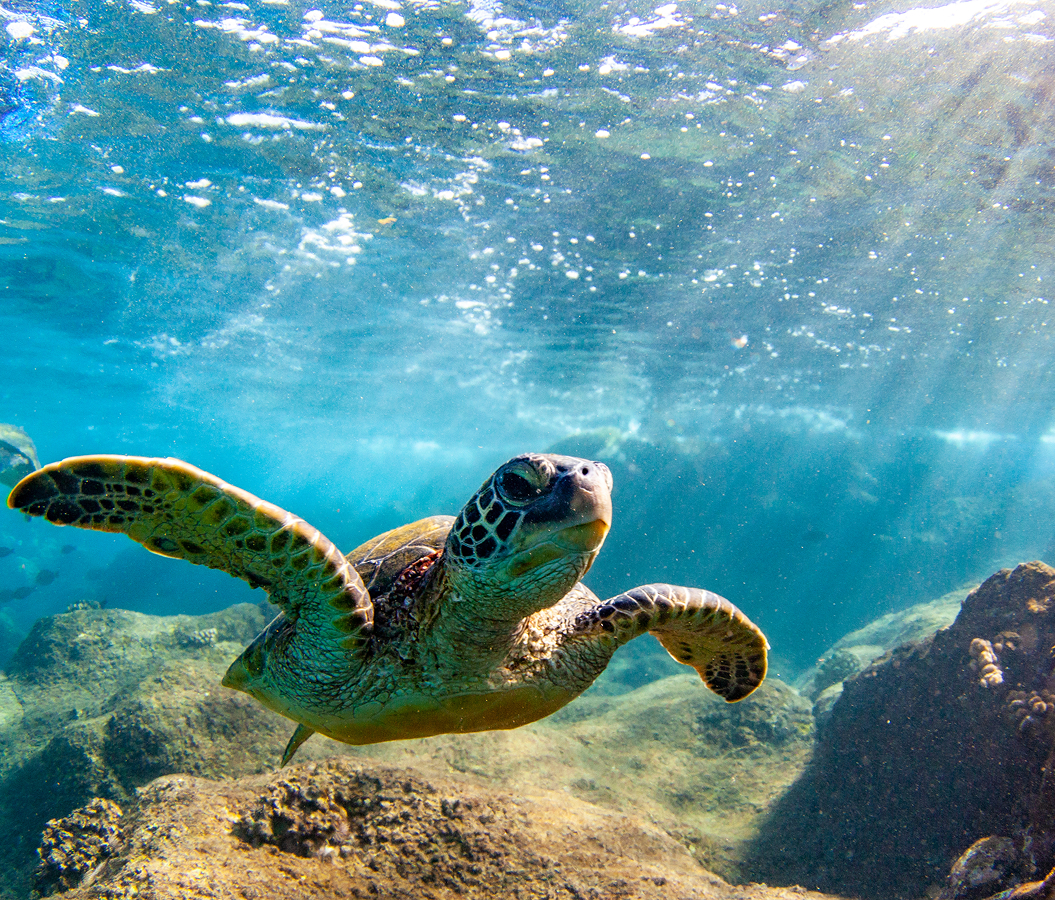
Kealakekua Bay's marine environment developed through the interaction of volcanic coastal geology, sheltered water circulation, and the biological productivity of Hawaiʻi Island's western reefs. The bay's underwater terrain includes coral formations, rocky substrates, and areas of deeper water that support distinct communities of reef fish and marine invertebrates. Hawaiian reef-building corals create complex structures that provide shelter for juvenile fish, feeding surfaces for herbivorous species, and habitat for organisms occupying the spaces between coral colonies. Yellow tang, convict tang, parrotfish, and butterflyfish contribute to the reef's ecological relationships through grazing, algae consumption, and specialized feeding behavior. Parrotfish use their hardened dental plates to scrape algae from reef surfaces, producing fine carbonate sediment through the breakdown of ingested material. Herbivorous fish play an important role in limiting algal growth that competes with living coral for space and sunlight. The bay's comparatively sheltered conditions also support Hawaiian spinner dolphins, known as naiʻa, whose offshore feeding movements are followed by periods of daytime rest in protected coastal waters. Spinner dolphins feed principally on small fish, squid, and other organisms associated with the ocean's deeper nighttime scattering layer. Their movement between offshore feeding grounds and sheltered resting habitat connects the bay's coastal ecosystem with the biological productivity of the surrounding Pacific. The presence of resting dolphins has influenced marine conservation policy through federal restrictions on approaching and swimming with Hawaiian spinner dolphins. Kealakekua Bay received designation as a Marine Life Conservation District in 1969, establishing protections for an ecologically important section of Hawaiʻi Island's coastal waters. The designation regulates the taking of marine organisms and supports the conservation of reef habitats affected by fishing pressure and recreational activity. The protected district includes 315 acres of marine habitat, encompassing coral communities whose biological diversity contributes to the bay's importance for marine conservation. The Hawaiʻi Department of Land and Natural Resources introduced a vessel permit system in 2013 to manage recreational access and reduce pressure on sensitive shoreline areas. Kayak access to Kaʻawaloa operates under restrictions intended to protect archaeological resources and limit damage associated with uncontrolled landings. The bay's ecological significance extends beyond its exceptional visibility and abundance of tropical marine life, encompassing the relationship between protected reef habitat, offshore biological processes, and the conservation of native Hawaiian marine species.
How Kealakekua Bay State Historical Park fits.
Kealakekua Bay State Historical Park works as the starting point for an exploration connecting South Kona's indigenous agricultural systems, the development of Japanese immigrant coffee farming, and the Portuguese food traditions that became part of Hawaiʻi's multicultural agricultural communities.
Begin at Amy B.H. Greenwell Ethnobotanical Garden, a fifteen-acre botanical and archaeological preserve dedicated to the plants cultivated and used by Hawaiians before sustained European contact. Amy Beatrice Holdsworth Greenwell inherited a deep interest in Hawaiian botany and traditional land use, eventually assembling a collection intended to preserve native species and plants introduced by Polynesian voyagers. Her 1974 bequest transferred the property to Bishop Museum, supporting the conservation of an important surviving section of the historic Kona Field System. The garden opened to the public in 1988 and contains more than 200 species of native and Polynesian-introduced plants, including kalo, maiʻa, and rare Hawaiian cotton relatives. Its five-acre archaeological preserve protects agricultural features developed between the fifteenth and eighteenth centuries, connecting traditional cultivation with the extensive food production that sustained Kona's precontact population. Continue to Kona Coffee Living History Farm, where Kona Historical Society preserves the agricultural practices and domestic life of Japanese immigrant coffee farmers during the early twentieth century. The farm occupies a historic coffee-growing property whose surviving farmhouse, cultivation areas, and processing equipment demonstrate the development of small family operations following the expansion of Hawaiʻi's plantation economy. Japanese immigrant families established independent coffee farms across the Kona uplands, creating a distinctive agricultural community whose labor and expertise became fundamental to the region's internationally recognized crop. The property preserves a 1920s farmhouse alongside a kuriba coffee mill and hoshidana drying platform, demonstrating the sequence of processing harvested coffee cherries into dried beans. Historical interpretation connects those agricultural techniques with family cooking, household labor, and the demanding seasonal routines of Kona's immigrant farming communities. Conclude at Kona Historical Society Portuguese Stone Oven, a reconstructed traditional baking structure that preserves the contribution of Portuguese immigrants to Hawaiʻi's agricultural and domestic food culture. Portuguese laborers began arriving in the Hawaiian Kingdom during the nineteenth century, particularly from Madeira and the Azores, joining plantation communities whose shared working lives encouraged the exchange of culinary traditions. Wood-fired stone ovens became important features of Portuguese family settlements, supporting the preparation of substantial loaves through a baking technique dependent on heat retained within masonry walls. Kona Historical Society reconstructed its communal oven through a heritage preservation initiative, creating a working example of the traditional structures once associated with Portuguese households across the islands. The oven's bread-making program preserves the preparation of Portuguese sweet bread and connects the culinary inheritance of immigrant families with the agricultural history of South Kona. The progression moves from Amy B.H. Greenwell Ethnobotanical Garden's preservation of indigenous cultivation through Kona Coffee Living History Farm's Japanese immigrant agricultural heritage and culminates at Kona Historical Society Portuguese Stone Oven, connecting three successive contributions to the food production, settlement, and cultural development of South Kona.
Where your story begins.
Foresyte Travel reveals places that feel extraordinary long before you arrive.
Enjoy editorial crafted for luxury travelers.
Foresyte may earn a commission when you book.