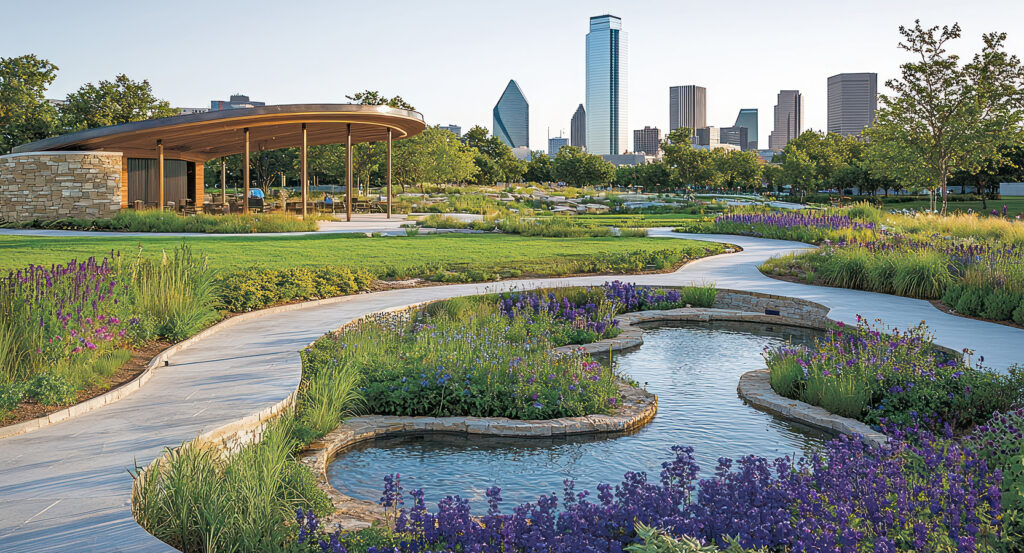
Why Klyde Warren Park matters.
Klyde Warren Park is an innovative urban park where the Dallas Arts District's cultural ambition meets a five-acre landscape suspended above a major freeway, reconnecting Downtown and Uptown through public gardens, performance spaces, and civic recreation.
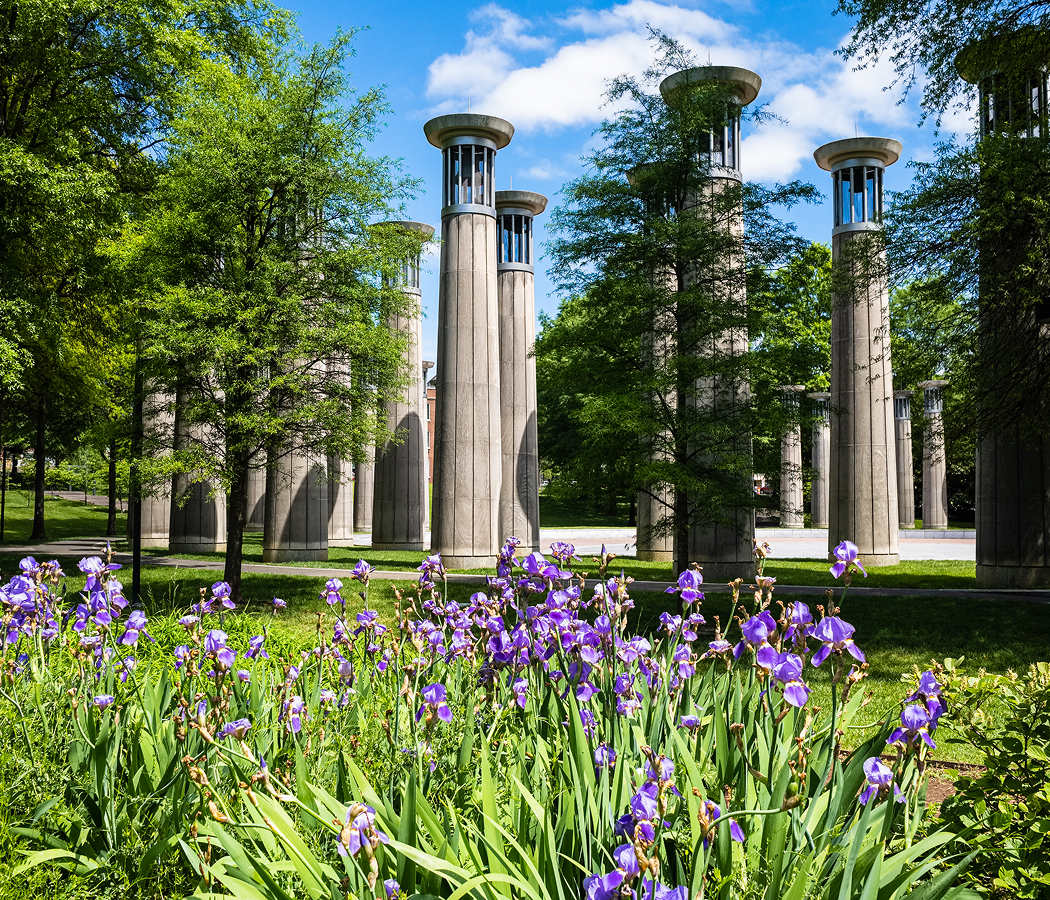
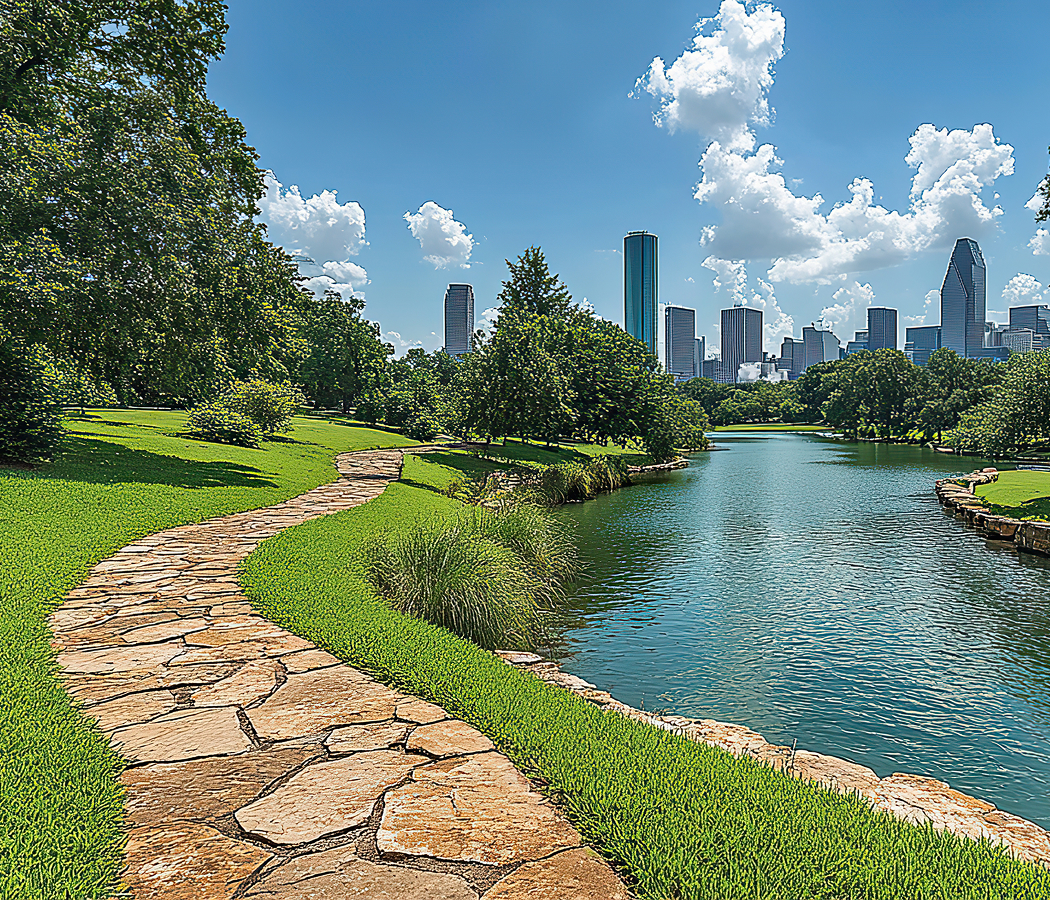
Set along Woodall Rodgers Freeway near North Pearl Street and just steps from the commercial blocks surrounding McKinney Avenue, the park occupies an elevated platform between St. Paul Street and Pearl Street, connecting the northern edge of Downtown with the southern approaches to Uptown. Broad lawns, shaded promenades, and landscaped planting beds organize the rectangular grounds into distinct outdoor spaces. Mature trees and carefully arranged gardens soften the surrounding towers, creating a green corridor amid substantial commercial development. Pedestrian paths connect open gathering areas with smaller recreational spaces, encouraging movement between the park's eastern and western edges. The result is a distinctive public landscape whose elevated construction restores pedestrian continuity across one of Dallas's busiest transportation corridors.
What defines Klyde Warren Park.
Klyde Warren Park is best known for transforming a recessed section of Woodall Rodgers Freeway into a major civic gathering place through an ambitious combination of structural engineering, landscape architecture, and public-private investment. The freeway opened in the early 1980s, creating a substantial physical division between Downtown and neighborhoods developing to the north. Civic leaders subsequently explored opportunities to reconnect those areas through a landscaped deck constructed above the roadway. The project gained momentum through the efforts of Dallas philanthropist Jody Grant, who became a leading advocate for the proposed park. The Woodall Rodgers Park Foundation emerged as the nonprofit organization responsible for advancing the project, coordinating fundraising, design, and long-term management. Landscape architect James Burnett and his firm, the Office of James Burnett, developed the park's landscape plan, establishing a sequence of lawns, gardens, and recreational areas above the transportation infrastructure. Jacobs Engineering contributed to the project's structural design, addressing the substantial engineering requirements of supporting soil, trees, buildings, and public activity over an operating freeway. Construction required a system of concrete beams and structural supports spanning the roadway, creating a deck capable of accommodating a landscaped public environment. The project incorporated specialized lightweight soil and irrigation infrastructure to support substantial planting above the highway. Private philanthropy contributed a major portion of the development funding, complementing public investment from the City of Dallas and other governmental sources. The park opened in October 2012, establishing a new pedestrian connection across the freeway and introducing a substantial public gathering place into the central city. Its name honors Klyde Warren, the young son of philanthropist Kelcy Warren, whose family contributed significant financial support to the project. The park's completion attracted national attention as an example of how transportation infrastructure could support new public space within a densely developed urban environment. Klyde Warren Park subsequently became an influential precedent for freeway-deck parks and the redevelopment of transportation corridors into civic landscapes.
The Office of James Burnett organized the park around a sequence of distinct outdoor environments, balancing large gathering spaces with intimate garden areas and recreational facilities. Its design incorporates a central lawn suited to performances and informal recreation, surrounded by shaded pathways and carefully arranged plantings. The use of substantial trees required specialized planting conditions, with engineered soil systems supporting root development above the structural deck. The park's horticultural program incorporates seasonal flowers, ornamental grasses, and shade-tolerant plantings, creating visual variation across the landscape. A dedicated children's area introduces interactive water features and climbing structures, establishing a recreational environment designed for younger visitors. Reading and game spaces provide additional opportunities for informal activity, encouraging people to occupy the grounds beyond scheduled performances. The park's programming includes outdoor concerts, exercise classes, cultural festivals, and educational activities, extending its function beyond passive recreation. Food trucks became an important part of its hospitality program, bringing rotating culinary operators into the surrounding streets and establishing casual dining opportunities within the public landscape. The park also developed restaurant facilities that support longer visits and evening activity. Its management structure allows the nonprofit organization to coordinate maintenance, programming, and private fundraising, establishing an operational model distinct from conventional municipal park administration. The surrounding commercial districts contribute substantial pedestrian traffic, connecting office workers, residents, and cultural audiences within the same public environment. Klyde Warren Park's civic significance emerges from this combination of engineered landscape, accessible recreation, and sustained public programming, demonstrating how a compact urban park can support an unusually broad range of activities.
How Klyde Warren Park fits.
Klyde Warren Park works as the anchor for a Dallas outing connecting major art collections, contemporary sculpture, and the architectural development of the city's principal orchestral performance hall.
Begin at the Dallas Museum of Art, the institution founded in 1903 and developed into one of the largest art museums in the United States. Its collection encompasses more than 25,000 works representing artistic traditions across thousands of years, including major holdings in European painting, American art, contemporary sculpture, and the arts of Africa, Asia, and the Americas. The museum's present building, designed by architect Edward Larrabee Barnes and opened in 1984, established a major architectural foundation for the surrounding cultural district. Its galleries connect historical collections with changing exhibitions, providing a broad introduction to the city's visual arts institutions. Continue to the Nasher Sculpture Center, the museum founded by collectors Raymond and Patsy Nasher and opened in 2003 to present their internationally significant collection of modern and contemporary sculpture. Architect Renzo Piano designed the building, with landscape architect Peter Walker developing its adjoining sculpture garden. The collection includes works by major twentieth-century artists such as Auguste Rodin, Pablo Picasso, Henry Moore, and Alberto Giacometti, connecting different approaches to figurative and abstract sculpture. Its combination of interior galleries and landscaped outdoor spaces allows sculpture to be encountered under contrasting architectural and natural lighting conditions. Conclude at the Morton H. Meyerson Symphony Center, the concert hall designed by architect I. M. Pei and opened in 1989 as the principal home of the Dallas Symphony Orchestra. Acoustician Russell Johnson collaborated on the auditorium's design, developing a performance environment centered on the acoustic requirements of symphonic music. The hall incorporates adjustable acoustic elements that support different musical configurations, allowing the orchestra to perform within a carefully controlled sound environment. Its architectural composition combines an expansive exterior with an auditorium organized around the relationship between performers and listeners. The progression moves from the Dallas Museum of Art's encyclopedic collections through the Nasher Sculpture Center's concentrated exploration of modern sculpture and culminates at the Morton H. Meyerson Symphony Center's orchestral performances, connecting three major institutions in Dallas's cultural landscape.
Where your story begins.
Foresyte Travel reveals places that feel extraordinary long before you arrive.
Enjoy editorial crafted for luxury travelers.
Foresyte may earn a commission when you book.