Why Koenig Lane matters.
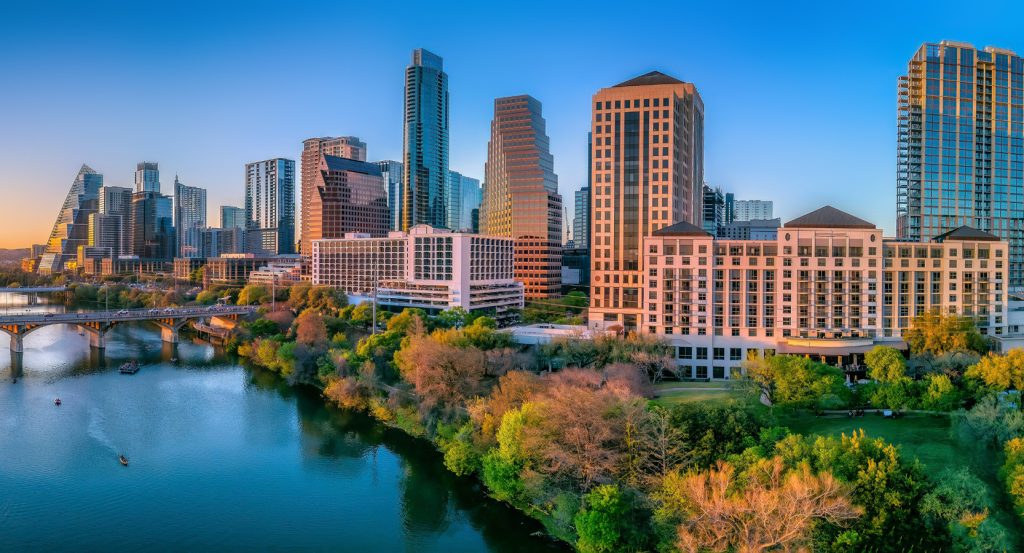
Koenig Lane is a lively corridor where North Loop's independent spirit, commercial heritage, neighborhood character, and enduring local character create one of Central Austin's most engaging thoroughfares.
Running through North Loop between Brentwood and Highland, the corridor links long-established neighborhoods, independent businesses, institutional campuses, neighborhood shopping districts, and mature urban landscapes that reflect generations of Austin's northward expansion. Broad live oak canopies, Mid-Century commercial architecture, restored storefronts, locally owned establishments, and evolving streetscapes create a corridor whose character remains firmly rooted in community. Decades of investment have layered transportation, commerce, and neighborhood life. The result is an experience defined by local authenticity, architectural continuity, and one of North Loop's most recognizable corridors.
What defines Koenig Lane.
Koenig Lane is best known for evolving from a rural farm road into one of Central Austin's principal east-west corridors as twentieth-century residential growth expanded beyond Hyde Park, with the roadway named for August Koenig, a nineteenth-century German immigrant whose family farm occupied land across the surrounding area. Development accelerated during the 1940s, 1950s, and 1960s as postwar neighborhoods including Brentwood, North Loop, and Highland expanded alongside new commercial districts, while construction of nearby Interstate 35 permanently reshaped regional transportation patterns across North Austin. The corridor also became closely associated with the establishment of Highland Mall, which opened in 1971 as Austin's first enclosed regional shopping mall before its long-term redevelopment into Austin Community College Highland Campus, preserving the site's importance as a civic and educational destination. Streetscapes combine Ranch-era commercial buildings, Mid-Century Modern storefronts, masonry retail centers, neighborhood offices, and mature live oak, cedar elm, pecan, and Texas red oak canopies reflecting successive decades of urban development. Collectively, the corridor's agricultural origins, postwar expansion, transportation history, commercial evolution, institutional reinvestment, and architectural diversity establish Koenig Lane as one of Central Austin's defining corridors.
The Austin State Hospital, established in 1856 as the Texas State Lunatic Asylum, occupies one of Texas's oldest continuously operating medical campuses and preserves numerous nineteenth-century institutional buildings recognized for their historical significance. Nearby, the Texas Department of Public Safety established its statewide headquarters in North Austin, reinforcing the district's longstanding governmental presence through administrative and public safety operations. The surrounding landscape also reflects the influence of the Balcones Fault Zone, whose limestone geology, elevation changes, and groundwater movement continue shaping soils, drainage patterns, and native vegetation throughout Central Austin. Together, these historic institutions, statewide organizations, and geological systems demonstrate how Koenig Lane reflects a corridor where history, public service, and natural processes continue reinforcing one another.
How Koenig Lane fits.
Koenig Lane works as an exploration of Central Austin's independent businesses, neighborhood heritage, and creative culture.
Begin at Austin Community College Highland Campus, where the remarkable conversion of Austin's first enclosed regional shopping mall into a modern educational destination introduces the corridor's continuing story of reinvention while establishing the outing's historical foundation. Continue to North Loop District, where independent bookstores, vintage shops, neighborhood cafés, record stores, and locally owned businesses deepen the experience by revealing the entrepreneurial character that continues distinguishing this part of Austin. Conclude at Elisabet Ney Museum, where the preserved studio of the renowned nineteenth-century sculptor provides the historical payoff through original artwork, personal collections, and architectural character that illuminate one of Austin's earliest cultural legacies. The progression moves naturally from educational renewal to independent neighborhood commerce before culminating in an artistic legacy that enriches the broader story of Central Austin.
Where your story begins.
Foresyte Travel reveals places that feel extraordinary long before you arrive.
Enjoy editorial crafted for luxury travelers.
Foresyte may earn a commission when you book.