Why La Petite Maison matters.
La Petite Maison is a celebrated Niçoise restaurant where Vieux Nice's Mediterranean culinary heritage meets the social traditions of the French Riviera, the cultural influence of international celebrity and the fiercely personal hospitality of restaurateur Nicole Rubi.
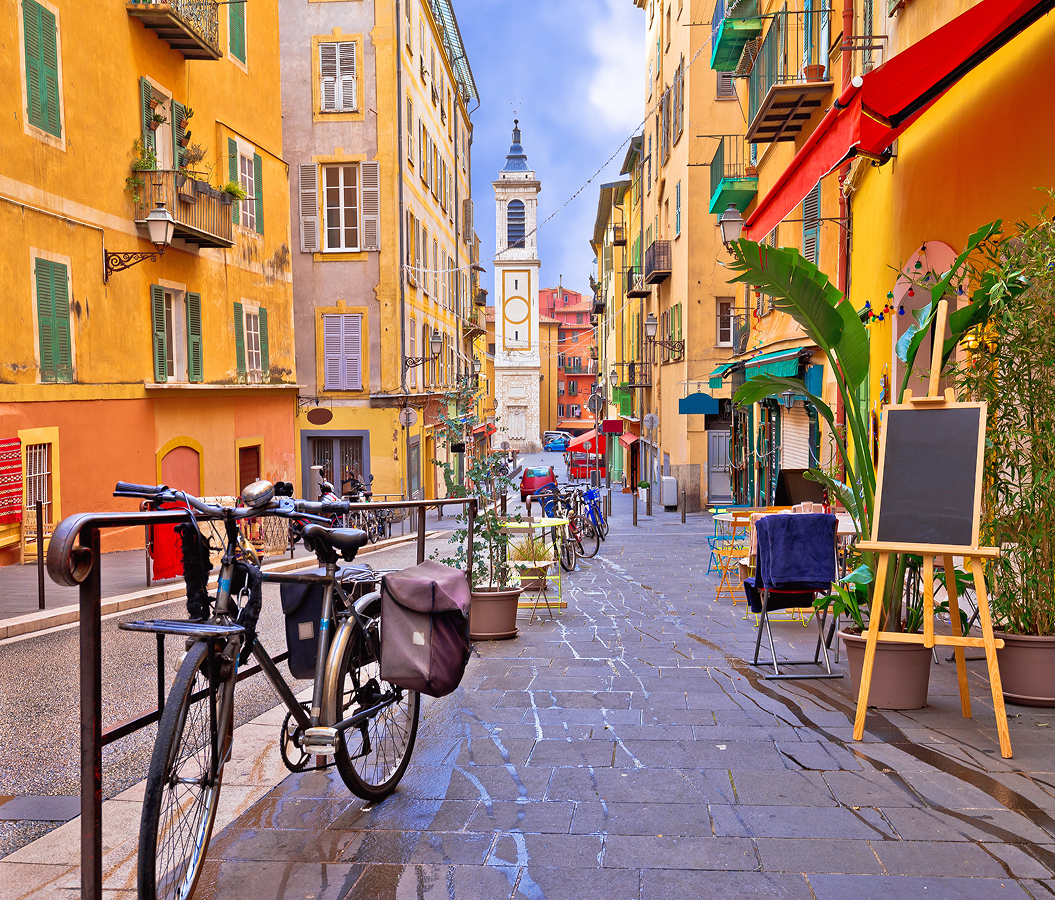
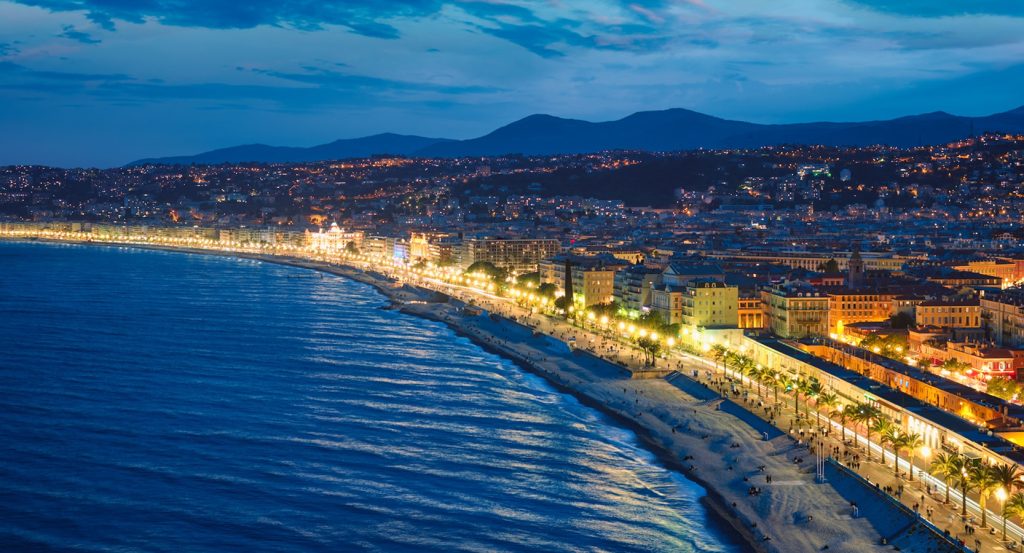
Occupying a prominent position on Rue Saint-François-de-Paule near the western entrance to Vieux Nice, the restaurant stands between the historic commercial streets surrounding Cours Saleya and the coastal frontage of Quai des États-Unis, a short distance from the landscaped approaches to Jardin Albert Ier. Its ground-floor premises incorporate a traditional dining room with white tablecloths, closely arranged seating, framed artwork and a collection of decorative objects that give the interior the character of a private Mediterranean residence. The adjoining terrace extends the restaurant into the surrounding pedestrian streetscape, where tightly arranged tables create a distinctive relationship between formal restaurant service and the public life of the historic quarter. Inside, polished table settings, substantial floral arrangements and carefully positioned artwork contribute to an intimate environment whose decorative character developed through decades of personal stewardship. The result is an established Riviera dining destination whose domestic proportions, animated terrace and highly individualized hospitality preserve the social character of Nice's traditional restaurant culture.
What defines La Petite Maison.
La Petite Maison is best known for the extraordinary social and culinary influence of Nicole Rubi, whose restaurant became a gathering place for political leaders, international performers, celebrated athletes and the established families of the French Riviera. Rubi grew up in the restaurant business through her father César, whose establishment L'Univers attracted a prominent clientele during the decades following the Second World War. The family restaurant developed a reputation among artists, performers and public figures visiting Nice, giving Nicole an early introduction to the relationship between regional cooking and the social networks of the Mediterranean coast. Its clientele included figures associated with European cinema, literature and professional sport, establishing the foundations of the hospitality culture she subsequently developed independently. During the late 1980s, César sold L'Univers, and Nicole acquired La Petite Maison, a former saddlery that had been converted into a tearoom under the name La Petite Maison Ferrier. The premises occupied a modest position in the restaurant economy of Central Nice, providing an opportunity to develop a new establishment around her personal understanding of regional food and social hospitality. Rubi removed the Ferrier designation and established La Petite Maison as a restaurant in 1989, beginning the transformation of the small business into one of the Riviera's most recognizable dining institutions. Her approach drew on the culinary traditions of Nice and Provence, concentrating on seasonal vegetables, olive oil, Mediterranean seafood and familiar family preparations served with considerable generosity. The restaurant's reputation developed through personal relationships and a distinctive approach to hospitality in which Rubi maintained direct control over the dining room and cultivated an unusually close association with regular patrons. Jacques Weber, who directed the Théâtre de Nice during the late 1980s, became an early supporter, helping attract performers including Daniel Auteuil, Isabelle Adjani and Emmanuelle Béart. The restaurant's political significance increased during the early 1990s through the patronage of Charles Pasqua, the French politician whose connections extended across the national Gaullist establishment. Following a political gathering in 1991, Pasqua arrived at La Petite Maison with fellow party figures and encountered a meal organized around traditional Niçoise specialties. The occasion initiated a professional relationship that subsequently brought Rubi into the political hospitality circuit of Paris. In 1992, Pasqua invited her to prepare meals for gatherings associated with the Conseil général des Hauts-de-Seine, extending the restaurant's reputation beyond the Côte d'Azur. A particularly consequential commission followed in 1993, when Rubi prepared a Niçoise meal at the Hôtel de Matignon for senior political figures including Édouard Balladur and Jacques Chirac. The event connected the restaurant's regional culinary traditions to the highest levels of French political society and strengthened Rubi's standing among the country's influential public figures. Chirac subsequently became one of the personalities most closely associated with the establishment, contributing to its reputation as an informal meeting place for national political leaders. Nicolas Sarkozy developed another enduring association with La Petite Maison, visiting during his political career and maintaining a personal relationship with its proprietor. The restaurant also attracted performers and international celebrities, including Elton John, Madonna, the Beckham family and Prince Albert II of Monaco, extending its reputation into entertainment and European royalty. Rubi's approach to seating and hospitality became inseparable from the restaurant's public character, with her personal presence determining the atmosphere of individual services and the relationships between established patrons. Artist Ben Vautier contributed to the restaurant's cultural associations through a work bearing the inscription Tous célèbres ici, connecting the establishment to the distinctive text-based artistic tradition that developed in Nice during the twentieth century. The restaurant's importance within the city received formal recognition in 2010 when Rubi was appointed to the Légion d'honneur, with the decoration presented by Nice mayor Christian Estrosi. Her achievement acknowledged a career that had elevated regional cuisine into a form of cultural representation extending across gastronomy, politics and international hospitality. The success of La Petite Maison also inspired an international restaurant concept developed beyond Nice, beginning with the opening of La Petite Maison in London in 2007. Subsequent restaurants associated with the LPM name expanded into major international hospitality markets, including Dubai and Miami, extending the culinary influence of the original establishment across Europe, the Middle East and North America. The Nice restaurant preserved its distinct family character through the participation of Rubi's daughter Anne-Laure, who became an important figure in the business's continuing operations. Their involvement sustained the personal hospitality traditions that distinguished the establishment from conventional luxury restaurant management. La Petite Maison's significance derives from Nicole Rubi's transformation of a modest neighborhood restaurant into an internationally recognized institution where Niçoise cuisine became closely associated with French political society, European celebrity and the cultural influence of the Riviera.
Nicole Rubi's culinary philosophy centers on the generous presentation of Mediterranean ingredients through the traditional cooking methods of Nice and Provence, creating a restaurant whose distinctive character emerges from the relationship between regional food and highly personal service. The kitchen places particular importance on seasonal vegetables, fresh seafood, aromatic herbs and olive oil, drawing on the agricultural and maritime traditions of southeastern France. Its cooking develops through preparations that preserve the natural character of individual ingredients, using roasting, grilling, gentle simmering and carefully controlled seasoning to create concentrated flavors. The restaurant's treatment of vegetables occupies an important position within this approach, connecting the agricultural abundance of the Riviera to a culinary tradition shaped by family kitchens and local markets. Petits farcis demonstrate this relationship through small vegetables filled with seasoned preparations and baked until their natural sweetness develops alongside the savory richness of the stuffing. The preparation belongs to a wider Niçoise tradition in which vegetables provide the structure for substantial dishes, combining economical household techniques with the flavors of the Mediterranean countryside. Courgette flowers contribute another characteristic element through their delicate structure and suitability for light frying, producing a contrast between crisp batter and the tender floral interior. Their preparation requires careful handling to preserve the flowers' shape and moisture, demonstrating the technical discipline underlying simple regional cooking. Artichokes introduce a complementary flavor through their slight bitterness and tender texture, supporting salads organized around olive oil, citrus and restrained seasoning. The restaurant's seafood preparations develop the same ingredient-centered approach through fish selected for freshness and handled with techniques that preserve the relationship between natural flavor and precise cooking. Grilled Mediterranean fish acquire depth through direct heat, with olive oil, lemon and herbs contributing aromatic complexity to the finished preparation. Sole meunière extends the restaurant's culinary repertoire into the classical French tradition, combining gently cooked fish with browned butter and citrus acidity. The resulting balance between richness and freshness connects the technical foundations of French restaurant cooking with the coastal ingredients of Nice. Pasta preparations introduce another regional influence through the longstanding relationship between the Côte d'Azur and neighboring Italy. Lobster linguine develops this connection through the concentrated flavor of shellfish, a carefully reduced sauce and the texture of pasta, creating a substantial preparation suited to the restaurant's generous style of dining. Truffles contribute a contrasting element through their earthy aroma and association with the gastronomic traditions of southern France. Brouillade aux truffes combines softly cooked eggs with the distinctive fragrance of truffle, relying on gentle heat and careful timing to preserve a delicate texture. The preparation connects a familiar domestic dish to the seasonal luxury ingredients associated with French haute cuisine. Rubi's approach to the menu balances traditional Niçoise preparations with established French restaurant classics, maintaining a recognizable culinary character across a broad selection of Mediterranean ingredients. The dining room extends this philosophy through a service culture organized around personal relationships, conversation and the ceremonial presentation of food. White tablecloths and formal place settings provide the foundation for meals whose social character develops through shared dishes, extended lunches and substantial evening gatherings. The restaurant's terrace contributes another dimension by connecting the private rituals of the dining table to the surrounding streets of Central Nice. Musical performances and spontaneous participation from patrons have also contributed to the establishment's reputation for animated social occasions, particularly during evening service. Rubi's personal supervision remains central to the restaurant's character, preserving the direct relationship between proprietor and clientele that shaped its development. The culinary program's enduring appeal derives from the combination of familiar Mediterranean preparations, substantial ingredient quality and the highly individualized hospitality that transformed a neighborhood dining room into an internationally recognized Riviera institution.
How La Petite Maison fits.
La Petite Maison works as the anchor for an outing connecting Nice's eighteenth-century aristocratic residences, its nineteenth-century operatic culture and the Baroque religious architecture that developed around the historic commercial center.
Begin at Palais Hongran de Fiano, the eighteenth-century aristocratic residence developed during the western expansion of Nice beyond its earlier fortified boundaries. Joseph-Antoine Hongran, a merchant and notary originally associated with Saint-Sauveur-sur-Tinée, acquired the property in 1760 as part of an ambitious residential project connected to the city's expanding commercial prosperity. Construction proceeded under his son Joseph-François Hongran between 1769 and 1772, producing a substantial urban palace whose architectural composition incorporated a formal façade and an elaborate internal staircase. Joseph-François acquired the title of Count of Fiano in 1772, connecting the residence to the social ambitions of a family whose wealth had developed through commerce. The building subsequently accommodated municipal cultural institutions beginning in 1838, and Napoleon Bonaparte had occupied rooms there during his command of the Army of Italy in 1796. Continue to Opéra de Nice, the principal opera house whose history began with the Théâtre Maccarani, a wooden performance venue established in 1776 through the conversion of a private residence. The municipality acquired the property in 1826 and commissioned an Italian-style theater with four tiers of boxes, creating a substantial cultural institution for the expanding city. A devastating fire destroyed the building on March 23, 1881, during a performance of Donizetti's Lucia di Lammermoor, prompting a major reconstruction under architect François Aune. Charles Garnier approved the new architectural plans, and the rebuilt theater reopened on February 7, 1885, with a performance of Verdi's Aida. Its horseshoe-shaped auditorium incorporates sculptural decoration by Raimondi and a ceiling painting by Emmanuel Costa depicting the Chariot of the Sun, preserving the artistic ambitions of nineteenth-century European opera architecture. Conclude at Chapelle de la Miséricorde, the eighteenth-century Baroque church whose elaborate interior represents one of the most accomplished expressions of Piedmontese religious architecture in Nice. The Theatine order commissioned the building on the former site of royal salt warehouses, and architect Bernardo Antonio Vittone developed its architectural composition between 1747 and 1770. Vittone organized the sanctuary around an elliptical nave surrounded by curved side chapels, creating a complex spatial arrangement that concentrates decorative movement toward the central dome. Gilded ornament, stucco decoration and painted architectural effects develop the theatrical character of the interior, connecting the building to the mature Baroque traditions of Turin. The chapel subsequently became associated with the Pénitents noirs, a religious confraternity whose charitable and devotional activities formed part of Nice's historic Catholic culture. Its architectural significance received national recognition through classification as a French historic monument on May 30, 1921. The progression moves from Palais Hongran de Fiano's mercantile aristocracy through Opéra de Nice's development of international performance culture and culminates in Chapelle de la Miséricorde's Piedmontese Baroque architecture, connecting the commercial wealth, artistic patronage and religious traditions that shaped the historic center of Nice.
Where your story begins.
Foresyte Travel reveals places that feel extraordinary long before you arrive.
Enjoy editorial crafted for luxury travelers.
Foresyte may earn a commission when you book.