
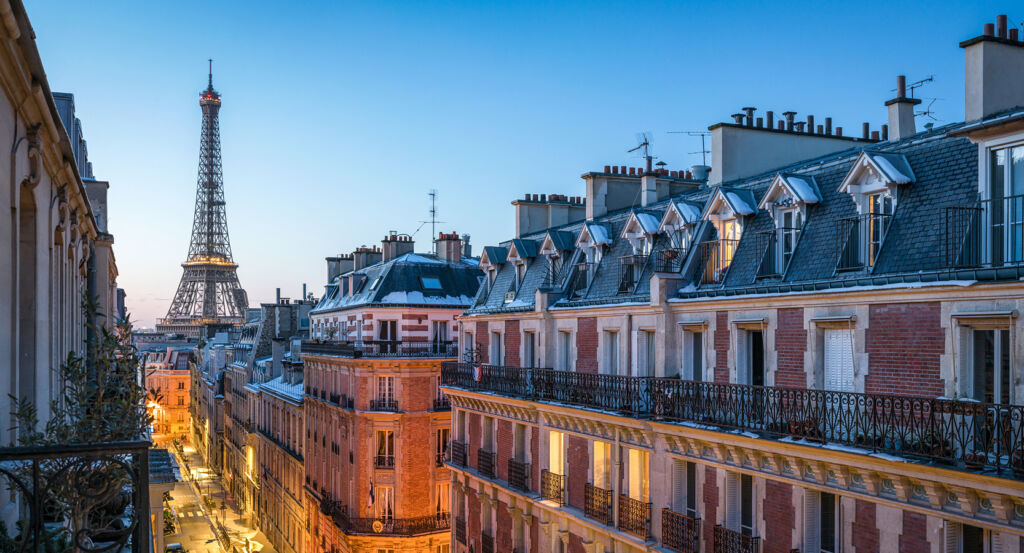
Why you should experience Le 37 Bis in Paris, France.
Le 37 Bis is a polished boutique hotel where Neuilly-sur-Seine's bourgeois character, century-old hospitality tradition, contemporary French design and residential intimacy converge inside the former Hôtel du Roule on Avenue du Roule.
Set along Avenue du Roule near Rue Madeleine Michelis and just steps from Église Saint-Pierre de Neuilly, the four-star hotel preserves an address that has accommodated visiting friends and relatives of Neuilly families for more than a century before reopening as Le 37 Bis in May 2021. An 18-month renovation recast the historic Hôtel du Roule as what the property describes as a twenty-first-century bourgeois house, with architect and designer Elsa Joseph developing both the interiors and bespoke furniture around wood, glass, marble, velvet and metal. The intimate inventory contains 34 completely renovated rooms divided between Deluxe and Prestige categories, while a small salon opens toward a terrace and planted garden behind the building. Joseph's muted palette, natural materials and residential furniture establish a hotel whose contemporary character remains closely tied to the domestic architecture and understated refinement associated with Neuilly.
What you should know about Le 37 Bis.
Le 37 Bis is best known for reopening in May 2021 after an 18-month reconstruction transformed the century-old Hôtel du Roule into the second property created by hotelier Karim Massoud for KM Hotels Collection, following Hôtel 10 Bis in Paris. Interior architect Elsa Joseph directed the renovation and decoration of all 34 rooms, designing furniture specifically for the property and combining brass, wood and wool with marble, glass, velvet and metal, while a collection of furniture and decorative pieces dating from the 1950s through the 1970s was sourced at the Puces de Saint-Ouen to establish the atmosphere of a private house assembled by a contemporary-art collector. The accommodation program divides the 34 rooms between Deluxe and Prestige categories, includes two accessible rooms and four communicating rooms, and uses old rose, almond green, topaz yellow and duck blue across soundproofed interiors furnished with full-height wooden wardrobes, marble-based tubular sconces, padded headboards, varnished stools, reinterpreted crapaud armchairs and wood-and-metal desks. KM Hotels Collection extended the residential concept beyond the guestrooms through a salon overlooking the garden terrace, while the wellness program introduced a sauna and hammam that can be privately reserved and the bar incorporated D.Wine technology for serving grands crus by the glass. The completed project consequently combines more than a century of Hôtel du Roule hospitality with Massoud's independent hotel collection, Joseph's authored interiors, twentieth-century French furniture and a compact 34-room format.
Elsa Joseph provides the strongest creative continuity through Le 37 Bis, with her architecture studio responsible for project management, execution and decoration and her custom furniture establishing the visual language carried from the bedrooms into the wider property. Karim Massoud developed that authored approach through KM Hotels Collection, pairing Le 37 Bis with Hôtel 10 Bis before planning Hôtel 12 near Saint-Lazare and Hôtel 46 at Porte Maillot, making the Neuilly property the second chapter in a deliberately numbered independent hotel portfolio. Puces de Saint-Ouen gives the interiors a material connection with twentieth-century design through pieces sourced from the 1950s, 1960s and 1970s, while D.Wine brings a contemporary technical component to the salon through a system designed to preserve grands crus for service by the glass. Together, Elsa Joseph, Karim Massoud, KM Hotels Collection and the Puces de Saint-Ouen collection give Le 37 Bis a coherent character in which custom contemporary design and collected twentieth-century objects reinterpret the domestic character of the former Hôtel du Roule.
How to fold Le 37 Bis into your trip.
Le 37 Bis works as the anchor for an afternoon tracing religious architecture, eighteenth-century garden design and royal decorative culture through Neuilly-sur-Seine.
Begin at Église Saint-Pierre de Neuilly, whose construction began under architect Alfred Dauvergne after Abbé Normand and Cardinal Guibert supported a new parish church for Neuilly's expanding population, with the first stone blessed in 1887 and Louis Dauvergne later completing his father's Romanesque-inspired project through successive campaigns extending into the twentieth century. The church also contains a Mutin-Cavaillé-Coll organ dating from 1898 and installed in 1900. Continue to Folie Saint-James, where Claude Baudard de Vaudésir, baron de Saint-James and treasurer general of the Marine and Colonies, commissioned François-Joseph Bélanger in 1777 to develop an extravagant pleasure estate whose Anglo-Chinese garden eventually extended toward the Seine with artificial waterways, architectural follies and the surviving Grand Rocher. Conclude at Temple de l'Amour, originally created by Bernard Poyet as the Temple de Mars for Philippe d'Orléans's Folie de Chartres before the future Louis-Philippe transferred it to his Neuilly estate shortly before 1830, renamed it and incorporated it into the garden extending from Château de Neuilly toward Île de la Jatte. The progression moves from Dauvergne's nineteenth-century church through Bélanger's aristocratic garden architecture into a pavilion transported by the future king of France, revealing the unusually deep architectural history surrounding Le 37 Bis.
Where your story begins.
Foresyte Travel reveals places that feel extraordinary long before you arrive.
Experience premium editorial crafted for luxury travelers.














































































































