
Why LX Factory matters.
LX Factory is a former industrial complex where Alcântara's manufacturing heritage meets Lisbon's nineteenth-century textile industry, the conversion of factory buildings into creative workplaces and the cultural regeneration of the city's western waterfront.
Positioned beneath the northern approaches to the 25 de Abril Bridge, the complex occupies a former manufacturing property between Rua Rodrigues de Faria and Alcântara's railway corridors, where brick workshops, industrial courtyards and converted warehouses extend toward the Tagus waterfront. Narrow pedestrian passages connect buildings of differing heights, retaining the compact arrangement of the original factory premises. Painted façades, exposed masonry and industrial chimneys preserve visible elements of the property's manufacturing past. Restaurants, studios, bookshops and exhibition spaces occupy former production buildings around shared courtyards. The result is a concentrated cultural quarter whose industrial architecture accommodates independent businesses, contemporary art and public events within Alcântara's historic manufacturing district.
What defines LX Factory.
LX Factory is best known for the conversion of the former Companhia de Fiação e Tecidos Lisbonense textile complex into a cultural and commercial district that became central to Alcântara's regeneration. The property's industrial history began in 1846, when Companhia de Fiação e Tecidos Lisbonense established manufacturing operations in the area. Alcântara's proximity to the Tagus, expanding transport infrastructure and available industrial land supported the concentration of factories along Lisbon's western approaches. Textile production required substantial buildings accommodating machinery, workers, storage and the movement of raw cotton and finished cloth. The Lisbonense enterprise expanded its premises through successive construction phases, contributing to the neighborhood's industrial employment and physical development. During the nineteenth century, Alcântara became an important manufacturing district, with textile works operating alongside food-processing facilities, workshops and transport-related businesses. The opening of railway connections strengthened the area's industrial economy by linking production sites with the wider Portuguese transportation network. Changes in manufacturing technology and commercial conditions gradually altered the economic position of Lisbon's older industrial properties. The former textile complex subsequently accommodated other enterprises, including printing operations associated with the newspaper O Século. Its buildings retained substantial elements of their industrial construction through successive changes in occupation. By the early twenty-first century, the property presented an opportunity to accommodate new commercial and cultural activities within its existing structures. The development company Mainside initiated the LX Factory project in 2008, adapting the former industrial premises for studios, offices, shops, restaurants and event spaces. The redevelopment attracted designers, artists, independent retailers and creative businesses, establishing a concentrated community of enterprises within the former manufacturing complex. Its subsequent growth contributed to Alcântara's wider transition from an industrial employment district toward a neighborhood accommodating cultural institutions, hospitality businesses and residential development.
Ler Devagar provides one of LX Factory's most distinctive interior spaces through the conversion of a former printing facility into a multilevel bookshop. Tall shelving rises through the industrial volume, placing extensive collections of books beneath exposed structural elements and former machinery. A suspended bicycle sculpture by Pietro Proserpio introduces a recognizable artistic feature above the central circulation area. The bookshop's elevated walkways connect upper shelving levels, preserving the substantial height of the former production building. Its café and exhibition activities extend the premises' cultural functions beyond bookselling, supporting readings and public gatherings. The surrounding complex develops through a sequence of workshops, studios and commercial interiors occupying buildings originally organized for industrial production. Exposed beams, masonry walls and large factory windows retain the proportions required for manufacturing equipment and workplace illumination. Outdoor murals occupy substantial sections of the building façades, contributing contemporary artwork to the surviving industrial streetscape. Lisbon-based artist Bordalo II has contributed work associated with his practice of constructing animal sculptures from discarded objects, connecting artistic production with the reuse of industrial and consumer waste. Independent design shops display Portuguese-made clothing, accessories and decorative objects, extending the site's relationship with production through smaller commercial enterprises. Restaurants and cafés occupy former workshops and courtyards, creating gathering places within the property's pedestrian passages. The weekly LX Market brings vendors selling vintage clothing, handmade objects and independent products into the complex's outdoor spaces. LX Factory's distinctive character develops through the continuing occupation of former manufacturing buildings by booksellers, artists, designers and small businesses, preserving the physical organization of the industrial property through its adaptation for cultural and commercial activity.
How LX Factory fits.
LX Factory works as the industrial heritage centerpiece for a Lisbon outing connecting Alcântara's former manufacturing district with the city's maritime institutions, riverfront architecture and twentieth-century engineering.
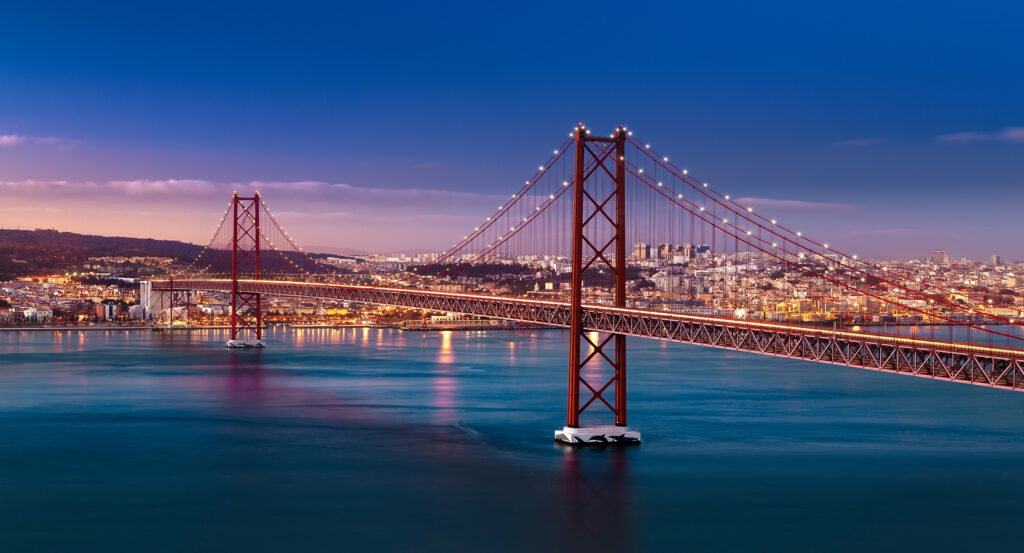
Begin at Museu da Carris, the transport museum established within the historic Santo Amaro tram depot. Carris, Lisbon's principal urban transport operator, traces its origins to 1872, when the Companhia Carris de Ferro de Lisboa was formed to develop horse-drawn streetcar services. Electric tram operations began in 1901, reshaping movement across the capital's steep streets and expanding neighborhoods. The museum preserves historic tramcars, buses, uniforms, tickets and equipment associated with successive generations of public transportation. Its depot setting retains the relationship between vehicle maintenance, operational infrastructure and the development of Lisbon's urban mobility. Continue to the 25 de Abril Bridge, the suspension bridge connecting Lisbon with Almada across the Tagus estuary. Opened in 1966 as the Salazar Bridge, the structure was renamed following Portugal's Carnation Revolution of April 1974. Its engineering incorporates a substantial suspended roadway supported by steel towers and cables spanning the river. A lower railway deck entered service in 1999, expanding the bridge's transportation functions. The structure's position above Alcântara connects Lisbon's western industrial district with the metropolitan road and railway networks crossing the estuary. Conclude at Museu do Oriente, the cultural institution occupying the former Pedro Álvares Cabral maritime warehouse beside the river. Opened in 2008, the museum is operated by Fundação Oriente and examines historical relationships between Portugal and Asian societies. Its collections encompass religious sculpture, decorative arts, ceramics and objects associated with trade and cultural exchange. The building's substantial industrial structure preserves its former maritime function through large interior volumes adapted for galleries. Its exhibitions connect the commercial history of Lisbon's waterfront with Portuguese activity across the Indian Ocean and East Asia. The progression moves from Carris's urban transport heritage through the bridge's metropolitan engineering and culminates at Museu do Oriente's maritime collections, connecting LX Factory with the industrial and commercial development of western Lisbon.
Where your story begins.
Foresyte Travel reveals places that feel extraordinary long before you arrive.
Enjoy editorial crafted for luxury travelers.
Foresyte may earn a commission when you book.














































































































