
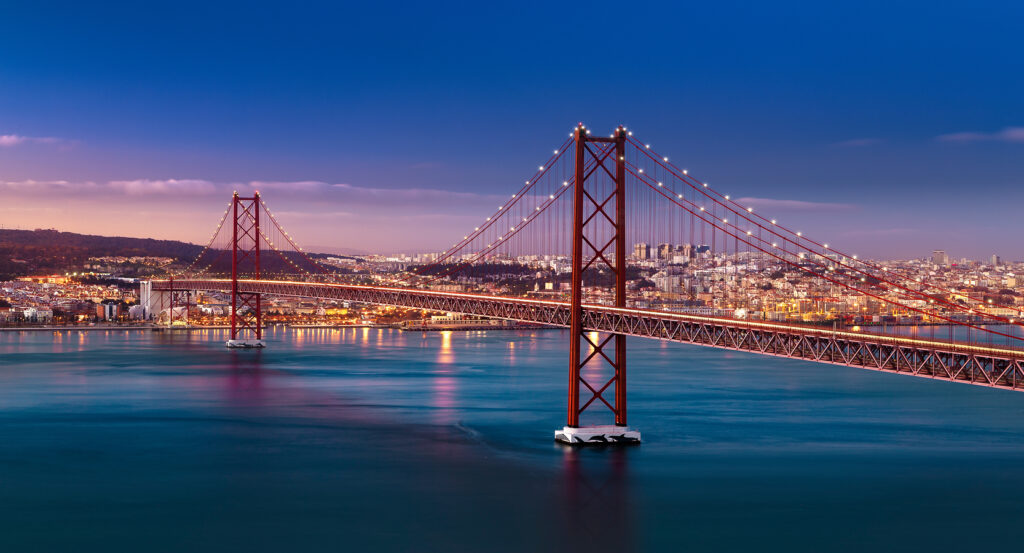
Why you should experience Marvila in Lisbon, Portugal.
Marvila is the Portuguese capital's most exciting creative frontier, where industrial heritage, contemporary culture, and urban reinvention converge along the eastern waterfront.
Converted warehouses, innovative galleries, craft breweries, creative studios, riverside corridors, and emerging cultural venues create a neighborhood that feels dramatically different from Lisbon's historic center. For much of its history, Marvila served as an industrial and manufacturing district that supported the city's economic growth through factories, logistics facilities, and working-class communities. As Lisbon evolved, many of these industrial spaces fell into decline before being rediscovered by artists, entrepreneurs, and cultural innovators seeking room to experiment. Today, the neighborhood has become one of the city's most talked-about destinations, attracting creatives, startups, and visitors interested in Lisbon's next chapter. The result is a neighborhood that feels raw, innovative, and full of possibility. To the east, Parque das Nacoes' modern waterfront landmarks extend naturally from Marvila along the Tagus River, reinforcing the neighborhood's position within one of the city's most transformative redevelopment corridors. Every warehouse, mural, and creative venue reflects a neighborhood shaped by reinvention, entrepreneurship, and imagination.
What you should know about Marvila.
Marvila is best known for being Lisbon's leading creative warehouse district, home to one of the city's highest concentrations of repurposed industrial spaces dedicated to art, culture, and innovation.
As former factories and industrial buildings became available, artists, designers, brewers, restaurateurs, and entrepreneurs transformed them into energetic cultural destinations that redefined the neighborhood's identity. The adaptive reuse of these spaces helped establish Marvila as a symbol of Lisbon's creative renaissance and urban transformation. Over time, the district developed a reputation for experimentation, attracting independent businesses and cultural projects that could not easily exist elsewhere in the city. Today, Marvila is widely recognized as one of Lisbon's most forward-looking neighborhoods and a center of contemporary culture. Few districts in Portugal possess such a strong association with creative urban regeneration.
How to fold Marvila into your trip.
Marvila works as an exploration of the creative spaces, industrial landmarks, and emerging cultural destinations that define one of Lisbon's most innovative neighborhoods.
Begin at Hub Criativo do Beato, where the neighborhood's defining connection to entrepreneurship and creative reinvention immediately comes into focus. Continue toward the Marvila warehouse district, whose galleries, breweries, studios, and cultural venues reveal how industrial spaces have been transformed into engines of contemporary culture. From there, make your way toward the riverside corridors along the Tagus, where evolving public spaces and redevelopment projects provide a broader perspective on the neighborhood's future-facing identity. Along the route, you'll encounter converted factories, neighborhood cafés, public art installations, creative workspaces, cultural venues, startup hubs, and architectural landmarks that showcase the neighborhood's remarkable depth. The progression moves naturally from innovation campus to creative warehouse quarter to waterfront redevelopment zone, revealing the forces that shaped the neighborhood. Marvila remains one of Europe's most compelling urban transformation stories, preserving a remarkable balance between industrial heritage, cultural experimentation, and future growth.
Where your story begins.
Foresyte Travel reveals places that feel extraordinary long before you arrive.
Experience premium editorial crafted for luxury travelers.














































































































