Why you should experience Morgan Street in Chicago, Illinois.
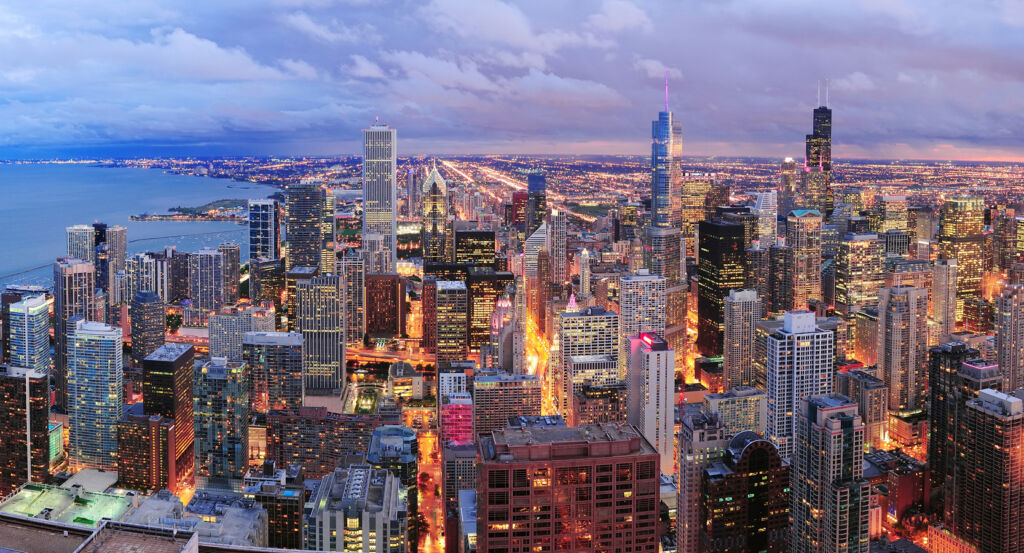
Morgan Street is an enterprising corridor where West Loop's industrial legacy, entrepreneurial ambition, architectural reinvention, and Chicago's continuing commercial evolution remain vividly intertwined.
Running through the West Loop between Fulton Market and University Village, Morgan Street connects former warehouse districts, contemporary office campuses, historic industrial buildings, educational institutions, and evolving residential blocks that collectively reflect more than a century of urban transformation. The corridor reveals how rail transportation, food distribution, manufacturing, and adaptive redevelopment steadily reshaped one of Chicago's most productive industrial landscapes into a nationally recognized center for business and innovation. Historic brick lofts, restored factories, and contemporary architecture coexist throughout the avenue, preserving its industrial origins while accommodating successive waves of investment. The result is a corridor distinguished by architectural continuity, commercial vitality, and an enduring role within Chicago's Near West Side.
What you should know about Morgan Street.
Morgan Street is best known for extending through the Fulton Market District, where industrial expansion accelerated after completion of the Chicago & North Western Railway freight facilities and the establishment of the Fulton Market Produce District during the late nineteenth century. Construction between the 1880s and the 1930s introduced multi-story cold-storage warehouses, wholesale food markets, meatpacking facilities, freight houses, and heavy timber loft buildings that established the surrounding district among the Midwest's principal centers of food distribution. Opening of the Morgan station on the Chicago Transit Authority Green and Pink Lines in 2012 restored rapid transit service to the corridor for the first time since the original Lake Street elevated station closed in 1948, reinforcing continued commercial redevelopment throughout the neighborhood. Designation of the Fulton-Randolph Market Historic District as a Chicago Landmark in 2015 preserved one of the city's most significant concentrations of nineteenth- and early twentieth-century industrial architecture while encouraging compatible adaptive reuse.
Completion of Google's Midwest headquarters within the former Fulton Market Cold Storage Building transformed one of Morgan Street's largest industrial structures into a modern technology campus through an adaptive reuse project designed by Gensler. Relocation of McDonald's global headquarters to the nearby Harpo Studios campus in 2018 further accelerated corporate investment while preserving a site long associated with Harpo Productions and Oprah Winfrey's media enterprise. Recognition of the Fulton Market Innovation District by the City of Chicago formalized long-term planning initiatives supporting research, life sciences, advanced business development, and historic preservation across the corridor. Together, Google's adaptive reuse, McDonald's headquarters, Gensler's architectural intervention, the Harpo Studios legacy, and the Fulton Market Innovation District demonstrate how Morgan Street continues evolving through investment that builds directly upon its industrial foundations.
How to fold Morgan Street into your trip.
Morgan Street works as an exploration of Chicago's industrial heritage, adaptive architecture, and contemporary innovation.
Begin at Fulton Market District, where preserved warehouse architecture introduces the commercial foundations that shaped the surrounding neighborhood before following Morgan Street through the West Loop. Continue to Mary Bartelme Park, whose contemporary landscape architecture offers a striking counterpoint to the district's historic industrial fabric while reflecting its residential transformation. Conclude at Chicago French Market, where independent vendors and regional culinary traditions provide a fitting finale celebrating the commercial exchange that has defined this part of Chicago for generations. The progression moves naturally from wholesale commerce to contemporary public space before concluding within one of downtown's enduring marketplace traditions, revealing why Morgan Street remains central to the West Loop's continuing evolution.
Where your story begins.
Foresyte Travel reveals places that feel extraordinary long before you arrive.
Experience premium editorial crafted for luxury travelers.