Why Lake Street matters.
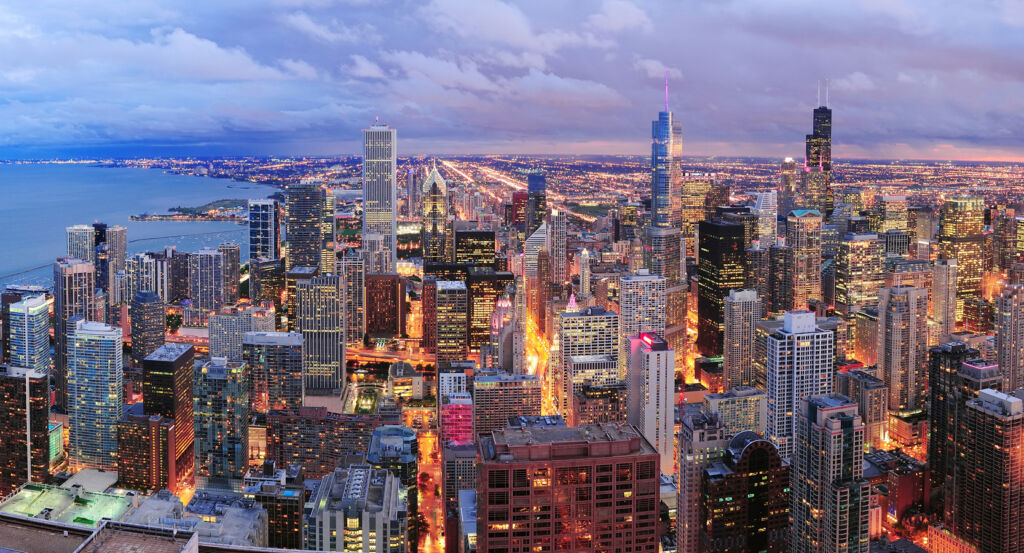
Lake Street is a foundational urban corridor where transportation innovation, commercial development, and city-building history converge along one of Chicago's most consequential streets.
Running through The Loop between the Near West Side and Near East Side, this historic corridor connects landmark office districts, cultural institutions, transportation hubs, commercial centers, public gathering spaces, and civic destinations that have shaped city life for generations. Historic commercial buildings, elevated rail infrastructure, architectural landmarks, thriving streetscapes, public plazas, and business districts create an environment defined by movement and economic vitality. The corridor emerged during Chicago's earliest years of growth and evolved into a critical artery supporting commerce, transportation, and urban expansion. Entrepreneurs, architects, laborers, civic leaders, and residents helped establish a legacy that continues to influence the city today. The result is a street defined by innovation, connectivity, and historical significance.
What defines Lake Street.
Lake Street is best known for hosting the world's first successful large-scale elevated urban rapid transit line, a pioneering transportation achievement that helped establish the model for modern elevated rail systems across the United States.
In 1892, the Lake Street Elevated Railroad began operation, fundamentally transforming how residents moved throughout the growing city. The success of the line demonstrated the viability of elevated rapid transit in dense urban environments and laid the foundation for what would become Chicago's iconic “L” system. Its influence extended beyond the city, helping shape transit planning and infrastructure development in metropolitan areas across the country. The corridor became synonymous with transportation innovation during a period of extraordinary urban growth. Few streets in America can claim such a direct role in the evolution of modern public transit.
How Lake Street fits.
Lake Street works as an exploration of Chicago's transportation legacy, architectural heritage, and urban evolution.
Begin at The Chicago Theatre, where the street's defining relationship with commerce, entertainment, and city life immediately comes into focus. Continue toward The Chicago Cultural Center, whose historic grandeur reveals the civic and cultural forces that helped shape the corridor across generations. From there, make your way to Willis Tower, where one of the world's most recognizable skyscrapers provides a broader perspective on the economic ambition, architectural innovation, and urban development that continue to define the area today. Along the route, you'll encounter historic architecture, transportation landmarks, public gathering places, cultural institutions, commercial destinations, civic landmarks, and celebrated streetscapes that showcase the corridor's remarkable depth. The progression moves naturally from entertainment landmark to civic institution to architectural icon, revealing the forces that transformed Lake Street into one of the city's most consequential urban corridors. Lake Street remains one of Chicago's most rewarding streets, preserving a distinctive balance between historical significance, transportation innovation, and contemporary city life.
Where your story begins.
Foresyte Travel reveals places that feel extraordinary long before you arrive.
Enjoy editorial crafted for luxury travelers.
Foresyte may earn a commission when you book.