Why The Loop matters.
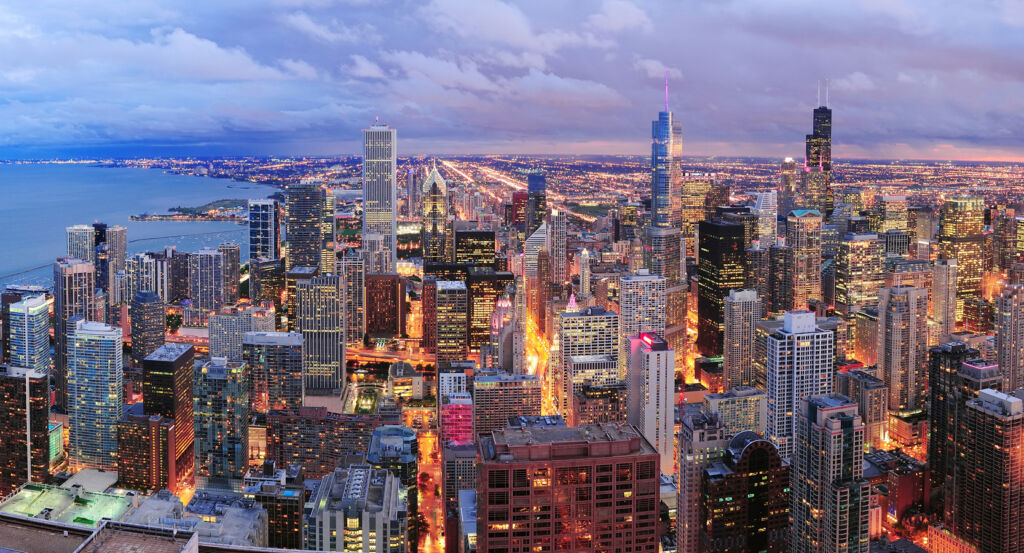
The Loop is the historic and symbolic heart of the city, where architectural icons, cultural institutions, and the energy of a global metropolis converge within one of the most influential downtown districts in America.
Encircled by the elevated train tracks that gave the neighborhood its name, the district unfolds through a breathtaking collection of skyscrapers, civic landmarks, public plazas, theaters, and historic commercial buildings that helped define modern urban architecture. Commuters stream beneath steel L tracks suspended above thriving streets, visitors gather in plazas framed by some of the world's most celebrated buildings, and the rhythm of trains, traffic, and pedestrians creates a constant sense of movement. Ornate early skyscrapers stand beside contemporary glass towers, while expansive public art and grand civic spaces reinforce the district's role as Chicago's center of business, culture, and government. Every block feels consequential, reflecting the ambition and innovation that helped shape the modern city.
What defines The Loop.
The Loop is best known for containing the largest collection of historic skyscrapers in the world, including many of the buildings that pioneered modern high-rise architecture.
Following the Great Chicago Fire of 1871, architects and engineers transformed the district into a laboratory for new construction techniques that would influence cities across the globe. Innovations in steel-frame design, elevator technology, and architectural engineering gave rise to landmark structures that established Chicago as the birthplace of the skyscraper. Today, masterpieces by figures such as Daniel Burnham, Louis Sullivan, and Mies van der Rohe coexist with contemporary towers that continue the neighborhood's architectural legacy. Walking through the Loop is not simply an urban experience, it is an opportunity to witness the evolution of modern architecture in the place where many of its foundational ideas first emerged.
How Loop fits.
The Loop is an ideal starting point for a day spent exploring the architecture, culture, and civic landmarks that define Chicago.
Begin at Millennium Park before the crowds arrive, then continue toward the Art Institute of Chicago to experience one of the finest art museums in the world. From there, spend the afternoon exploring the Loop's architectural landmarks, historic theaters, and public plazas before making your way to the Chicago Riverwalk, where riverfront views provide a different perspective on the skyline. As evening approaches, return to the district for dinner and a performance in the Theatre District or simply enjoy watching the city illuminate around you. Millennium Park, the Art Institute of Chicago, and the Chicago Riverwalk create a natural progression through the landmarks that best capture the neighborhood's identity. Loop fits seamlessly into that journey, serving as both the historic foundation of the city and the stage upon which modern Chicago continues to evolve.
Where your story begins.
Foresyte Travel reveals places that feel extraordinary long before you arrive.
Enjoy editorial crafted for luxury travelers.
Foresyte may earn a commission when you book.