
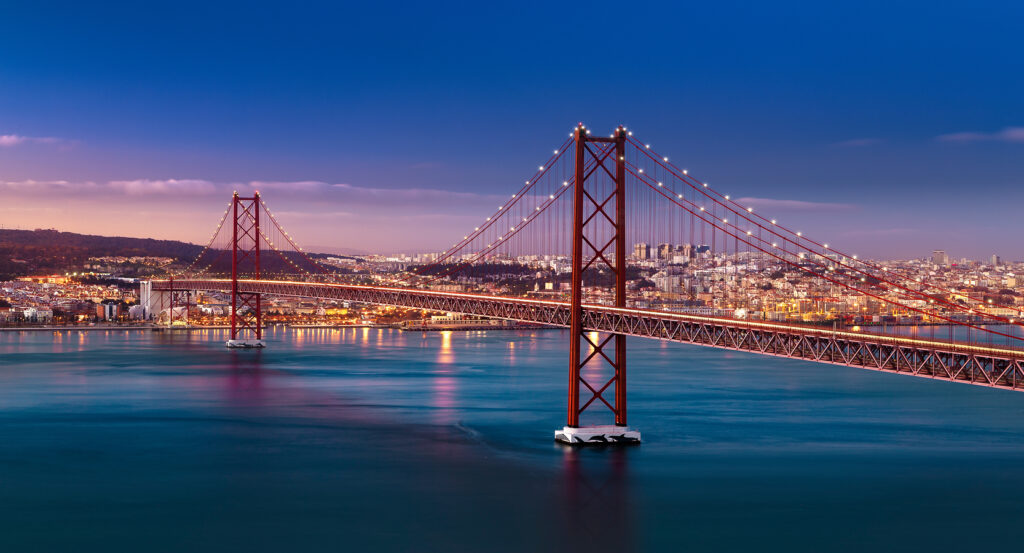
Why Olivais matters.
Olivais is a thoughtfully planned urban district where modern architecture, expansive green spaces, and aviation history converge across one of the Portuguese capital's most distinctive residential neighborhoods.
Broad boulevards, landscaped parks, innovative housing developments, cultural facilities, community spaces, and convenient transportation links create a district that reflects Lisbon's postwar vision for modern urban living. Originally developed during the mid-twentieth century as one of Portugal's most ambitious residential planning projects, Olivais became a showcase for progressive architecture, public amenities, and integrated green space. Urban planners sought to create a neighborhood that balanced density, accessibility, and quality of life while accommodating Lisbon's growing population. Today, visitors encounter a district that feels open, functional, and uniquely representative of modern Lisbon. The result is a neighborhood that feels spacious, livable, and deeply connected to contemporary urban design. To the east, Parque das Nacoes' waterfront landmarks and architectural icons extend naturally from Olivais toward the Tagus River, reinforcing the neighborhood's position within one of the city's most transformative urban corridors. Every park, avenue, and residential complex reflects a neighborhood shaped by planning, innovation, and community.
What defines Olivais.
Olivais is best known for being home to Lisbon Humberto Delgado Airport, Portugal's busiest airport and the country's primary international gateway.
Since its opening in the twentieth century, the airport has played a central role in connecting Portugal with Europe, the Americas, Africa, and beyond. Its presence helped shape the development of surrounding neighborhoods while establishing Lisbon as one of Southern Europe's most important transportation hubs. Millions of travelers pass through the airport annually, making it a vital component of the national economy and tourism industry. Over time, the airport's strategic importance influenced infrastructure investment and urban growth throughout eastern Lisbon. Few districts in Portugal possess such a direct connection to the country's international connectivity and economic development.
How Olivais fits.
Olivais works as an exploration of the parks, modern architecture, and civic landmarks that define one of Lisbon's most distinctive planned communities.
Begin at Vale do Silêncio Park, where the neighborhood's defining connection to green space and urban planning immediately comes into focus. Continue toward Lisbon Humberto Delgado Airport's observation areas and surrounding transport district, whose significance reveals the infrastructure that helped shape the neighborhood's modern identity. From there, make your way to Quinta Pedagógica dos Olivais, where educational programs, agricultural heritage, and community engagement provide a broader perspective on the district's cultural and social character. Along the route, you'll encounter landscaped parks, neighborhood cafés, residential landmarks, public art, community facilities, pedestrian corridors, and civic spaces that showcase the neighborhood's remarkable depth. The progression moves naturally from urban parkland to transportation gateway to educational landmark, revealing the forces that shaped the neighborhood. Olivais remains one of the city's most successful modern districts, preserving a remarkable balance between accessibility, green space, and everyday local life.
Where your story begins.
Foresyte Travel reveals places that feel extraordinary long before you arrive.
Enjoy editorial crafted for luxury travelers.
Foresyte may earn a commission when you book.














































































































